Sharp Daily
No Result
View All Result
Thursday, September 10, 2026
  • Home
  • News
    • Politics
  • Business
    • Banking
  • Investments
  • Technology
  • Startups
  • Real Estate
  • Features
  • Appointments
  • About Us
    • Meet The Team
Sharp Daily
  • Home
  • News
    • Politics
  • Business
    • Banking
  • Investments
  • Technology
  • Startups
  • Real Estate
  • Features
  • Appointments
  • About Us
    • Meet The Team
No Result
View All Result
Sharp Daily
No Result
View All Result
Home News

Kenya named the haven for low-quality textiles, study reveals

Austin Wekesa by Austin Wekesa
February 16, 2024
in News
Reading Time: 2 mins read

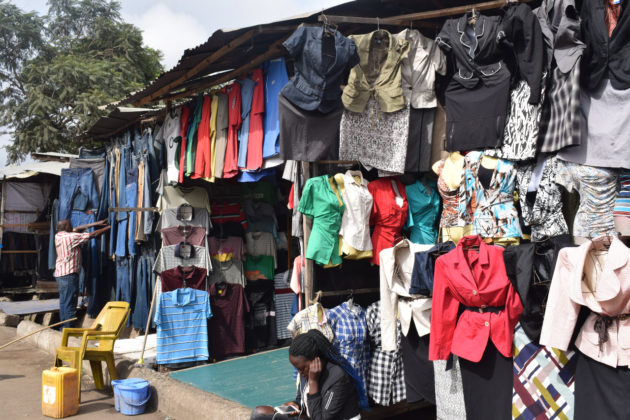
Kenya emerges as a significant disposal site for second-hand clothes, known locally as mitumba, primarily due to the prevalence of low-quality items in a recent study titled “Destinations of Dutch Used Textiles”.

Conducted across Ghana, India, Kenya, Poland, and Pakistan, the study also unveils a network of cloth laundering operations centered in Poland and Pakistan.

According to the findings, the Netherlands annually exports 1,049 tonnes of second-hand clothing to Kenya. However, the study uncovers additional imports of 1,145 and 1,146 tonnes, respectively, facilitated by laundering schemes in Poland and Pakistan, contributing to Kenya’s influx of substandard garments.

The report highlights a concerning statistic, estimating that approximately 150 to 200 tonnes of used textiles, destined for immediate disposal, enter Kenya daily. This trend aligns with insights from Dutch sorters, who acknowledge the inferior quality of textiles destined for Pakistan, and presumably, subsequently re-exported to Kenya.


RELATEDPOSTS

Kenya’s diaspora remittances fall 3% to Sh316 Billion in H1 2026

September 3, 2026

Kenya’s inflation edges up to 6.6% in August 2026, driven by fuel and food costs

September 1, 2026

Despite entering through the port at Mombasa, used clothes predominantly circulate in Kenya’s largest market, Gikomba, supporting thousands of livelihoods.

However, the report notes that between 20 to 50 percent of imported second-hand clothes are deemed unusable upon arrival, exacerbating environmental challenges as unfit garments accumulate in landfills and waterways.

Further analysis underscores a significant trade disparity, with Kenya importing 183,506 tonnes of second-hand clothes while exporting a mere 1,519 tonnes. This stands in stark contrast to the Netherlands, which imports 63,672 tonnes while exporting 167,674 tonnes.

Mitumba retailers in Kenya express dissatisfaction with the disconnect between pricing and quality, exacerbated by the absence of a robust feedback system involving exporters, importers, and wholesalers, hindering the return of substandard goods.

The study sheds light on Kenya’s pivotal role as a recipient of low-quality second-hand textiles, emphasizing the urgent need for systemic improvements to address environmental concerns and ensure fair trade practices.


Previous Post

KMRC increases loan access for middle-class buyers

Next Post

Long-term investment principles amid market volatility

Austin Wekesa

Austin Wekesa

Related Posts

News

Understanding what investors are really paying for (Enterprise value vs. Equity value)

September 7, 2026
Analysis

Kenya holds central bank rate at 8.75%

September 4, 2026
News

The Power of Compound Interest in Building Your Retirement Fund

September 4, 2026
News

Election Cycles and Investments in Kenya: Positioning Ahead of 2027

September 4, 2026
News

A Strong Brand Does Not Always Make a Strong Investment

September 4, 2026
News

When Weak Financial Controls Become an Investment Risk

September 4, 2026

LATEST STORIES

Kenya’s regulator schedules stakeholder meeting on proposed import permit fees

September 10, 2026

Umbrella vs Standalone Pension Scheme: Which Is Better for Your Business?

September 10, 2026

Meta launches Muse, a personal AI agent that acts on users’ behalf

September 9, 2026

StanChart Kenya gives Nakumatt 30 days to settle Sh1.9 Billion debt

September 8, 2026
KRA

KRA now cross checks your tax returns against eTIMS, customs and withholding data

September 7, 2026

Understanding what investors are really paying for (Enterprise value vs. Equity value)

September 7, 2026

Kenya holds central bank rate at 8.75%

September 4, 2026

How financial institution failures affect the wider economy

September 4, 2026
  • About Us
  • Meet The Team
  • Careers
  • Privacy Policy
  • Terms and Conditions
Email us: editor@thesharpdaily.com

Sharp Daily © 2024

No Result
View All Result
  • Home
  • News
    • Politics
  • Business
    • Banking
  • Investments
  • Technology
  • Startups
  • Real Estate
  • Features
  • Appointments
  • About Us
    • Meet The Team

Sharp Daily © 2024