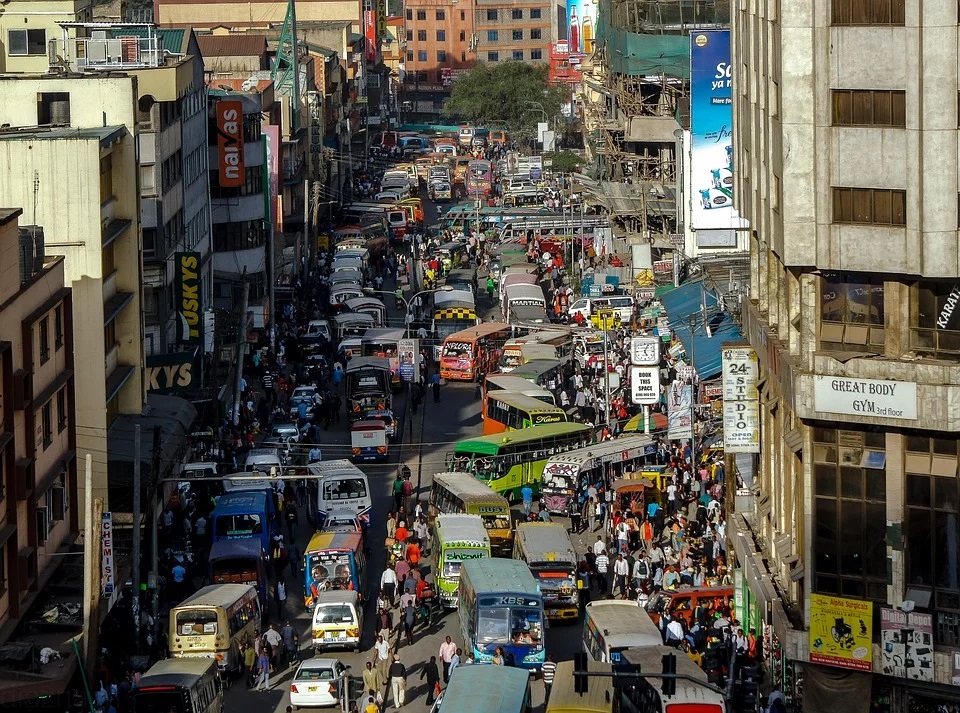
Kenya’s economy appears to be on an upswing by many market indicators, signaling recovery and stability. Yet, beneath these promising figures, ordinary Kenyans face a different story: a steady erosion of their disposable income, which has declined by an estimated 6.1% over the past year. This gap has in recent times dominated conversations in the public, as the benefits are unevenly distributed, with many Kenyans feeling left behind.
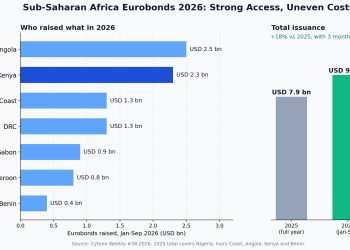
Interest rates have been on a downward trajectory, with the Central Bank of Kenya recently reducing its benchmark rate to 12.00% from 12.75%, making borrowing theoretically more affordable. Yields on government debt have also been trending down; for example, the yield on the 91-day Treasury bill fell by over 60 basis points to 14.9%. Similarly, interbank lending rates have declined by 55.5 basis points over the past year, bringing stability to short-term funding between banks. Even Kenya’s Eurobond yields show positive signs, particularly for the 7-year Eurobond issued in 2019, where yields dropped by 69.1 basis points to 8.1% this year. These falling yields suggest that Kenya is perceived as less risky in global markets, which could potentially reduce the cost of future international borrowing.
Kenya’s foreign reserves have also shown resilience, growing by 16.4% over the last two years to reach USD 8.5 billion. This reserve level covers 4.4 months of imports, comfortably above the legal minimum of 4 months and a marked improvement from two years ago when reserves only covered 3.6 months. The Kenyan shilling, which depreciated significantly against the US dollar in 2023, losing 26.8%, has rebounded, gaining 17.7% against the dollar in 2024. This newfound strength in the currency should theoretically ease import costs, particularly for vital commodities like fuel, providing a measure of relief for households and businesses.
Remittances from the diaspora have added another layer of economic support, amounting to USD 4.6 billion over the past year, a 12.7% increase from 2023. The government has made strides in revenue collection, gathering KES 592 billion as of September 2024, meeting 90% of revised estimates. Although slightly below target, this shortfall has been offset by lower-than-expected expenditures, with only 73.4% of the projected amount spent. Moreover, Kenya has comfortably exceeded its borrowing target for the year, achieving KES 296.7 billion against a goal of KES 125.7 billion. Inflation is another bright spot, dropping to 3.6% in September, within the Central Bank’s target range, while fuel prices have also decreased.


Yet, for the average Kenyan, these encouraging metrics feel distant. Rising living costs have outpaced wage increases, which have grown by an estimated 4.8% over two years. With inflation averaging 5.2% over the same period, this increase is simply insufficient to offset the eroding purchasing power. For an individual earning a monthly salary of KES 50,000, statutory deductions, along with cumulative inflation adjustments, have contributed to a 6.1% reduction in disposable income. Despite lower inflation and some declines in fuel prices, everyday costs for essentials remain high, leaving many households struggling to make ends meet. This is where the focus should now be turned, a good economy should reflect in better lives for the people.