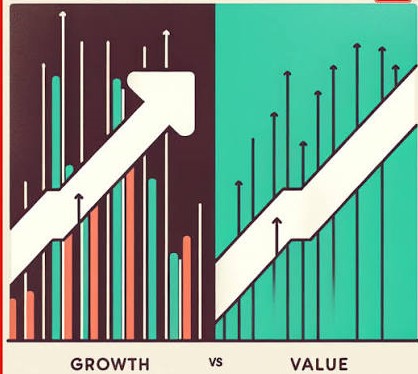
Growth is commonly viewed as a positive indicator of corporate performance, with rising revenue, expanding customer bases and increasing market share often interpreted as evidence of strengthening businesses. For investors, however, the more important consideration is whether the capital required to achieve that growth is generating sufficient returns. A company can expand rapidly while simultaneously experiencing pressure on margins, cash flows and returns on invested capital, making the quality of growth more important than its headline rate.
Safaricom provides a useful illustration of this distinction. In the financial year ended March 2025, Group revenue increased by 11.2% to Kshs 388.7 bn, from Kshs 349.4 bn in the previous year. However, operating costs increased at a substantially faster rate, rising by 25.2% to Kshs 104.3 bn from Kshs 83.3 bn. As a result, EBITDA increased by only 5.4% to Kshs 172.2 bn, from Kshs 163.3 bn, while the EBITDA margin declined by 2.4% points to 44.3%, from 46.7%.
The difference between revenue and EBITDA growth illustrates why investors need to look beyond the top line. Although Safaricom generated substantially more revenue, the faster increase in operating costs meant that a smaller proportion of each additional shilling of revenue translated into operating earnings. This does not necessarily indicate weak performance, particularly where higher costs are associated with investments intended to support future growth, but it demonstrates why revenue growth alone cannot establish whether shareholder value is being created.
The relationship becomes even more important when expansion requires substantial capital expenditure. Safaricom’s Group capital expenditure increased to Kshs 93.5 bn in FY2024, from Kshs 62.8 bn in FY2023, with Ethiopia accounting for 49% of FY2024 expenditure. Over the same period, Group service revenue increased by 13.4% to Kshs 335.4 bn, from Kshs 295.7 bn, while net income attributable to shareholders increased by only 1.2% to Kshs 63.0 bn, from Kshs 62.3 bn.

For investors, this creates a more useful framework for assessing expansion. The relevant question is not simply whether a company is increasing revenue and assets, but whether the additional capital deployed is capable of generating returns above the company’s cost of capital over time. Where investment increases faster than earnings, returns on invested capital can weaken temporarily or remain depressed if new assets fail to generate sufficient cash flows.
This distinction is particularly relevant in capital-intensive sectors such as telecommunications, banking, manufacturing, infrastructure and aviation. Expansion often requires substantial expenditure before the resulting revenues become fully visible. Investors therefore need to distinguish between investment that builds future earning capacity and investment that merely increases the size of the balance sheet.
The reverse situation can also occur. A company may record relatively modest revenue growth while generating stronger shareholder returns by improving the productivity of its existing assets, controlling costs or shifting towards higher-margin products and services. Safaricom’s Kenyan operations provide an example of why the composition of growth matters. In FY2024, voice revenue declined by 1.7% to Kshs 79.5 bn, from Kshs 80.9 bn, while free cash flow increased by 15.7% to Kshs 76.1 bn, from Kshs 65.8 bn. The difference demonstrates that declining performance in one revenue segment does not necessarily translate into weaker overall investment economics when cash generation improves.
Growth should consequently be treated as an input into investment analysis rather than evidence of value creation by itself. A rapidly expanding company can create significant shareholder value if its investments generate attractive returns, while a slower-growing business can potentially deliver stronger returns by deploying capital more efficiently. The investment question is ultimately not how quickly a company is growing, but how much economic value it creates from every additional shilling invested in that growth.