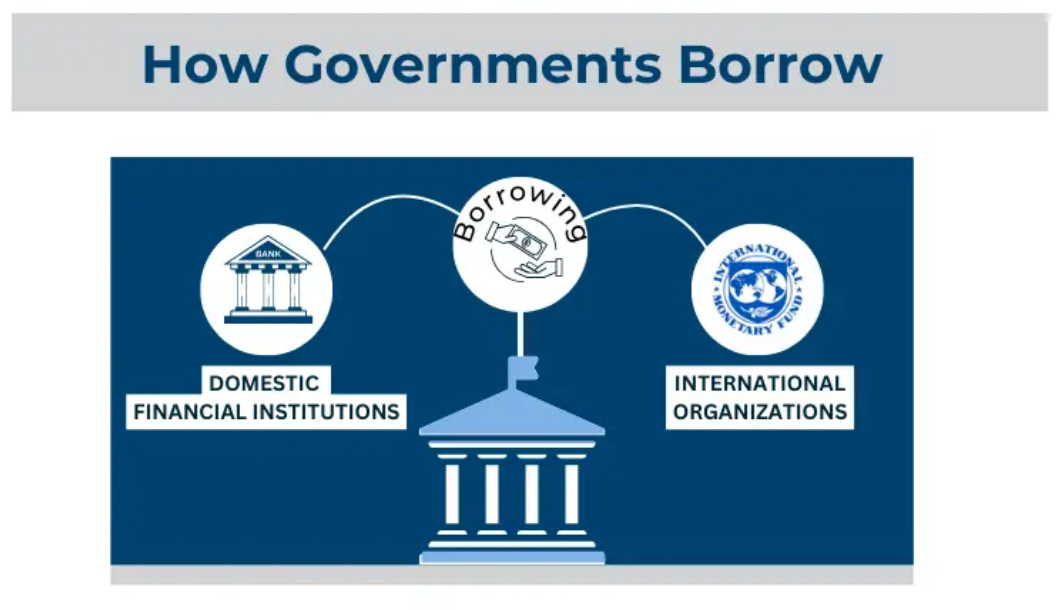
Government borrowing is a common fiscal tool used to finance budget deficits, fund infrastructure projects, and support economic development initiatives. When public expenditure exceeds government revenue, borrowing allows governments to maintain spending without immediately increasing taxes. However, the structure and scale of a government’s borrowing strategy can have significant effects on domestic financial markets, influencing interest rates, liquidity, and investment behavior.
Governments typically borrow through domestic and external sources. Domestic borrowing involves issuing government securities such as treasury bills and treasury bonds within the local financial market. These instruments are purchased by banks, institutional investors, pension funds, and individuals seeking relatively stable returns. By issuing debt securities, governments mobilize funds from the domestic economy to finance public spending while providing investment opportunities for market participants.
The level and frequency of government borrowing can affect domestic interest rates. When borrowing requirements are high, governments may issue larger volumes of treasury securities. This increased supply of government debt may push yields higher in order to attract investors. Higher yields on government securities can influence broader market interest rates, as government debt is often considered a benchmark for pricing other financial instruments. Consequently, lending rates for businesses and households may also increase.
Another important domestic market effect is the potential crowding-out of private sector borrowing. If government borrowing absorbs a large share of available liquidity in the financial system, banks and investors may allocate more funds toward government securities rather than private sector loans or corporate bonds. This situation can limit access to credit for businesses, particularly small and medium-sized enterprises, which rely on bank financing for expansion and investment.


However, government borrowing can also support domestic markets when managed effectively. A well-structured government securities market contributes to the development of a country’s financial system by providing a reliable benchmark yield curve. This benchmark helps investors evaluate the risk and return of other financial assets. In addition, a liquid government bond market encourages participation from institutional investors and promotes greater financial market stability.
Government borrowing strategies may also influence monetary policy transmission. When central banks adjust policy interest rates, changes in government security yields often transmit these signals to the wider financial market. This interaction between fiscal and monetary policy can play an important role in maintaining economic stability and managing inflation expectations.
The maturity structure of government debt also matters for domestic market outcomes. Governments may choose between short-term and long-term borrowing depending on cost considerations and debt management objectives. Short-term borrowing typically carries lower interest rates but exposes governments to refinancing risks if market conditions change. Long-term borrowing, while sometimes more expensive, can reduce the frequency of refinancing and provide greater stability in debt servicing.
Ultimately, government borrowing strategies require careful planning and coordination with broader economic policies. Transparent debt management practices, sustainable borrowing levels, and efficient domestic capital markets can help ensure that government financing supports development objectives while minimizing disruptions to private sector activity.