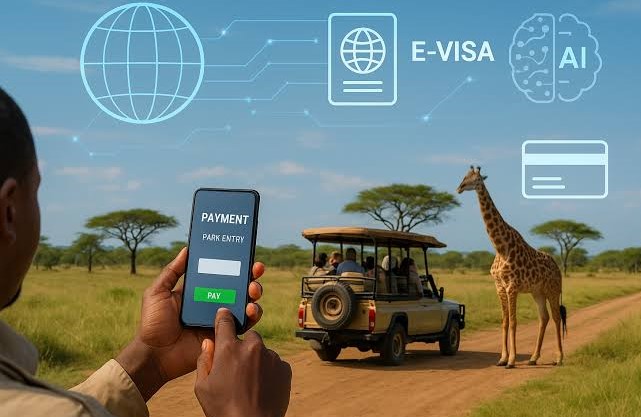
East Africa’s tourism and hospitality industry is experiencing strong growth, supported by rising international visitor arrivals and increasing tourism earnings across the region. While this expansion presents significant opportunities for hotels, safari lodges, tour operators and other hospitality businesses, many establishments continue to rely on fragmented operational systems that limit efficiency. As visitor numbers continue to increase, integrating digital payments with reservation and financial management platforms is becoming increasingly important to support sustainable growth and improve customer experiences.
According to the Kenya Tourism Sector Performance Report 2025 released by the Ministry of Tourism and Wildlife, international visitor arrivals increased by 9% to 2.70 million in 2025, up from 2.47 million in 2024. The increase generated approximately KSh 500 billion in tourism earnings, reinforcing the sector’s importance to Kenya’s economy and its contribution to employment, foreign exchange earnings and investment.
Growth has also been recorded across the wider East African region. In Tanzania, tourism receipts increased by 12.82%, rising from USD 3.90 billion in 2024 to USD 4.40 billion in 2025 reflecting higher international visitor spending and continued sector expansion. Meanwhile, data from the Uganda Ministry of Tourism, Wildlife and Antiquities shows tourism earnings rising by 26.56% from USD 1.28 billion to USD 1.62 billion during the same period highlighting the country’s strong recovery and growing appeal as a regional tourism destination.
Despite these encouraging performance indicators many hospitality businesses continue to face operational challenges arising from disconnected digital systems. While mobile money, online card payments and electronic banking have become widely available, payment processing often remains separate from reservation management and financial accounting platforms. This fragmentation creates unnecessary administrative work and increases the risk of operational errors.


In many establishments, payment confirmations are still manually transferred into booking systems or spreadsheet-based accounting records. Such processes can delay reservation confirmations, create inconsistencies in room availability and increase the likelihood of bookkeeping errors. As transaction volumes continue to rise, manual workflows become increasingly difficult to manage efficiently.
The adoption of integrated hospitality management systems offers a practical solution to these challenges. Modern digital platforms can automatically connect online reservations, payment processing, customer communication and accounting functions within a single system. When a guest completes a payment, the software can immediately confirm the booking, update room availability, generate invoices and record the transaction in the financial ledger without requiring manual intervention.
Integrated systems also improve operational visibility by providing real-time information on occupancy levels, cash flow, customer bookings and financial performance. This enables hospitality managers to make faster business decisions while improving service delivery and reducing administrative costs.
Digital transformation will also support Kenya’s long-term tourism development strategy. The government has set an ambitious target of attracting 5 million international visitors by 2027, a goal that will require hospitality businesses to process significantly higher booking volumes while maintaining service quality and operational efficiency. Scalable digital infrastructure will therefore become an increasingly important component of the region’s tourism ecosystem.
Overall, East Africa’s tourism industry is entering a period of sustained expansion driven by growing international demand. However, fully capturing the benefits of this growth will depend not only on attracting more visitors but also on modernizing business operations. By adopting integrated digital payment and management systems, hospitality businesses can improve efficiency, enhance customer experiences and position themselves to support the region’s long-term tourism growth.