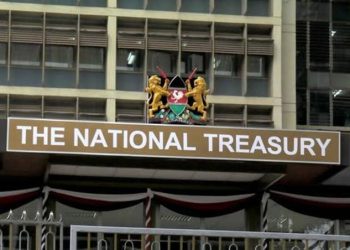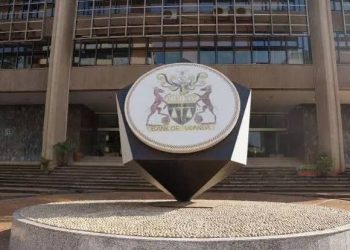
Kenya’s growing exposure to financial crime is not a failure of law. It is a consequence of budgeting. In 2025, the state did not dismantle its anti–money laundering framework; it simply starved it. And in enforcement, starvation is indistinguishable from surrender.
The contradiction is stark. Reports released in 2025 show a rise in suspicious financial activity across the economy. The Financial Reporting Centre(FRC) recorded over eight thousand suspicious transaction reports in the most recent reporting cycle, a material increase from the previous year. Banks flagged trillions of shillings in potentially illicit flows over a short multi-year window, while typology reports confirmed growing use of structured transactions, shell entities and professional intermediaries. Financial crime is scaling. Complexity is rising. Workloads are expanding.
Yet this escalation is occurring inside a fiscal environment defined by consolidation. The 2025/26 national budget prioritises debt servicing and revenue mobilisation while enforcement and compliance functions remain compressed within broad public financial management allocations. No surge in funding accompanies the surge in risk. This mismatch matters. Anti-money laundering enforcement does not degrade gracefully under budget pressure. It collapses selectively. Inspections are deferred. Analytic backlogs grow. Follow-through weakens. The system continues to receive information but loses the capacity to convert intelligence into consequence.
This is not conjecture. Kenya’s own 2025 national risk assessment guidance identifies real estate, legal services and other non-financial professions as high-risk sectors with weak preventive controls. These are labour-intensive domains to supervise, requiring skilled personnel, on-site inspections and sustained coordination. When budgets tighten, these sectors are the first to fall into regulatory shadow, not because they are unimportant, but because they are costly to police.


The economic effects are visible even when prosecutions are not. Capital linked to crime does not wait for conviction; it reallocates immediately. It moves toward opaque assets, inflates prices without regard to yield, and distorts markets that rely on income-based demand. Housing affordability erodes. Legitimate businesses face mispriced competition. Risk ceases to reflect fundamentals.
International institutions have already priced this weakness. In 2025, Kenya remained under enhanced monitoring for AML deficiencies and was listed by the European Union as a high-risk jurisdiction, triggering heightened due diligence on cross-border transactions. These designations are not symbolic. They raise transaction costs, slow capital flows and quietly tax the entire economy. Financial credibility, once lost, is repurchased slowly and expensively.
The uncomfortable truth is that budget cuts do not merely weaken enforcement; they signal tolerance. Markets understand this. Criminal networks certainly do. When the cost of oversight falls below the scale of suspicious activity, financial crime becomes rational.
Kenya is not failing to fight dirty money because it lacks laws or intent. It is failing because, in 2025, it chose fiscal restraint over financial integrity. And in markets, that choice is never neutral. (Start your investment journey today with the cytonn MMF, call+2540709101200 or email sales@cytonn.com)