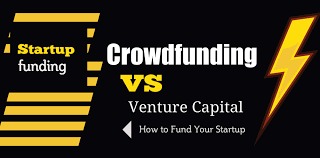
In Kenya’s entrepreneurial ecosystem, accessing capital remains a vital yet challenging step for start-ups and small businesses. Two funding models that have gained prominence are crowdfunding and venture capital (VC). Both aim to support innovation and business growth, but they differ greatly in structure, scale, risk and investor expectations. Understanding these differences helps Kenyan founders and investors make informed decisions about which path best suits their goals.
Crowdfunding refers to raising small amounts of money from many individuals, typically through online platforms. In Kenya, interest in crowdfunding has grown with increasing internet penetration and widespread use of mobile money especially M-Pesa. A major step in formalizing this market was the introduction of the Capital Markets (Investment-Based Crowdfunding) Regulations, 2022, which require platforms to be licensed by the Capital Markets Authority. Under these regulations, small enterprises can raise up to KES 100.0 million in a 12-month period through regulated investment-based crowdfunding, offering a legal framework for this form of finance.
In Kenya, crowdfunding takes several forms including donation-based, reward-based and investment-based models, with only the investment-based approach subject to formal regulation. Platforms such as M-Changa have become increasingly popular, allowing businesses, communities and social causes to mobilize funds efficiently from a wide audience. Even with this growing adoption, the crowd-investing segment remains relatively limited in size, reflecting its early stage of development in the country. This indicates that crowdfunding in Kenya is still mainly used to support small-scale initiatives rather than large commercial ventures.
In contrast, venture capital involves funding from specialised firms or funds that provide significant capital to high-growth start-ups in exchange for equity. VC funding in Kenya has grown substantially with the country emerging as a leading destination for start-up investment across Africa. In 2024, Kenyan start-ups attracted approximately USD 537.0 mn in venture capital, capturing about 26.0% of total VC inflows to the continent and highlighting strong investor interest in sectors like climate tech and mobility solutions.


The scale of funding distinguishes the two models. Crowdfunding is accessible and community-oriented suitable for early-stage ventures or smaller projects. It allows many individuals to contribute modest amounts and often focuses on social impact or early validation. Venture capital, on the other hand, provides large capital injections and strategic support, but demands significant growth potential and a clear path to scale. VC investors generally seek substantial returns through future exits such as acquisitions or public offerings.
In Kenya’s evolving business landscape, both crowdfunding and venture capital have roles to play. Crowdfunding can serve as a launchpad or demand validator for new ideas, while venture capital can fuel rapid expansion. Entrepreneurs should consider their stage, growth ambitions and investor expectations when choosing between these financing paths. ( start your investment journey today with the cytonn money market fund. Call + 254 (0)709101200 or email sales@cytonn.com)