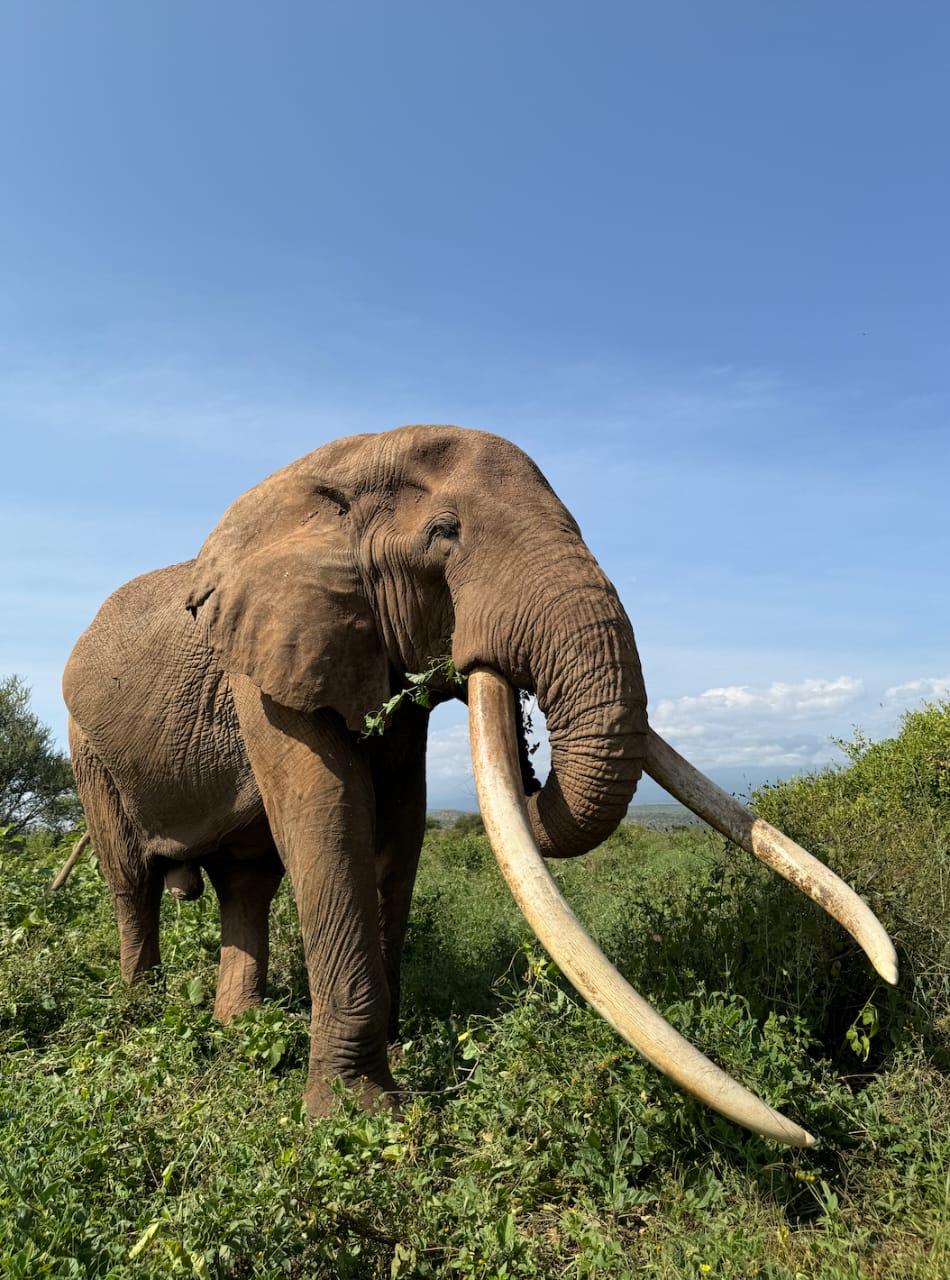
Craig, the celebrated super tusker of Amboseli National Park, stands as a symbol not only of Kenya’s rich natural heritage but also of its economic potential. With his massive symmetrical tusks and commanding presence, Craig has drawn the attention of tourists, photographers, and wildlife enthusiasts from across the globe. His movements through the park, monitored by rangers and researchers, have become an integral part of Amboseli’s tourism narrative, creating predictable patterns that benefit the industry and the broader economy.
Animals like Craig function as living infrastructure within Kenya’s tourism sector. Their uniqueness and visibility attract visitors, drive safari bookings, and enhance the country’s global brand as a premier wildlife destination. Lodges, tour operators, guides, and transport services all benefit from the consistent flow of tourists motivated by the chance to witness such iconic species. The revenue generated supports local employment, infrastructure development, and community projects, creating a ripple effect that extends beyond the park itself.
Recognizing the economic significance of wildlife encourages a proactive approach to conservation. Protecting species like Craig is not only an environmental responsibility but also an investment in sustainable growth. Anti-poaching patrols, habitat management, and veterinary care ensure that these animals continue to thrive and contribute to predictable tourism returns. Similarly, integrating local communities into conservation efforts, through employment, revenue-sharing programs, and education initiatives, strengthens the social and economic ecosystem around these natural assets.
The government and private sector also play a crucial role in maintaining and enhancing the value of wildlife as economic infrastructure. Strategic investments in park facilities, improved access routes, and marketing campaigns showcasing Kenya’s biodiversity amplify the appeal of iconic animals to both domestic and international travelers. Policies that balance conservation with tourism promotion help ensure that wildlife remains a reliable contributor to national income while safeguarding ecological integrity.


Craig’s presence underscores a broader lesson: Kenya’s economic growth is intertwined with its natural capital. By maintaining and promoting iconic wildlife, the country not only preserves its heritage but also generates sustainable revenue, supports communities, and strengthens its international brand. Approaching wildlife as an investment in economic infrastructure reframes conservation, transforming protection into a proactive strategy for growth. In doing so, Kenya can enhance, both of its tourism sector and its broader economy, demonstrating that ecological stewardship and financial prosperity can progress hand in hand.