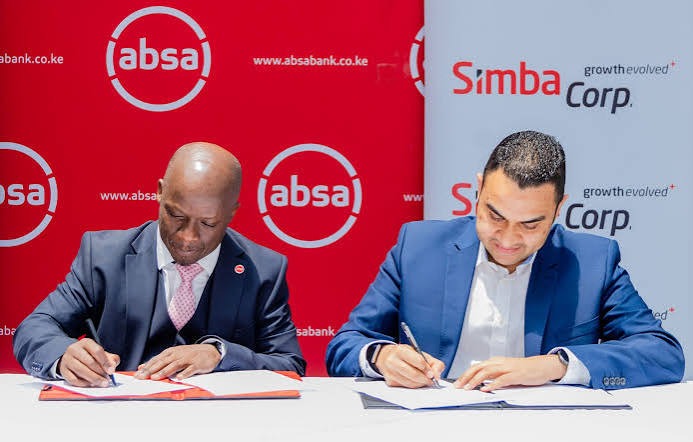
Absa Asset Financing Targets Productive Assets
Absa asset financing is expanding through a strategic partnership with Simba Corporation to improve access to commercial vehicles, passenger vehicles and agricultural equipment. The partnership forms part of Absa’s Kshs 100.0 bn Asset-Based Finance 2.0 commitment, which targets productive assets across sectors including trade, logistics, manufacturing, healthcare and agriculture. The arrangement allows businesses and individuals to acquire income-generating assets while spreading repayment over periods that can align with their expected cash flows.
Financing Terms Reduce Upfront Capital Requirements
The financing structure varies according to the type of asset and customer. Commercial vehicles, including trucks, buses and light commercial vehicles, can receive financing of up to 95.0% of the purchase price, with repayment periods of up to 72 months. School buses qualify for financing of up to 100.0%, with repayment periods extending to 84 months. Agricultural equipment such as tractors and farm machinery can receive financing of up to 90.0% over periods of up to 60 months. These terms reduce the upfront capital requirement for businesses while preserving a borrower contribution in most commercial and agricultural transactions.
Asset-Backed Lending Connects Credit to Collateral
The partnership represents a form of asset-backed commercial lending in which the financed vehicle or equipment provides security for the facility. This structure allows Absa to link credit directly to a tangible productive asset, while Simba Corporation provides the distribution network, vehicle and equipment portfolio and after-sales support. Customers can identify an eligible asset through the dealer before progressing to the financing process. For Absa, the structure provides greater visibility over the underlying collateral, while Simba benefits from a larger pool of customers able to purchase its products.
Commercial Vehicles Can Support Business Growth
Commercial-vehicle financing can support Kenya’s logistics, distribution and construction sectors. Trucks, buses and light commercial vehicles can generate revenue throughout their useful lives, allowing borrowers to service financing from the cash flows generated by the underlying assets. Repayment periods of up to 72 months can reduce monthly obligations and improve affordability. However, longer loan periods also extend borrowers’ exposure to interest-rate, maintenance and asset-value risks.


For MSMEs, Absa asset financing can preserve working capital that businesses would otherwise use to purchase vehicles outright. Instead of committing large amounts of cash to equipment, businesses can retain liquidity for inventory, wages, fuel and other operating expenses. This can become particularly valuable for businesses whose revenues depend directly on transport and distribution capacity.
Agricultural Financing Supports Mechanization
Agricultural equipment financing provides another important channel for productive investment. Tractors and other machinery can improve farm productivity by reducing reliance on manual labor and enabling farmers to complete time-sensitive activities more efficiently. Financing of up to 90.0% can lower the initial capital barrier for farmers and agribusinesses that have viable cash flows but limited upfront liquidity. The partnership therefore connects financial-sector credit with agricultural mechanization and broader productivity gains.
Credit Risk Remains a Key Challenge
The expansion of Absa asset financing also creates important credit-risk considerations. High loan-to-value ratios can increase the bank’s exposure if borrowers default and the recovered value of the underlying vehicle or machinery does not cover the outstanding balance. Commercial assets can depreciate rapidly, while repossession costs, maintenance conditions and secondary-market demand can affect recovery values.
Effective underwriting therefore requires more than assessing the financed asset. Absa must evaluate borrower cash flows, debt-service capacity, business concentration, asset utilization and expected resale values. The dealer relationship can support asset verification and valuation, but it does not eliminate the underlying credit risk.
Asset Financing Supports Kenya’s Productive Economy
From a broader macroeconomic perspective, the Absa-Simba partnership reflects a shift toward financing productive capital rather than relying solely on conventional working-capital facilities. If effectively deployed, asset-based lending can support business expansion, agricultural mechanization, logistics capacity and employment while allowing banks to diversify their loan portfolios.
The key challenge will be maintaining credit quality as lenders expand into higher-risk MSME and commercial-asset segments. The partnership is therefore significant because it connects bank credit directly to physical assets capable of generating economic output and repayment cash flows.