


Investing in fixed-income securities involves more than comparing the interest income offered by different bonds. Investors must also assess the likelihood that an issuer will meet its contractual obligations and whether the returns adequately compensate them for the risks involved. One important measure used in this assessment is the credit spread, which represents the difference between the yield on a debt security and the yield on a comparable benchmark security, typically a government bond. Credit spreads provide valuable information about perceived credit risk, investor confidence and broader financial market conditions.
A credit spread reflects the additional yield investors demand for holding a bond with greater credit risk compared to a relatively safer security. For example, if a corporate bond offers a yield of 12.0% while a comparable government bond yields 9.0%, the credit spread is 3.0 percentage points, equivalent to 300 basis points. This additional return compensates investors for risks associated with the corporate issuer, including the possibility of default, lower recovery in the event of insolvency and reduced liquidity. However, the spread may also reflect other factors, such as differences in taxation, marketability and the structure of the securities being compared.
Credit spreads are influenced by several factors, with the issuer’s financial strength being particularly important. Companies with stable earnings, manageable debt levels, strong cash flows and adequate interest coverage generally have a greater capacity to service their obligations. Consequently, their bonds may trade at relatively narrower spreads. Conversely, issuers experiencing declining profitability, rising leverage, deteriorating liquidity or weakening cash flow generation may be perceived as having a higher probability of default. Investors consequently demand higher yields, resulting in wider credit spreads.
Credit ratings also influence the pricing of debt securities. Credit rating agencies assess an issuer’s ability and willingness to meet its financial obligations, assigning ratings that help investors distinguish between different levels of creditworthiness. Investment-grade securities generally attract lower credit spreads than speculative-grade securities because they are associated with comparatively lower credit risk. Nevertheless, ratings should not be treated as a substitute for independent financial analysis. An issuer’s financial position can deteriorate between rating reviews, making it important for investors to monitor financial statements, debt maturities, operating performance and changes in the business environment.


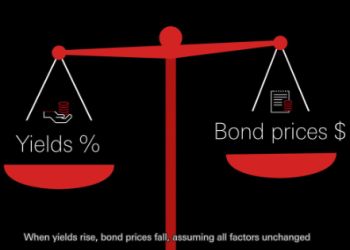
Beyond issuer-specific factors, credit spreads provide insights into broader market sentiment. During periods of economic stability and strong investor confidence, demand for corporate debt may increase as investors seek higher returns. This can push bond prices upwards and yields downwards, narrowing credit spreads. During periods of economic uncertainty, however, investors may become more cautious and shift towards securities perceived to be safer. Corporate bond prices may consequently decline relative to government bonds, widening spreads. Such movements can signal increasing concerns about economic growth, corporate profitability, refinancing conditions or the overall availability of credit.
The relationship between credit spreads and economic conditions is particularly important because financial markets often anticipate changes in economic activity. A sustained widening of corporate bond spreads may indicate that investors are becoming increasingly concerned about the financial health of businesses before these concerns are fully reflected in reported earnings or default statistics. Conversely, narrowing spreads may suggest improving confidence in corporate borrowers and more favourable financing conditions. However, spreads should be interpreted alongside other indicators, including interest rates, inflation, liquidity conditions and economic growth expectations, since changes may be driven by technical market factors rather than deteriorating credit fundamentals.
For investment analysts, credit spreads are also useful when evaluating whether a bond offers adequate compensation for the risks involved. A bond with a relatively high yield may initially appear attractive, but its spread could be justified by weak financial performance, elevated leverage or uncertainty surrounding future debt repayments. Analysts therefore need to examine the issuer’s capacity to generate sufficient cash flows, its debt repayment schedule, access to refinancing and the security or guarantees attached to the borrowing. Comparing the spread with those of similar issuers and securities can help establish whether a bond is attractively priced relative to its risk profile.
In Kenya, credit spread analysis is relevant when evaluating corporate debt against comparable government securities. Government bond yields provide an important reference point for assessing the additional return investors require from corporate issuers. However, comparisons must account for differences in maturity, liquidity, taxation and security structures. This is particularly important in markets where corporate bond trading may be relatively limited, as infrequent transactions can make observed yields less representative of prevailing market conditions. Analysts should therefore combine spread analysis with issuer-level financial assessment rather than relying on yield differences alone.
Credit spreads also have implications for companies seeking to raise capital. When spreads widen, businesses may face higher borrowing costs as investors demand greater compensation for perceived risk. This can increase financing expenses, affect investment decisions and constrain expansion plans. Companies with strong balance sheets and credible cash flow generation may be better positioned to access funding on favourable terms, particularly when market conditions become less supportive.
Ultimately, credit spreads connect the financial health of individual borrowers with broader market expectations. They help investors evaluate the additional compensation available for assuming credit risk, identify changes in market sentiment and compare investment opportunities across debt securities. However, a wide spread does not automatically represent an attractive investment, just as a narrow spread does not necessarily indicate that a bond is risk-free. Effective analysis requires understanding the underlying reasons for the spread and determining whether the expected return adequately compensates investors for the risks they assume.