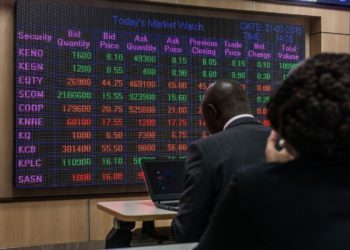



Government borrowing in Kenya continues to climb, and the price it pays to raise that money is becoming just as important a story as the debt stock itself. At the most recent Treasury bond auctions on 14th October the government accepted bids at average rates of 13.7% percent and 14.3% on the 20-year paper and 30-year reopening respectively, while even the Treasury bills across the 91, 182 and 364-day tenors in the 22nd October 2026 auction stood at 8.75%, 8.86% and 9.03% respectively. These rates reflect a market that continues to price meaningful risk into government paper even as the Central Bank Rate has held steady at 8.75%, unchanged from June 2026.
Favoring shorter dated instruments keeps rates lower in the near term but forces the government back into the market more often, exposing it to whatever conditions prevail each time a rollover comes due. Leaning toward longer dated bonds instead locks in today’s rates for years or decades, trading near term refinancing risk for long term cost certainty, but only if the rates available today are ones the government is willing to live with for the long haul.
The investor base matters just as much as the instrument mix. Commercial banks have traditionally been the largest buyers of government debt in Kenya, partly because government paper is viewed as lower risk and requires less capital to hold than private sector loans. When banks allocate more of their balance sheets to government securities, there is less room, and often less incentive, to extend credit to businesses and individuals at competitive rates. This is the essence of what is often called crowding out, and it helps explain why lending rates to the private sector can stay elevated even when the policy rate is stable.
On the external side, global investor sentiment toward frontier market debt broadly, not just Kenya specifically, also shapes the cost of any international borrowing the government considers. A single country rarely moves in isolation, borrowing costs tend to rise or fall across a basket of similarly rated economies as global risk appetite shifts. Put together, the picture is one of a government that can still access credit markets, but increasingly on terms set by investors rather than the state, with consequences that extend well beyond the Treasury’s own balance sheet.