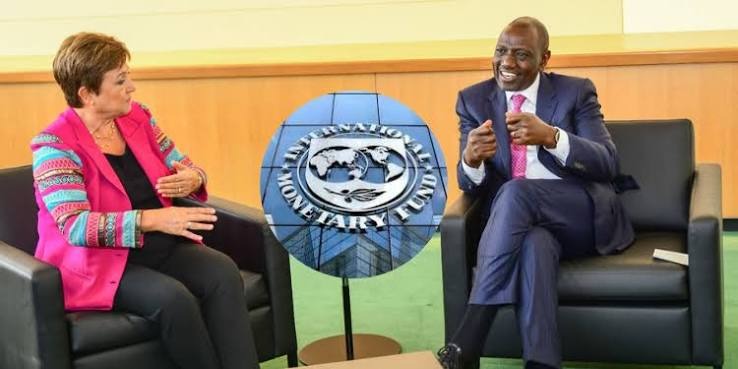
Kenya’s efforts to secure a new lending programme with the International Monetary Fund (IMF) remain unresolved, raising questions about how the government will finance its budget deficit, manage debt repayments and sustain investor confidence. The country’s previous USD 3.6 billion programme expired in 2025, and although discussions on a new arrangement have continued, no agreement has been reached. In March 2026, the IMF confirmed that discussions were ongoing following a staff mission to Nairobi.
The absence of a new programme matters because IMF financing can provide relatively affordable funding while supporting confidence in a country’s economic reform agenda. Without a new arrangement, Kenya must meet its financing needs through other sources, including domestic borrowing, commercial external loans and financing from other development partners. This comes amid persistent fiscal pressures, with the government projecting the budget deficit at 5.5% of gross domestic product (GDP) in FY2026/27 and 5.9% in FY2027/28.
Greater reliance on domestic borrowing could intensify competition for funds between the government and private sector. If Treasury securities offer attractive returns, banks and other investors may prefer lending to the government over financing businesses, potentially constraining private-sector credit and investment. Alternatively, sustained demand for government securities could keep borrowing costs manageable. The outcome will depend on the government’s financing mix, liquidity conditions and investor appetite.
External financing also presents a confidence consideration. An IMF-supported programme can reassure investors that fiscal and economic reforms are being pursued within an agreed framework. Without one, investors may scrutinise Kenya’s debt sustainability, foreign-exchange reserves, repayment capacity and policy credibility more closely. However, the absence of an agreement does not automatically imply a loss of confidence or an inability to access external financing.


For investors, the key question is whether Kenya can demonstrate fiscal discipline without relying on a new IMF programme. Revenue collection, expenditure control, domestic borrowing, Treasury yields and the shilling will be important indicators to monitor. Progress in IMF negotiations will also matter, although securing an agreement alone would not resolve the country’s structural fiscal challenges.
Ultimately, Kenya’s financing position will depend less on the presence of an IMF programme alone than on its ability to manage debt, strengthen public finances and maintain macroeconomic stability. The challenge is to meet immediate financing needs without allowing borrowing costs to undermine private investment and long-term economic growth.