For decades, investors have relied heavily on equities and fixed-income securities to build their portfolios. These traditional asset classes remain central to investment markets, but investors are increasingly looking for other ways to generate returns and manage portfolio risk. This shift has increased interest in alternative investments, including private equity, private credit, infrastructure, real estate and other unlisted assets.
Alternative investments can serve several purposes within a portfolio. The CFA Institute identifies capital growth, income generation, diversification and, in some cases, portfolio protection as key reasons investors allocate capital to alternative assets. Their appeal also comes from the potential to access return opportunities that may not move closely with traditional public markets.
Kenya’s capital markets have gradually expanded beyond conventional investment products. The Capital Markets Authority (CMA) has supported the development of alternative financing and investment options, including private equity, private debt, Real Estate Investment Trusts (REITs) and asset-backed securities.
The expansion of investment products has also increased the range of opportunities available to investors. The CMA, for example, approved a multi-asset fund that provides exposure to private equity, private debt, offshore investments and other unlisted securities. Such products can give investors access to asset classes that may otherwise require significant capital, specialized knowledge or direct participation.


This development reflects a broader shift in investment markets. Instead of relying entirely on listed securities, investors can increasingly consider opportunities across both public and private markets.
Real estate provides one of the most established forms of alternative investment. Investors can purchase property directly, but direct ownership requires significant capital and can involve management, maintenance and liquidity challenges. Real Estate Investment Trusts (REITs) provide another route to property exposure. REITs allow investors to participate in large-scale real estate investments without necessarily purchasing and managing the underlying properties themselves. Income-focused REITs primarily generate returns from rental income earned from their property portfolios.
This structure can broaden access to real estate while also providing investors with a different way to participate in the property market.
Private equity investors provide capital to companies that are not publicly traded. They generally seek returns as the businesses expand, increase in value or reach an eventual exit event. The investment approach can provide exposure to businesses and sectors that may not be available through public equity markets. Private credit takes a different approach. Investors provide loans or other forms of financing to businesses and seek returns primarily through interest payments and repayment of principal. This can provide an income-oriented investment opportunity while allowing investors to participate in the financing of private-sector activity.
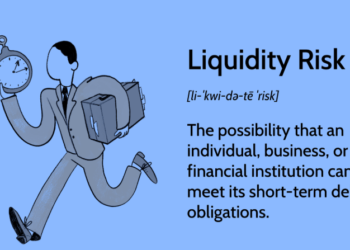
Many alternative assets have limited liquidity, meaning investors may not be able to sell their investments quickly when they need cash. Valuations can also prove more complex because unlisted assets do not have continuously quoted market prices. In addition, many alternative investments require longer holding periods and greater information or specialist expertise. These characteristics make alternative investments different from conventional listed securities. A potentially higher return does not necessarily compensate every investor for the additional risks involved. The appropriate allocation therefore depends on several factors, including an investor’s risk tolerance, liquidity requirements, investment horizon and return objectives.
The development of alternative investments could represent an important stage in the evolution of Kenya’s capital markets. As new investment vehicles emerge, investors may gain greater opportunities to diversify beyond conventional stocks, bonds and cash.
However, greater access does not guarantee superior returns. Alternative investments remain subject to market, credit, valuation, liquidity and execution risks. Investors need to evaluate these risks alongside the potential benefits before allocating capital.
As Kenya’s investment industry continues to develop, alternative investments could become a more significant component of diversified portfolios. Their growing presence gives investors more choices, but it also makes disciplined asset allocation increasingly important. The focus should therefore remain on matching each investment opportunity with the investor’s objectives, capacity to absorb risk and ability to commit capital for the required period.