Cabinet Approves Milestone Capital Transit Project
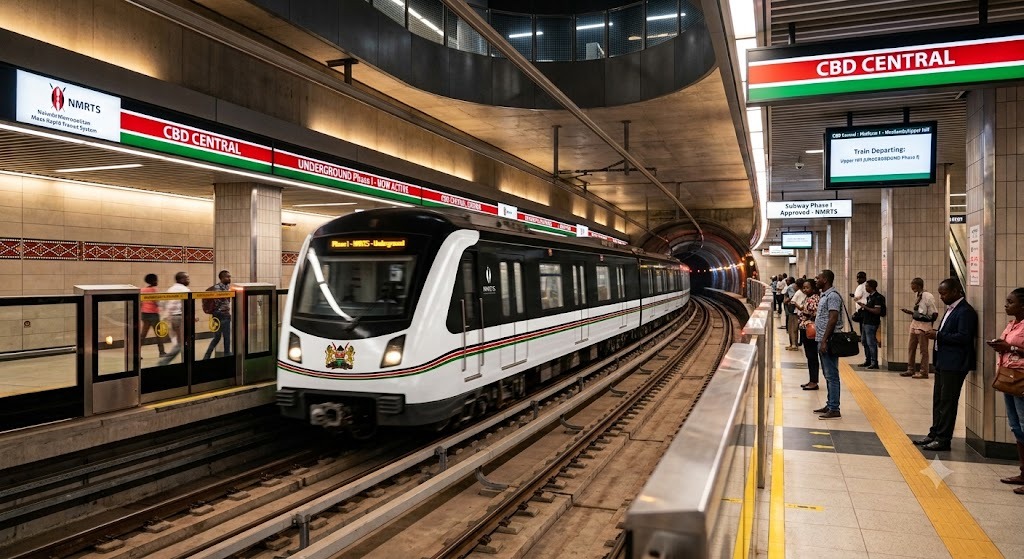
Nairobi has officially authorized a historic infrastructure blueprint for the capital city. Governor Johnson Sakaja chaired the cabinet session that approved the underground metro plan during its 90th executive meeting. Developed alongside national leaders, the Ksh 1.0 trillion project introduces the country’s first subterranean subway network beneath the central business district. City planners designed this initiative to transform the capital into a seamless 20-minute city. Furthermore, the project aims to end severe traffic gridlock that costs the metropolitan economy billions of shillings annually in lost productivity.
Phase One Connects Key Financial and Residential Nodes
The initial blueprint establishes a 30-kilometer transit backbone connecting vital urban hubs. An underground core will link commercial centers in Upper Hill and Westlands directly to the central district. From this subterranean spine, high-capacity surface lines will extend outward to serve dense residential communities across Eastlands. Major interchange hubs at Kencom Central Station and Muthurwa will streamline movement for daily commuters. Consequently, this network directly addresses last-mile connectivity bottlenecks along the city’s busiest passenger routes.
Blended Financing Model Leverages Diverse Capital Sources
Structuring the USD 7.8 billion framework requires a robust mix of public funding and private investment. Under the proposed model, national and local governments will provide USD 3.0 billion to anchor initial development. Technical feasibility studies conducted with partners like JICA have helped solidify this capital structure. Additionally, private equity partners will contribute USD 2.0 billion to support construction. The remaining balance will rely on commercial debt and development capital, spreading risk effectively across high-value partners.
Integrated Network Links Rail, Buses, and Pedestrian Paths
To ensure seamless movement, the subway will serve as the central anchor of a multi-modal transport network. The underground metro plan connects directly with existing commuter rail lines, non-motorized walkways, and dedicated bus rapid transit corridors. Transport economists note that replacing informal surface routes along primary corridors with electrified rail will lower operating costs per passenger kilometer. In addition, this shift stabilizes travel expenses for households while advancing local climate resilience goals.


National Mega Projects Complement Urban Rail Master Plan
This city initiative aligns directly with ongoing national projects transforming regional transit capacity. The expansion coincides with Kenya Railways extending the Standard Gauge Railway line straight into the central district. At the same time, regional authorities are advancing the broader Nairobi Railway City redevelopment program. Looking forward, planners have already initiated preliminary designs for phase two, which will extend services to Ngong Road, Lang’ata, and Ongata Rongai across eighty planned stations.
Transit-Oriented Development Unlocks Real Estate Value
From a corporate finance perspective, this massive investment signals a major shift toward transit-oriented real estate development. Land surrounding underground stations in Upper Hill, Muthurwa, and Westlands is poised to experience substantial valuation growth. These strategic nodes create major opportunities for real estate developers, logistics providers, and infrastructure funds. While land acquisition and utility relocation present execution challenges, launching East Africa’s first subway establishes a lasting benchmark for sustainable urban transit financing.