For years, Kenya’s capital markets have struggled to attract meaningful participation from retail investors, with trading largely dominated by institutional and foreign investors. However, 2026 may prove to be a turning point. A combination of improving market performance, digital innovation and renewed investor confidence is bringing thousands of small-scale investors back to the Nairobi Securities Exchange (NSE). The key question, however, is whether this marks the beginning of a structural transformation in Kenya’s investment culture or simply another wave of speculative enthusiasm.
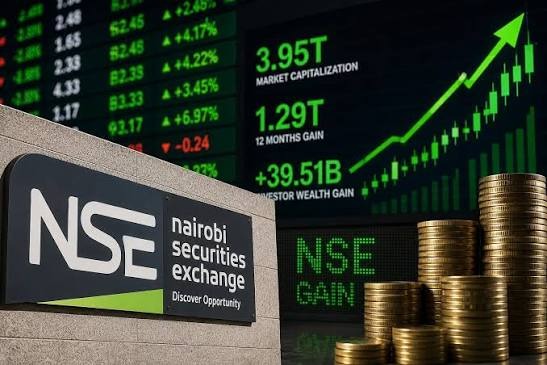
The renewed interest comes at a time when the NSE has been enjoying a strong recovery in equity prices and market capitalization, supported by improved macroeconomic stability, easing inflation and renewed interest in fundamentally strong listed companies, particularly within the banking sector. Recent corporate actions, including public listings, tender offers and strategic acquisitions, have further placed the equity market back in the spotlight, encouraging more Kenyans to consider shares as an alternative investment alongside money market funds, real estate and Treasury securities.
Perhaps the biggest catalyst has been the launch of Ziidi Trader, the mobile-based stock trading platform developed through a partnership between the NSE, Safaricom and Kestrel Capital. By integrating share trading directly into the M-PESA ecosystem, the platform has significantly lowered the barriers to investing, allowing users to purchase NSE-listed shares directly from their mobile phones with relatively small amounts of capital. The response has been remarkable. Within just a few months of its launch, Ziidi Trader had attracted over 511,000 registrations, facilitated approximately 84,000 active retail investors, and surpassed Kshs 1.08 bn in cumulative turnover across more than 351,000 trades, demonstrating growing retail participation in Kenya’s capital markets.
While these developments point to a more inclusive and accessible stock market, they also raise an important question: are Kenyans investing or simply chasing returns? History suggests that retail participation often rises during periods of strong market performance, only to weaken when markets become more volatile. Behavioural biases such as herd mentality, recency bias and fear of missing out (FOMO) can encourage investors to buy shares simply because prices are rising, rather than because of strong company fundamentals. Sustainable wealth creation, however, requires disciplined investing based on earnings growth, valuations, dividend prospects and long-term business performance—not short-term market excitement.


Nevertheless, the current momentum presents a significant opportunity for Kenya’s capital markets. A larger domestic investor base can improve market liquidity, reduce reliance on foreign portfolio flows and enhance price discovery, making the market more resilient during periods of global volatility. More importantly, greater retail participation broadens wealth creation opportunities by enabling ordinary Kenyans to own stakes in some of the country’s largest companies.
Ultimately, the success of Kenya’s retail investing revolution will not be measured by the number of investment accounts opened or the value traded through Ziidi Trader, but by whether these investors remain active when market conditions become less favourable. If the current momentum is accompanied by continued financial education, more quality listings and a greater focus on long-term investing, Kenya may well be witnessing the emergence of a deeper, more inclusive and resilient capital market. If not, the recent surge may prove to be little more than another cycle of market optimism driven by FOMO.
Start your investment journey today with the Cytonn Money Market Fund. Call + 254 (0)709101200 or email sales@cytonn.com