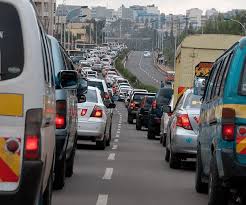
The National Transport and Safety Authority (NTSA) announced on Thursday, May 28, 2026, that motorists charged with minor traffic offences will now be able to settle fines without appearing in court, effective June 1, 2026.
The modernized enforcement framework was developed under Sections 117 and 117A of the Traffic Act (Cap. 403), and was finalized by NTSA in collaboration with the National Police Service, the Office of the Director of Public Prosecutions, the Judiciary, and other enforcement agencies.
Under the new system, motorists who commit certain minor traffic offences will no longer need to appear in court immediately. Instead, they will receive a Police Notification of Traffic Offence, detailing the alleged violation, supporting evidence, applicable penalty, payment instructions, and response timelines.
These notifications may be served through personal delivery by police officers, by affixing the notice to the vehicle, or electronically via SMS, email, or approved digital traffic enforcement platforms, according to NTSA.

Once notified, motorists have two options: they may admit liability and pay the prescribed fine within the stipulated period, or dispute the allegation in court.
NTSA also warned that motorists who fail to respond, pay fines, or appear in court when required may face harsher penalties imposed by the courts. The system additionally allows motorists to access evidence such as photographs or video recordings supporting the alleged offence.
This announcement is not Kenya’s first on this issue. NTSA launched an earlier Instant Fines Traffic Management System on March 9, 2026, as part of a government initiative to strengthen road safety and reduce corruption in traffic enforcement. The platform automatically sent traffic violation notifications via SMS to motorists, with fines payable through KCB Bank within seven days.
The backlash was swift. On March 12, Justice Bahati Mwamuye issued a conservatory order restraining NTSA and related parties from issuing or enforcing any traffic penalties generated through automated or algorithm based systems until the matter was fully heard. The petition was filed by legal advocacy group Sheria Mtaani, which argued the system violated motorists’ constitutional rights.
On Friday, March 27, NTSA Director General Nashon Kondiwa announced the suspension of the system, stating the reversal was necessary to allow for further civic education and public awareness on the proper procedures for handling minor traffic offences under the Traffic Act.
Two months later, the authority returns with a revised framework one that leans on human-involved notification rather than a fully automated algorithmic system, and that preserves the right to contest an offence in court. According to NTSA, the changes are aimed at enhancing road safety for all road users, improving compliance with traffic laws, reducing congestion in traffic courts, and promoting efficiency, transparency, and accountability in traffic enforcement.
The authority also assured that all personal data collected will be handled in accordance with the Constitution and the Data Protection Act.