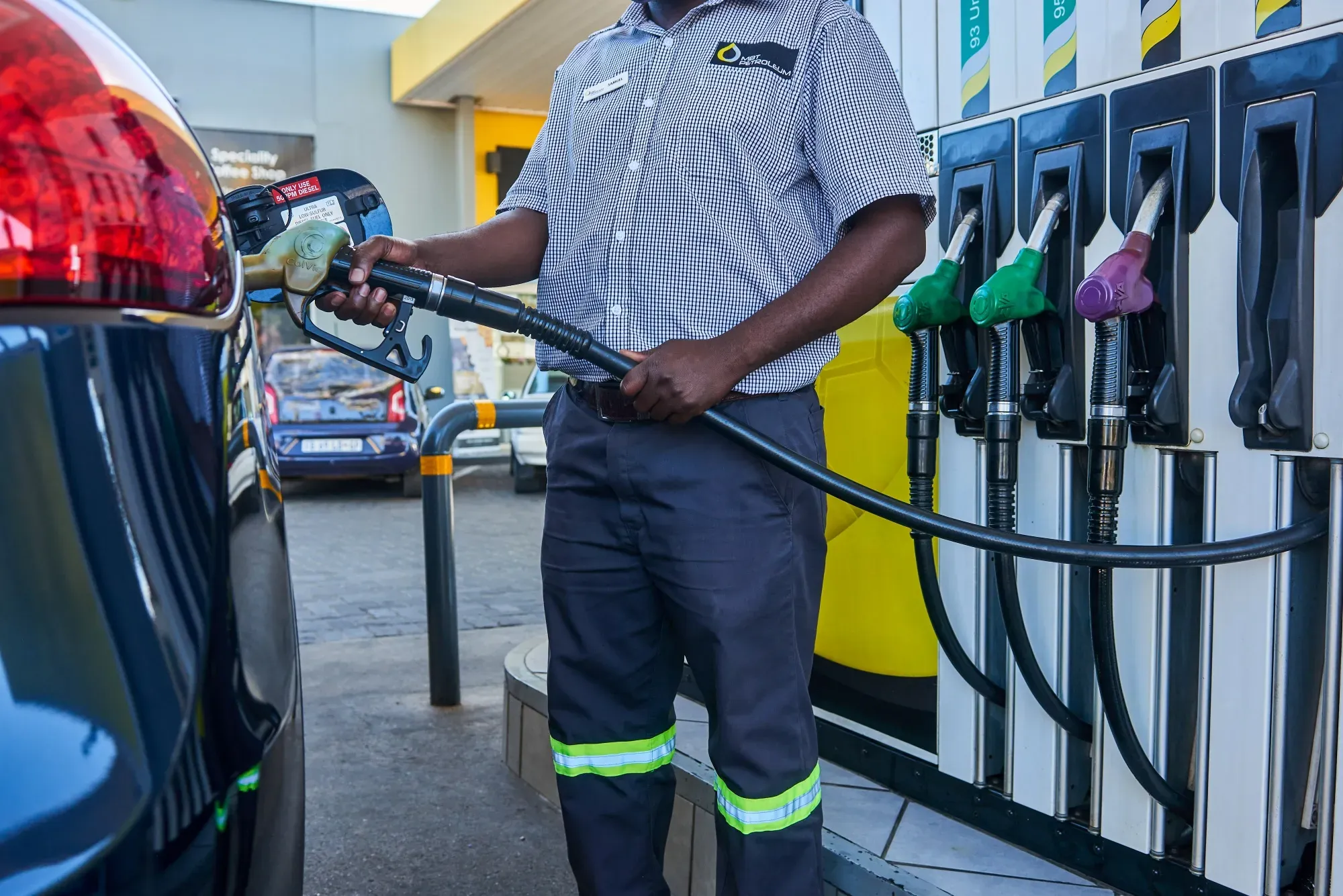
A new Mercy Corps report documents what many African consumers have long suspected: that fuel pump prices climb fast when global oil spikes, but crawl downward when it falls. For fragile economies already under pressure from war, displacement, and aid shortfalls, that asymmetry is not just an economic inconvenience — it is a humanitarian threat.
The accusation at the heart of the report
Mercy Corps, the global humanitarian organisation, has levelled a pointed charge at oil-importing countries: they are failing their populations by not passing on the benefits of falling crude prices to consumers at the pump. In its new report — titled From Hormuz to the Frontlines of Hunger: The Middle East War’s Reach into Six Fragile Contexts — the charity documents a pattern that will be familiar to anyone who has watched fuel pricing across import-dependent economies. Prices at the pump rise in lockstep with global benchmarks within days of an upward move, but take weeks or even months to reflect a downward correction.
This pricing asymmetry is not a new phenomenon in commodity economics, but Mercy Corps is surfacing it at a moment when the human cost of that delay is especially acute. The ongoing conflict in the Middle East has sent Brent crude on a volatile trajectory — rising from roughly $71 per barrel before the war began to a peak daily close of $138.21 on April 7, just before a ceasefire announcement triggered an 11.6 per cent single-day drop to $122.11 on April 8. By late April, prices had climbed back toward $108 as US–Iran peace talks stalled and the Strait of Hormuz blockade tightened, before settling around $104 on April 28.


The 46 per cent problem
The most striking number in the Mercy Corps data is not the peak price itself, but the persistence of elevated costs. From April 27 to 28, Brent remained between 46 and 51 per cent above its pre-war level. On a monthly basis, the average Brent price rose 46 per cent from February to March alone — a benchmark that directly feeds into import parity pricing, the mechanism that determines what fuel-dependent countries actually pay once shipping, insurance, tariffs, and handling costs are factored in.
For countries that import virtually all of their petroleum, there is little domestic buffer between a global price shock and the petrol station forecourt. When that shock is sustained rather than transient, the effects compound — flowing from transport costs into food prices, agricultural inputs, and the logistics of humanitarian operations. “Households and retailers across the case study countries are continuing to pay high prices at the pump, with knock-on effects for food prices, agricultural inputs, and humanitarian supply chains,” the report states, as cited in The East African’s coverage by James Anyanzwa.
Sudan, Somalia, Ethiopia: already past breaking point
Mercy Corps identifies six countries as the most exposed globally to this fuel-driven cost shock: Sudan, Somalia, Ethiopia, Pakistan, Myanmar, and Lebanon. Three of those — Sudan, Somalia, and Ethiopia — are African nations that were already navigating devastating humanitarian and displacement crises well before the Middle East conflict escalated on February 28.
That context is critical. These are not economies with fiscal shock absorbers. They are, as the report puts it, countries that “have now exhausted their capacity to withstand further shocks.” For them, a sustained 46-plus per cent increase in landed fuel costs is not an inconvenience to be managed — it is a force multiplier on existing fragility. Every dollar added to the cost of delivering food aid, running water pumps, or transporting seed for the planting season is a dollar subtracted from already depleted response capacity.
The Mercy Corps report is a valuable piece of accountability journalism in data form. It names a structural problem — the asymmetric transmission of global oil prices in import-dependent economies — and maps its human consequences with precision. What it cannot do is compel governments to act. That pressure must come from informed publics, regional institutions, and development partners who are willing to connect the dots between the Strait of Hormuz, a Brent crude chart, and a family in the Horn of Africa unable to afford the fuel to cook a meal. This is one of those moments when the phrase “global crisis” should be taken literally rather than used metaphorically.
This commentary is based on reporting by James Anyanzwa, published in The East African under the headline “Mercy Corps blames high pump prices on importers.” All factual data and claims are drawn exclusively from that report and the Mercy Corps publication it references. No additional assertions have been introduced.