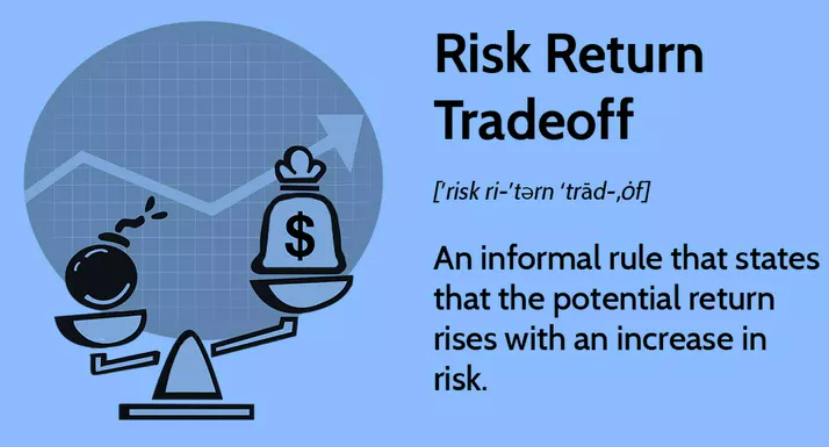
The relationship between risk and return is a central principle in investment analysis, guiding how individuals and institutions allocate capital across different assets. Commonly referred to as the risk-return tradeoff, this concept suggests that higher potential returns are generally associated with higher levels of risk. Understanding this relationship is essential for constructing investment portfolios that align with specific financial goals, time horizons, and risk tolerance.
Risk in investments refers to the uncertainty surrounding the expected return of an asset. This uncertainty can arise from various sources, including market volatility, economic conditions, interest rate changes, and company-specific factors. Different asset classes carry varying levels of risk. For example, equities are typically considered higher-risk investments due to price fluctuations, while government securities are generally viewed as lower-risk because of their relative stability and predictable returns.
Return, on the other hand, represents the gain or loss generated from an investment over a given period. Investors seek to maximize returns while managing the level of risk they are exposed to. However, achieving higher returns often requires accepting greater uncertainty. This tradeoff is a fundamental consideration in portfolio construction, as investors must balance their desire for growth with their ability to withstand potential losses.
Diversification is one of the primary strategies used to manage the risk-return tradeoff. By spreading investments across different asset classes, sectors, and geographic regions, investors can reduce the impact of poor performance in any single investment. Diversification does not eliminate risk entirely but helps create a more stable overall return profile by balancing potential gains and losses.


Time horizon is another important factor in assessing the risk-return relationship. Investors with longer investment horizons may be more willing to take on higher risk, as they have more time to recover from short-term market fluctuations. In contrast, those with shorter time frames often prioritize capital preservation and may prefer lower-risk investments with more predictable returns.
Market conditions also influence the risk-return tradeoff. During periods of economic expansion, investors may be more willing to take on risk in pursuit of higher returns. Conversely, during times of uncertainty or market downturns, there is often a shift toward safer assets as investors seek to protect their capital. These shifts in investor behavior can affect asset prices and overall market dynamics.
Understanding individual risk tolerance is crucial in making investment decisions. Factors such as income stability, financial goals, and personal preferences all play a role in determining how much risk an investor is willing to accept. A well-structured investment strategy takes these factors into account, ensuring that the portfolio is aligned with both financial objectives and comfort levels.
In conclusion, the risk-return tradeoff is a fundamental concept that underpins all investment decisions. By carefully balancing risk and return, and by adopting strategies such as diversification and long-term planning, investors can build portfolios that support sustainable financial growth while managing uncertainty.