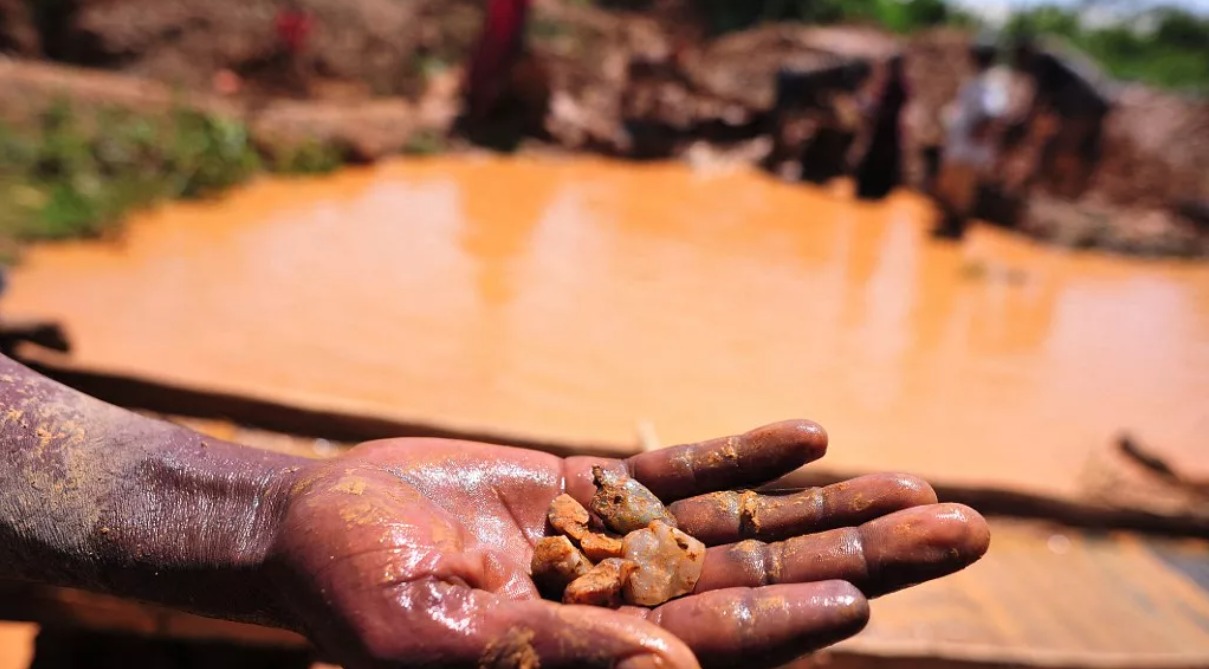
Kenya’s mining sector is experiencing renewed investor interest following a series of regulatory reforms, with Shanta Gold committing approximately Sh66 billion (about $500 million) to gold exploration and development. The investment signals a shift in sentiment toward a sector that has historically faced regulatory uncertainty and limited large-scale capital inflows.
The planned investment will focus on gold mining operations in Kakamega County, particularly in regions such as Siaya and the broader Luhya Belt. These areas have increasingly attracted attention due to their geological potential, positioning Kenya as an emerging player in regional gold production. The scale of the commitment reflects growing confidence in the country’s mineral prospects, particularly after policy adjustments aimed at improving the investment climate.
Recent reforms in Kenya’s mining sector have played a central role in attracting new capital. Changes implemented between 2019 and October 2023 simplified licensing procedures and reduced administrative bottlenecks. Notably, the cost of applying for mining rights was significantly lowered from approximately $5,000 to $500, making entry more accessible for investors. At the same time, the validity period for prospecting licenses was extended, enabling firms to undertake longer-term exploration activities.
These adjustments appear to have had a measurable impact. Data indicates that the value of gold production in Kenya has been rising, with output trends showing a steady increase in recent years. While production levels remain modest compared to established mining jurisdictions, the upward trajectory suggests that reforms are beginning to translate into tangible sector growth.


The government has also introduced stricter compliance requirements aimed at enhancing transparency and accountability. Investors are now required to submit detailed documentation, including ownership structures, proof of financial capacity, and environmental compliance certifications during the licensing process. This dual approach—lowering entry barriers while strengthening oversight—reflects an effort to balance investment attraction with regulatory integrity.
Shanta Gold’s expansion strategy aligns with this evolving policy environment. The company’s focus on Kenya complements its existing operations in East Africa, reinforcing a regional growth model centered on underexplored mineral belts. The investment is expected to support exploration, infrastructure development, and eventual production activities, potentially contributing to employment creation and local economic development.
Beyond gold, Kenya is also positioning itself to diversify its mineral portfolio. Increased exploration activity is being observed in sectors such as rare earth elements, manganese, and other strategic minerals. This diversification strategy is intended to reduce reliance on a narrow resource base while aligning with global demand trends for critical minerals.
However, challenges remain. Community relations, environmental concerns, and land access issues continue to influence project timelines and investor confidence. Protests in some mining regions highlight the importance of stakeholder engagement and equitable benefit-sharing frameworks.
Overall, the Sh66 billion investment by Shanta Gold underscores a broader shift in Kenya’s mining landscape. Regulatory reforms, improved licensing conditions, and rising global demand for minerals are converging to reshape the sector. While risks persist, the current trajectory suggests that Kenya is gradually emerging as a more competitive destination for mining investment in the region.