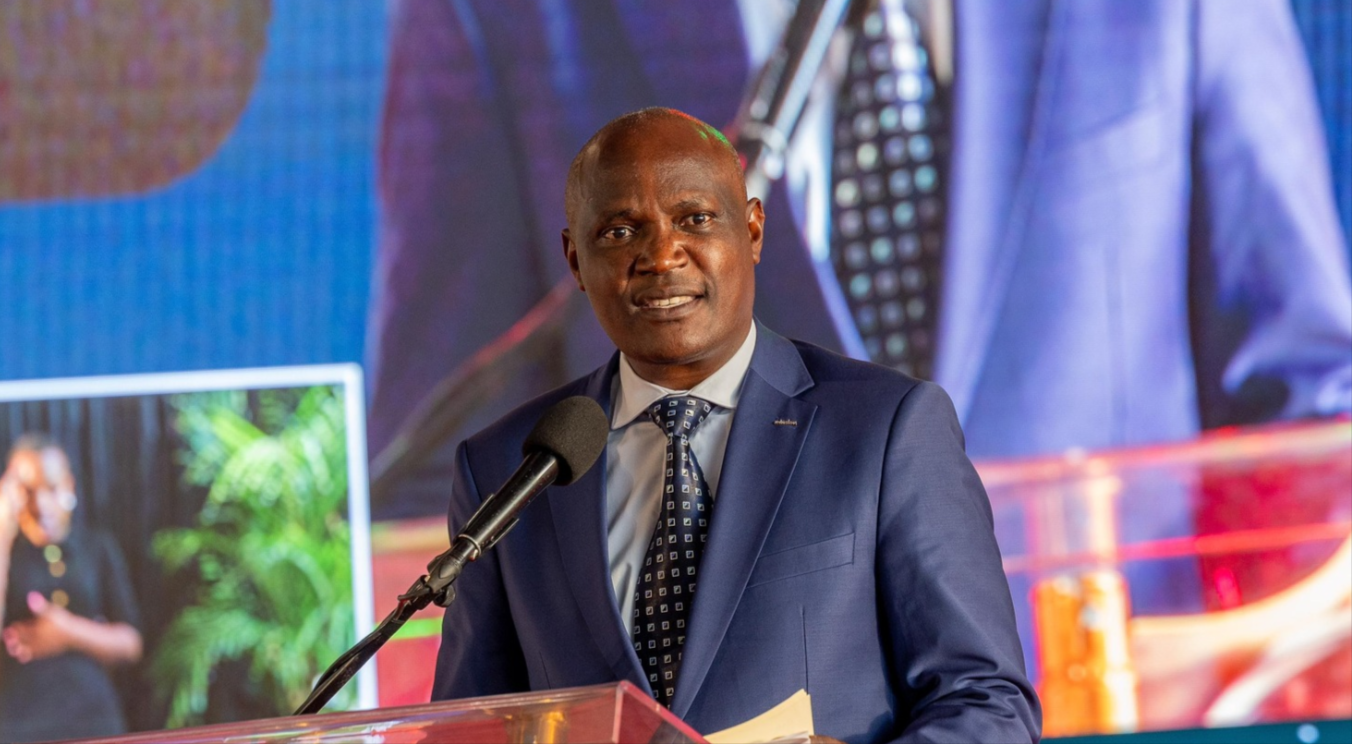
Kenya’s Treasury Cabinet Secretary, John Mbadi, openly criticized the country’s recent interactions with the International Monetary Fund (IMF), describing the experience as “embarrassing” during his address at the Taxpayers Day celebrations.
Recalling the scene in Washington, Mbadi said African nations, including Kenya, queued in hallways and were called one by one for financial discussions. “For those of us who have some pride, it’s a bit demeaning,” he remarked.
Mbadi’s comments came as he urged Kenya to step up its domestic revenue efforts, reducing reliance on international loans. He highlighted Kenya’s potential to close its budget deficit with internal resources, estimating that streamlined tax policies could yield up to KES 400 billion annually. This sum, he noted, is considerably higher than the recent KES 78 billion IMF disbursement Kenya received. “If we just tighten our system, we can do without some of these monies,” Mbadi stated.
The Treasury Secretary commended Kenya’s resilience amid global economic headwinds, citing steady GDP growth and revenue improvements. The Kenyan economy expanded by 5% in the first quarter of 2024, with projections of a 5.2% growth rate in 2025. He noted that Kenya’s tax revenue collection has tripled over the last decade to reach KES 2.7 trillion but admitted that significant revenue gaps persist, largely due to tax evasion and untapped potential in the informal and digital sectors.
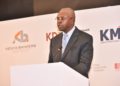
According to Mbadi, Kenya’s tax revenue currently accounts for just 11% of GDP, well below the Treasury’s target of 22%. To address this, he outlined several proposed reforms, including reducing corporate tax rates from 30% to 25% and lowering VAT from 16% to 14%, contingent on improved compliance rates. “Our tax policy aims to protect existing businesses from over-taxation while bringing untaxed sectors into the fold,” Mbadi explained, adding that equitable taxation would foster broader economic growth.
Key to these efforts, Mbadi noted, would be enhancing Kenya’s tax collection system through digitization. Leveraging technology, he argued, could reduce revenue leaks and improve compliance by identifying untaxed or under-taxed entities. “Enhanced digital infrastructure will revolutionize tax processes and seal revenue loopholes,” he said, citing the Treasury’s commitment to boost the tax-to-GDP ratio through better tracking and data management.
Mbadi also addressed concerns raised by Kenya Revenue Authority (KRA) staff about compensation and working conditions. Acknowledging their role in maintaining a sustainable revenue system, he pledged to prioritize adequate funding for KRA staff in the Treasury’s upcoming budget. “We must feed the cow we milk,” he said, emphasizing the importance of staff motivation and efficient service delivery.
In addition to tax policy reforms, Mbadi encouraged greater private-sector investment and regional cooperation to support Kenya’s long-term economic objectives. He reassured the public and business community that the proposed tax measures were crafted with their interests in mind, promising that the government remains committed to avoiding over-taxation and improving transparency in revenue collection.
He also called for public engagement, urging citizens to review and provide feedback on the Treasury’s proposals. “These policies are not meant to punish or target Kenyans,” he said. Rather, he urged the nation to come together to strengthen the country’s economic foundation. “Let us engage as a country,” Mbadi appealed.