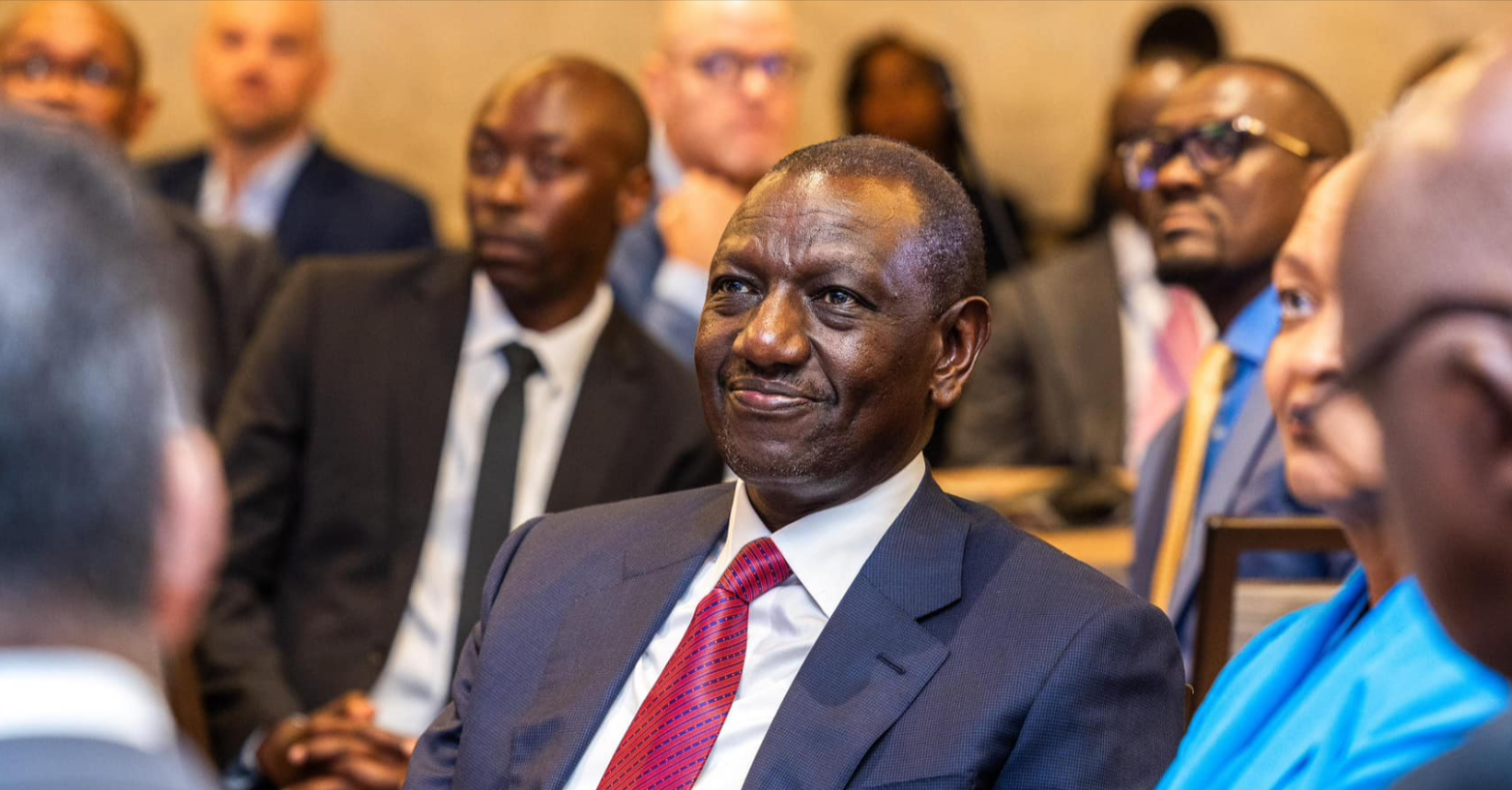
President William Ruto’s endorsement of Starlink’s entry into the country at the U.S.-Kenya Business and Investment Roundtable in New York has intensified competition in the telecommunications sector, posing a significant challenge to Safaricom. The move follows Safaricom’s ongoing efforts to limit independent satellite service providers’ market access, warning of potential risks and disruptions.
Ruto welcomed the introduction of Elon Musk’s Starlink to Kenya during the U.S.-Kenya Business and Investment Roundtable in New York. This announcement has raised concerns at Safaricom, the nation’s leading telecommunications provider, which has been vocal about the potential market disruptions that Starlink could create.
“I know I have my CEO for Safaricom here, sometimes he’s not very happy with me for bringing other characters like Elon Musk into the space,” President Ruto remarked. Safaricom’s CEO, Peter Ndegwa, has previously expressed reservations about the arrival of satellite-based internet providers, especially as the market shifts toward independent operators like Starlink.
Safaricom has actively sought to influence the Communications Authority of Kenya’s (CA) stance on licensing satellite service providers. In a letter dated July 5, 2024, Safaricom urged the CA to reconsider its approach to granting independent licenses to satellite operators such as Starlink. The telecommunications giant argued that satellite service providers should operate as infrastructure suppliers under agreements with local companies rather than being allowed to compete directly. Safaricom contends that this would mitigate potential harm to the domestic market.
“Safaricom kindly requests the Communications Authority of Kenya to carefully assess the risks of granting independent licenses to satellite service providers and the consequent harm it may cause to Kenya,” the letter states. The company further highlighted its significant investments in operating and radiofrequency spectrum licenses, noting that an unregulated influx of satellite providers could erode Safaricom’s ability to maintain these investments.


Starlink’s entry into Kenya is significant, especially given its ability to provide high-speed internet in underserved areas through its constellation of low Earth orbit satellites. In a country where many rural regions still lack reliable broadband connectivity, Starlink’s satellite internet service could fill critical gaps, potentially diminishing Safaricom’s dominance in the market.
Starlink has already started making its hardware kits widely available across Kenya, including through retailers like Carrefour, and has introduced rental options to lower the entry barriers for customers. The pricing for these services is competitive, ranging from KES 1,300 for a 50GB monthly plan to KES 6,500 for an unlimited data plan, with a one-time activation fee of KES 2,700. Payments can be made via M-Pesa, Safaricom’s flagship mobile money service, offering a convenient and familiar payment method for customers.
However, Safaricom’s concerns about Starlink extend beyond pricing and accessibility. The telecommunications company has partnered with Avellan Space Technology & Science (AST) to leverage satellite technology under a more controlled framework, where AST serves as an infrastructure provider rather than an independent operator. Safaricom’s approach reflects its desire to maintain control over the rapidly evolving digital landscape while avoiding direct competition with global players like Starlink.
Despite Safaricom’s reservations, President Ruto has made it clear that he supports competition in the telecommunications sector as a means of driving innovation. During his speech in New York, he pointed out that competition forces companies to improve their offerings, noting that Safaricom has “upped its game” in response to the growing pressure.
“We are currently engaged in spreading the fiber optic footprint around Kenya, but there is also room for satellite providers like Starlink to fill in the gaps,” Ruto said, inviting American companies to invest in Kenya’s digital infrastructure. He further emphasized that the country’s goal is to ensure every citizen has access to high-speed internet, particularly in rural areas where traditional broadband infrastructure is difficult to implement.
While Safaricom continues to raise concerns over the regulatory implications of granting independent licenses to satellite service providers, the government appears committed to embracing new technologies that can accelerate Kenya’s digital transformation. The arrival of Starlink, coupled with President Ruto’s pro-competition stance, may well signify a shift in the telecommunications landscape, with Safaricom now facing its most formidable competitor yet.