In the heart of England, specifically Oxfordshire, a captivating trend has surged in the real estate world: self-build. As the name suggests, this concept involves individuals, families, and friends taking control of their home ownership journey by crafting their dream abodes.
In contrast to conventional construction models, self-build projects grant owners more influence over the construction process, sometimes acting as project managers. This approach allows for creativity in home design and offers individuals the opportunity to build energy-efficient dream homes on affordable budgets.
However, self-build doesn’t always entail physical construction work, and owners often collaborate with architects, engineers, designers, contractors, and service providers to engage in all aspects of development.
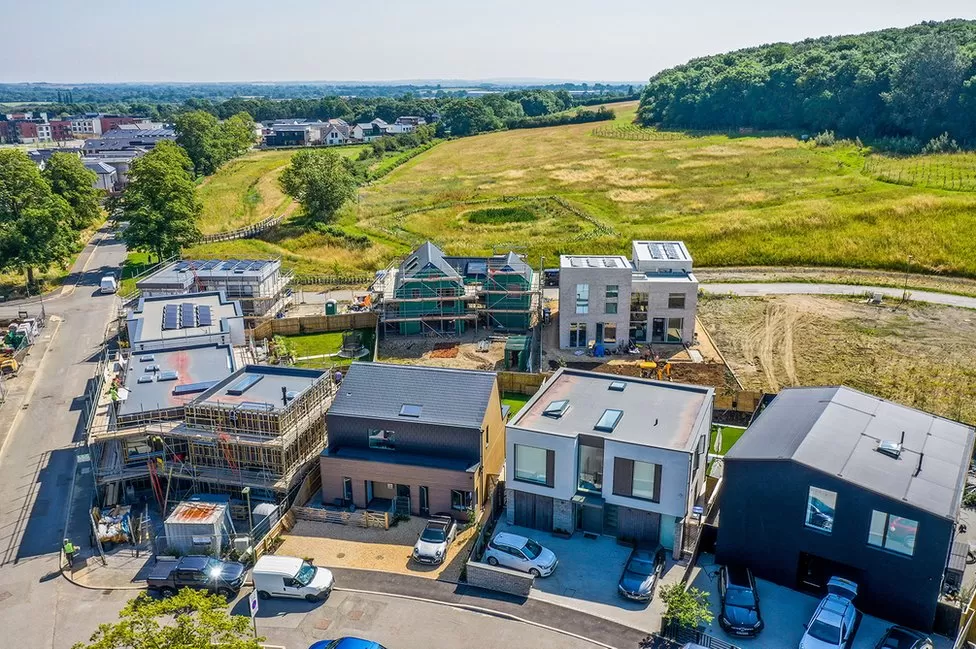
Graven Hill, located in Oxfordshire, currently stands as the largest self-build site in the United Kingdom. The land, initially sold by the Cherwell District Council to pioneering self-builders, resulted in an impressive street comprising ten uniquely designed houses.


Inspired by successful self-building ventures in Almere, Holland, Graven Hill unveiled a masterplan for 1,900 homes, each a testament to individuality and originality. This echoes a European trend where up to 80.0% of new homes in countries like Austria are self-built.
Similar to other self-build initiatives, Graven Hill offered various plots at discounted prices, catering to different budgets. These plots came with pre-approved outline planning and utility services, streamlining the construction process. This approach provides aspiring homeowners with design freedom, ready infrastructure, tax exemptions, subsidies, and the opportunity to join a community of like-minded individuals.
While self-build projects are well-established in European countries, the same cannot be said for Africa. However, following the success of Graven Hill, other county governments in the United Kingdom have adopted self-build frameworks to address the demand for affordable housing. These frameworks include self-build individual plots, custom build homes, community-led housing, co-housing, and developer-led builds. Across Europe, approximately 50.0% of newly built homes in countries such as Belgium, Italy, Sweden, Norway, Germany, and Switzerland are self-built.
Furthermore, a paper by students from the University College London explores the feasibility of eco-self-build housing communities, highlighting their potential to foster sustainable and low-carbon lifestyles. Compared to conventional approaches, co-self-build communities offer advantages in delivering wider social, environmental, and economic sustainability objectives by incorporating innovative and sustainable technologies.
Self-building not only reduces construction costs but also allows for tailored homes that reflect individual needs and personalities. This framework shifts the responsibility of overseeing construction and financing developments away from the government, ensuring genuine affordability. This approach results in realistically priced homes for a broader range of individuals, in contrast to developer-built houses sold at set profit margins.
In the ever-evolving landscape of homeownership, the self-build revolution stands as a beacon of individual empowerment and creative expression. As the concept expands into Africa, particularly in countries like Kenya with a demand for 200,000 new homes annually, the self-build approach emerges as a potential game-changer.
This empowering framework could be the key to addressing the housing deficit in Africa, turning dreams of homeownership into personalized realities. It’s not just about constructing houses; it’s about empowering citizens to shape their destinies and create affordable, personalized havens.
Email your news TIPS to sharpdailyke@gmail.com