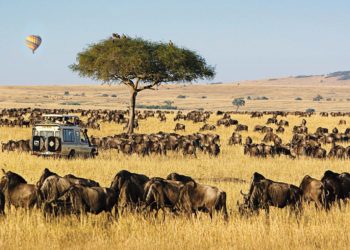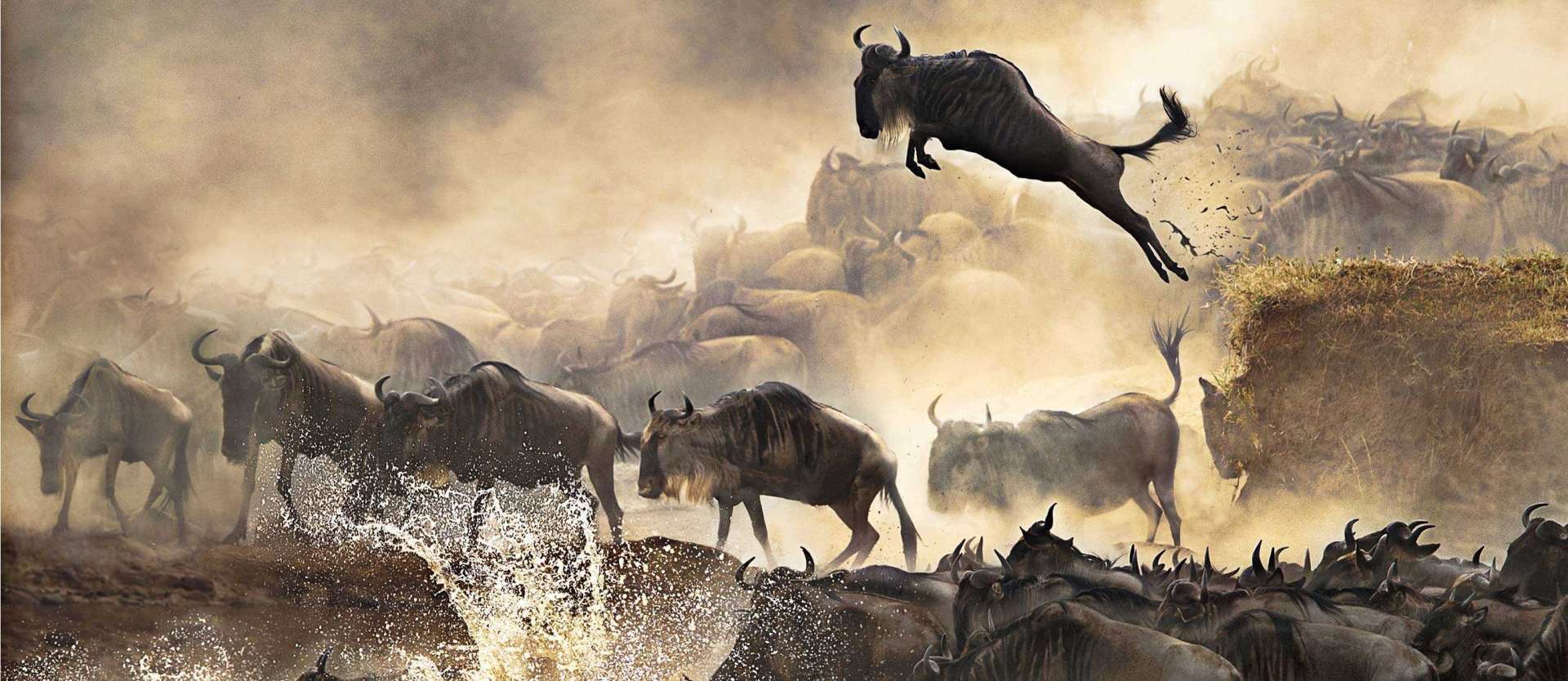
Every year, over a million wildebeest thunder across the Serengeti and into the Maasai Mara, driven by nothing but instinct and the call of rain. Known as the Great Wildebeest Migration, this natural phenomenon is often described in numbers: 1.5 million wildebeest, 500,000 zebras, 1,000 km traveled.
But what if we stopped looking at it purely through a wildlife lens?
What if we saw it as a blueprint for movement, adaptation, and growth?
Lets explore five unexpected life and travel lessons inspired by this great journey… Lessons that resonate far beyond the savannah.


1. Trust Your Instincts (Even When the Path Isn’t Clear)
The migration doesn’t follow a set trail or fixed itinerary. The wildebeest navigate based on the subtlest signs: a distant thunderstorm, a shift in wind, a patch of green on the horizon.
As travelers, we often plan every step, every booking, every moment. But there’s something to be said for surrendering control, for trusting our instincts when choosing a destination, following a local tip, or saying yes to something unplanned.
Like the wildebeest, sometimes the most meaningful journeys are the ones that aren’t fully mapped out.
2. The Journey Is the Destination
The world focuses on the dramatic river crossings, the perilous plunge through crocodile-infested waters. But in reality, the migration is a slow, steady movement that spans the entire year, across endless plains and dusty trails.
Most of the journey is quiet, rhythmic, even repetitive.
And that’s the point.
In a world obsessed with highlights and must-sees, the wildebeest remind us that travel is not about the moment you arrive, it’s about everything in between. Embrace slow travel. Notice the details. Let the road transform you.
3. We’re Stronger Together
Wildebeest move in herds because it increases their chances of survival. The more eyes, the more protection. The more hooves, the greater the impact. Even predators hesitate when the herd is strong.
In travel, and in life, we’re not meant to go it alone. Whether it’s joining a group trip, bonding with strangers in a new city, or relying on locals for advice, community shapes the richness of our journey.
Solo travel is powerful, yes. But shared experiences? They’re unforgettable.
4. Adaptability is the Ultimate Survival Skill
Climate patterns shift. Predators change tactics. Water sources dry up.
And still, the wildebeest move forward.
Today’s traveler faces their own uncertainties, canceled flights, changing border rules, new global norms. The ability to adapt on the go is more valuable than ever.
Flexibility isn’t just a convenience anymore it’s a superpower.
5. Nature Moves in Cycles, So Should We
The migration doesn’t have a final destination. It’s circular. Each year, the herds return to where they began. And yet, it’s never the same journey.
That cyclical rhythm is something modern travel (and modern life) often forgets. We’re taught to always chase something new, to move forward in straight lines.
But returning to a place, a memory, a slower rhythm, can be deeply renewing.
Let the wildebeest remind us: there’s value in coming full circle.