Sharp Daily
No Result
View All Result
Monday, January 26, 2026
  • Home
  • News
    • Politics
  • Business
    • Banking
  • Investments
  • Technology
  • Startups
  • Real Estate
  • Features
  • Appointments
  • About Us
    • Meet The Team
Sharp Daily
  • Home
  • News
    • Politics
  • Business
    • Banking
  • Investments
  • Technology
  • Startups
  • Real Estate
  • Features
  • Appointments
  • About Us
    • Meet The Team
No Result
View All Result
Sharp Daily
No Result
View All Result
Home News

Safaricom Announces 10.6 % PAT Decline in FY’22/23

Dennis Otsieno by Dennis Otsieno
May 11, 2023
in News
Reading Time: 2 mins read
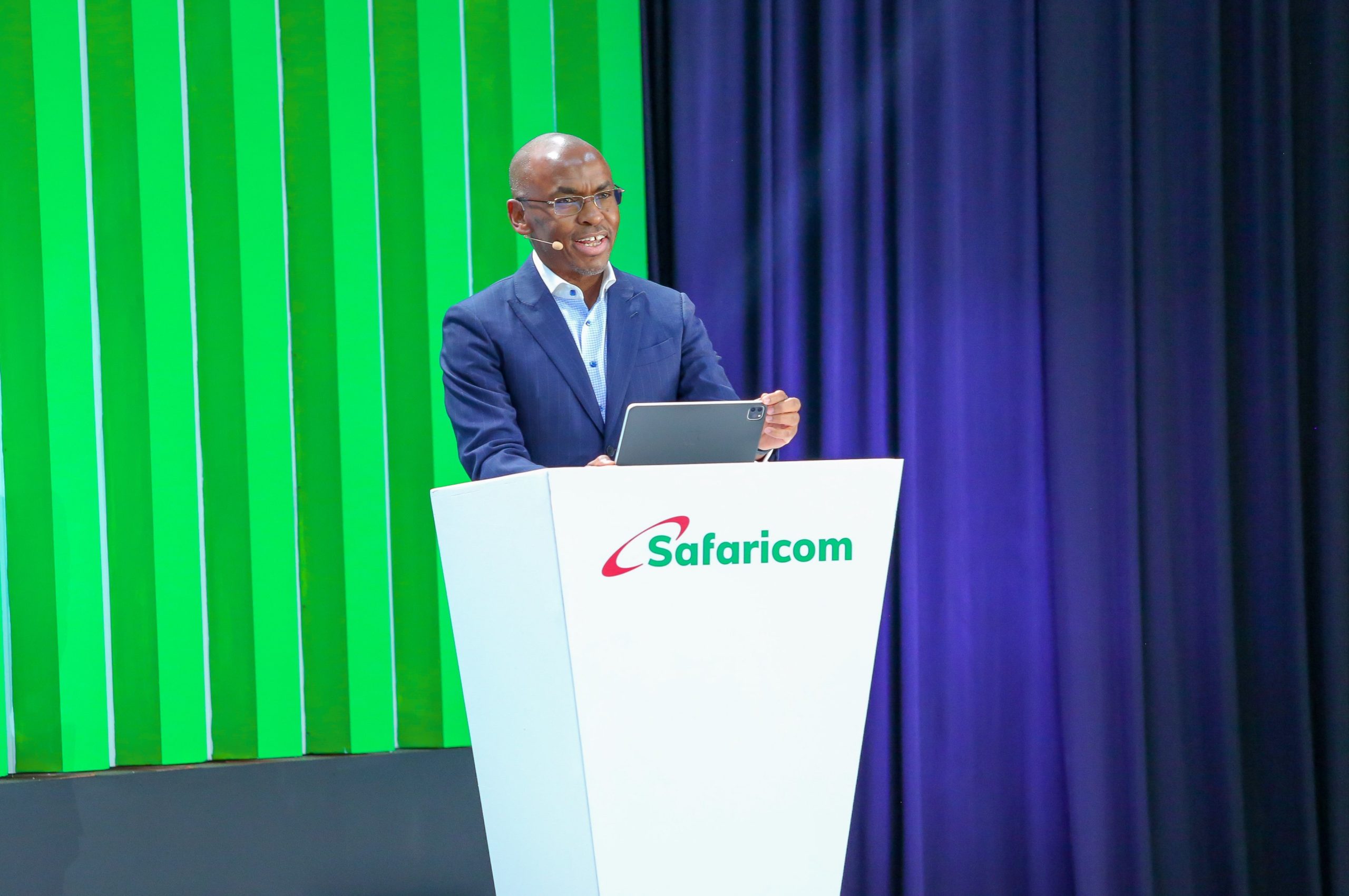
Safaricom CEO Peter Ndegwa

Safaricom CEO Peter Ndegwa [Photo/Courtesy]

Safaricom PLC has reported a 10.6 percent decline in profit after tax for the year ended March 2023.

This has been attributed to inflation pressures on customers’ spending and high investment cost in Ethiopia.

Even so, the revenue growth was underpinned by robust growth in M-Pesa and data revenue.

M-Pesa now contributes to 39.7 percent of Safaricom’s revenue and mobile data contributes 18.2 percent.

RELATEDPOSTS

Safaricom plans rollout of tokenised Wi-Fi and prepaid fibre with flexible internet payments in FY2026

January 20, 2026

Safaricom says SHA can deduct money from M-Pesa accounts without a pin when standing orders are active

January 15, 2026

The telco reported a net earning of Kshs 62.3 billion during the year under review compared to Kshs 67.49 billion in the same period last year.

The firm’s service revenue closed the year at Kshs 297.2 billion (adjusted for mobile termination rates impact), 5.72% up year-on-year. Without adjustment, it is Kshs 295.2 billion.

This is the firm’s third straight drop in a row after it posted a 6.8 percent profit retreat in 2021 to Kshs 68.67 billion, which was the first in nine years.

The board has recommended a final dividend of Kshs 0.62 per share.

Safaricom Plc chief executive officer Peter Ndegwa attributed the drop to harsh economic times that saw customers cut on their voice budget, opting for social media. High investment costs in the Ethiopian market also ate into the profits.

Read: Safaricom’s Plan to Launch M-Pesa Services in Ethiopia Completed

“We have delivered a solid set of results despite the tough operating environment occasioned by a slowdown in business activity in an election year in Kenya, tough macro environment as well as change in mobile termination rates which impacted our voice revenues significantly,” Ndegwa said.

He reassured investors that the business is stable and regained a strong positive momentum in the second half of the year.

Looking into the future, he is optimistic that the business is well positioned to support customers and provide technology solutions as the firm transitions into a purpose-led technology organisation.

Crossing the 50 per cent threshold meant that Safaricom’s market worth exceeded the combined valuation of all the other listed companies.

This raised market concentration concerns given that the top five firms —Safaricom, Equity Group, KCB, EABL and Co-operative Bank —accounted for more than 80 per cent of the NSE’s valuation, while also dominating daily trading volumes.

Email your news TIPS to editor@thesharpdaily.com

Previous Post

Kenya Shilling to Continue Depreciating- Absa Bank Report

Next Post

President Ruto’s Housing Fund: A Great Idea Badly Structured?

Dennis Otsieno

Dennis Otsieno

Related Posts

News

Public enterprises in the capital market

January 23, 2026
News

Why Bank Lending Rates Remain Sticky Despite CBK Policy Signals

January 23, 2026
News

The Rising Foreign Ownership of Kenyan Banks: Opportunity, Risk, or Market Maturity?

January 23, 2026
News

Fuel price decline as a hidden stimulus

January 23, 2026
News

Beyond Representation: Are Kenya’s Foreign Missions Engines of Economic Growth?

January 23, 2026
News

Beyond Compliance: Why Money Laundering Is a Development Problem

January 23, 2026

LATEST STORIES

Why the Two-tiered Structure in NSSF is Important

January 23, 2026

Public enterprises in the capital market

January 23, 2026

Why Bank Lending Rates Remain Sticky Despite CBK Policy Signals

January 23, 2026

The Rising Foreign Ownership of Kenyan Banks: Opportunity, Risk, or Market Maturity?

January 23, 2026

Fuel price decline as a hidden stimulus

January 23, 2026

Beyond Representation: Are Kenya’s Foreign Missions Engines of Economic Growth?

January 23, 2026

Beyond Compliance: Why Money Laundering Is a Development Problem

January 23, 2026

LAPSSET: Delayed Vision or Long-Term Bet on Regional Integration?

January 23, 2026
  • About Us
  • Meet The Team
  • Careers
  • Privacy Policy
  • Terms and Conditions
Email us: editor@thesharpdaily.com

Sharp Daily © 2024

No Result
View All Result
  • Home
  • News
    • Politics
  • Business
    • Banking
  • Investments
  • Technology
  • Startups
  • Real Estate
  • Features
  • Appointments
  • About Us
    • Meet The Team

Sharp Daily © 2024