Kenya Moves Toward Open Finance
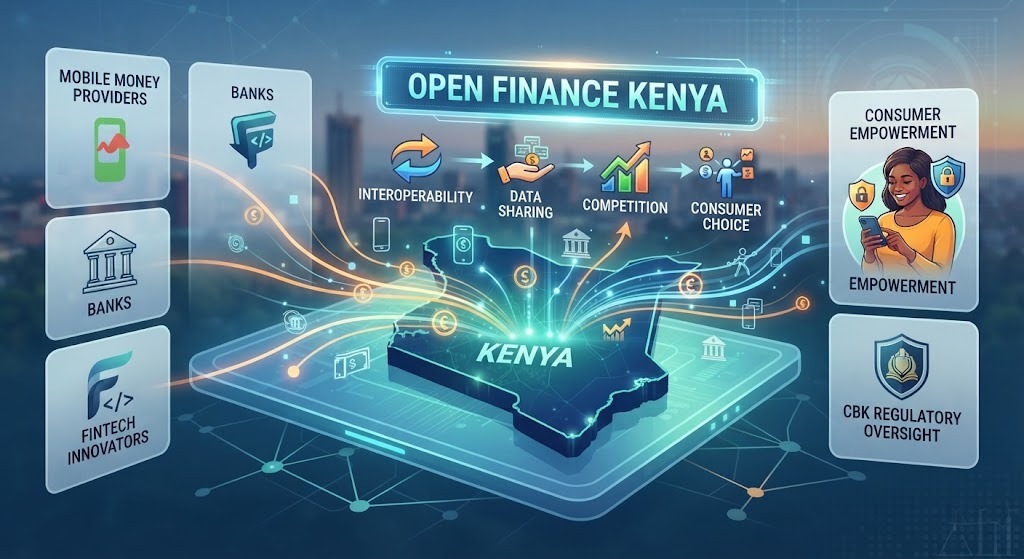
Open Finance Kenya could mark a major shift in the country’s digital financial-services landscape as the proposed National Payment System Bill, 2026 seeks to modernize the payments framework and strengthen competition across the sector. The proposed legislation introduces measures aimed at improving interoperability while establishing a framework that could allow consumers to share financial information with licensed third parties. These changes could significantly influence how banks, mobile money providers and fintech companies develop and deliver financial services.
Interoperability Could Increase Competition
A major feature of the proposed framework is its focus on interoperability across payment systems. Greater interoperability could make it easier for customers to transact across different financial platforms without being restricted by systems operated by individual providers. For consumers, this could translate into greater convenience and potentially lower transaction costs. For financial institutions and fintechs, however, increased interoperability could intensify competition by reducing the advantages created by closed or proprietary payment ecosystems.
Financial Data Could Power New Services
The proposed open-finance framework also places greater emphasis on allowing customers to authorize licensed third parties to access their financial information. This could enable fintech companies to develop services using a broader view of a customer’s financial position, subject to appropriate consent and regulatory safeguards. Access to reliable financial data could support more personalized lending, payments, savings, investment and financial-management products while creating opportunities for new business models within Kenya’s fintech sector.
Stronger CBK Oversight
The proposed reforms could also strengthen the regulatory role of the Central Bank of Kenya (CBK) over payment service providers. Recent reporting indicates that the proposed framework could give the regulator stronger powers to intervene where payment firms present risks to consumers or the wider financial system. Stronger supervision could help address operational, liquidity, consumer-protection and other risks as the payments ecosystem becomes increasingly interconnected.


M-Pesa, Banks and Fintechs Face New Competition
The transition toward open finance could reshape the competitive relationship between established financial institutions and fintech companies. Platforms such as M-Pesa and traditional banks have built extensive customer ecosystems, while fintechs have increasingly competed by offering specialized and technology-driven services. Greater interoperability and data portability could reduce barriers to entry and allow smaller innovators to build services around existing financial infrastructure. Established providers may consequently face greater pressure to compete on customer experience, pricing and product innovation.
Consumer Protection Will Be Critical
While Open Finance Kenya could create significant opportunities, the success of the framework will depend heavily on consumer protection and data governance. Greater access to financial information increases the importance of ensuring that customers understand how their data is being used, who can access it and for what purpose. Clear consent requirements, cybersecurity standards and effective regulatory oversight will therefore be essential in maintaining consumer trust as financial services become increasingly interconnected.
A Potential Turning Point for Fintech
The proposed National Payment System Bill could mark an important shift in Kenya’s digital financial-services landscape. By promoting interoperability, enabling greater data portability and strengthening regulatory oversight, the framework could create room for new products while encouraging existing providers to innovate. For investors and businesses, the development of Open Finance Kenya will therefore be worth monitoring closely as the country seeks to maintain its position as one of Africa’s leading digital-finance markets.