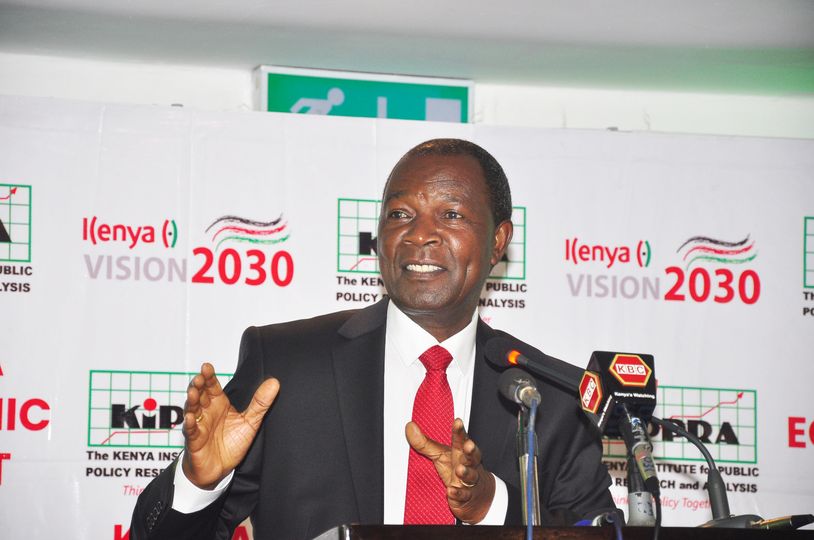
The Kenya Institute for Public Policy Research and Analysis (KIPPRA) has unveiled its annual Kenya Economic Report 2023. This comprehensive report meticulously evaluates Kenya’s economic performance while shedding light on its medium-term prospects, with a particular focus on addressing the mounting cost of living.
The Kenya Economic Report 2023’s release is particularly timely, given the inflationary pressures currently affecting the nation. It closely aligns with the Bottom-up Economic Transformation Agenda (BETA), a government initiative aimed at fortifying the economic foundation and trajectory to facilitate inclusive growth. Central to this agenda is the recognition of well-functioning markets as pivotal in managing the cost of living and ensuring accessibility and affordability of goods and services for all citizens.
Strategic Approaches for Cost of Living Management
The report furnishes substantial policy evidence and recommendations for fostering well-functioning markets through a range of strategies, including:


- Sustaining macroeconomic stability
- Enhancing production and agro-processing to secure a stable food supply
- Improving trade and distribution logistics
- Augmenting household incomes
- Broadening financial access
- Investing in infrastructure development
- Institutional transformation
- Provision of quality market information
Government Initiatives
The Kenyan government has implemented a series of measures to alleviate the high cost of living, including tightening monetary policy to curb inflationary expectations, subsidizing fertilizers to bolster agricultural productivity, and bridging food supply gaps through imports. Additionally, the establishment of a financial inclusion fund, known as the Hustler Fund, and the reduction of import duties to encourage electric vehicle adoption are in progress while competition and consumer protection laws are being enacted to enhance the business environment. Nevertheless, the report underscores the significance of strengthening market systems to further mitigate the cost of living.
Macroeconomic Performance
In 2022, the Kenyan economy encountered challenges stemming from a protracted drought, global geopolitical tensions (Russia-Ukraine conflict), and tightened global financial markets. Consequently, the growth rate dropped to 4.8%, down from 7.6% in 2021. Inflation rates exceeded the government’s upper target band of 7.5%, averaging 7.7% in 2022. The Central Bank of Kenya responded by implementing stringent monetary policies.
Medium-Term Economic Prospects
The report projects that, with the gradual execution of the government’s agenda, the Kenyan economy is poised to grow at a rate of 5.7% in 2023 and achieve an average growth of 6.1% by 2025. Key drivers for this growth include increased investments and exports. Nevertheless, potential risks, such as prolonged droughts, may impede this progress.
Managing Food Inflation
Food inflation has been a significant contributor to the escalating cost of living. The report recommends strategies to stabilize food prices, encompassing diversifying food sources, building resilience against climate change, and fortifying social safety nets.
Minimum Wage and Social Protection
The report underscores the imperative of aligning the minimum wage with prevailing living wage trends to shield workers from the escalating cost of living. Furthermore, it emphasizes the importance of strengthening social protection programs to support vulnerable groups.
Role of Credit Market
Enriching the credit market and offering an array of suitable financial products attuned to household requirements can assist households in coping with income fluctuations and decrease their susceptibility to the high cost of living.
Leveraging Food Manufacturing
Promoting food processing can stabilize consumer prices by ensuring a consistent supply of processed food products. The report accentuates the necessity of reducing vulnerabilities to supply disruptions, particularly those arising from droughts.
Electric Mobility for Lower Transport Costs
The adoption of electric mobility is proposed as a strategic policy shift to diminish reliance on fossil fuels and reduce transportation costs, which can significantly impact household budgets. The report suggests exploring partnerships with the private sector to establish charging infrastructure along major routes. Additionally, proposals for subsidized charging fees, free parking for electric vehicles, and the establishment of a support fund for the sector are discussed.
Trade and Market Efficiency
Efficient trade and market systems, accompanied by transparent regulatory frameworks, can play a pivotal role in curbing logistical costs and import taxes, ultimately benefiting consumers.
Government Interventions
The report advocates for the revision of competition and sector-specific legislations, standardization of product information, and the development of digital infrastructure to augment market transparency and efficiency. It emphasizes the necessity of addressing regulatory gaps and staying abreast of the evolving pace of change and innovation in various markets.
The Kenya Economic Report 2023 furnishes an exhaustive roadmap for addressing the soaring cost of living and ensuring that Kenyan citizens attain a decent standard of living, in alignment with the Ruto administration’s Bottom-up Economic Transformation Agenda. The report’s recommendations underscore the significance of robust market mechanisms, strategic policy measures, and governmental interventions in realizing these objectives.
Email your news TIPS to editor@thesharpdaily.com