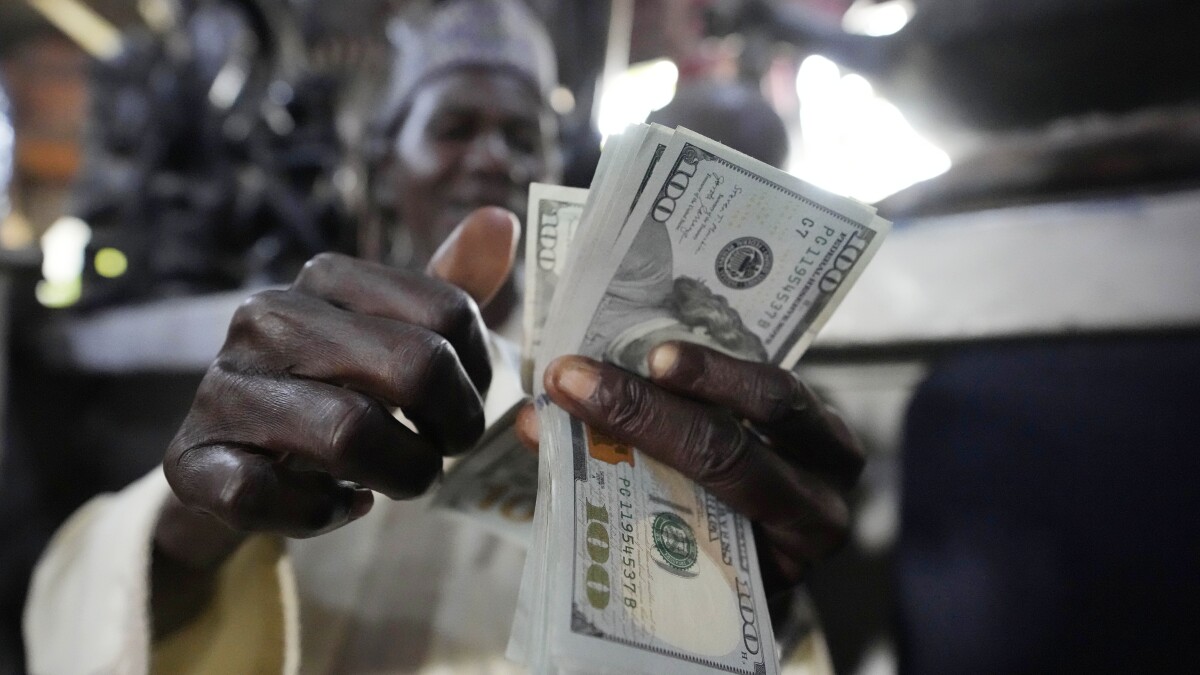
The Kenyan government is taking steps to address the recent sharp depreciation of the Kenyan shilling and stabilize the volatile currency by introducing legislation aimed at curbing speculation in the foreign exchange market.
The Forex Hoarding Bill, sponsored by Member of Parliament Paul Abuor of Rongo, aims to penalize the stockpiling or hoarding of foreign currency for speculative purposes beyond “reasonable” needs. While the draft law does not provide a clear definition of what constitutes reasonable needs, it lays out stiff penalties for individuals found guilty of amassing dollars and other foreign currencies for reasons other than meeting basic import requirements and travel expenses.
Specifically, the bill states that individuals who illegally hoard hard currencies could face fines of up to KES 1 million or up to 10 years imprisonment, while businesses and other organizations could be slapped with fines of up to KES 10 million and risk having their licenses revoked.
Read more: COTU slams proposed forex hoarding bill as ‘retrogressive’

The need for such stringent measures comes as the Kenyan shilling has experienced a precipitous decline, losing 19.6% of its value against the U.S. dollar since the start of 2023. The local currency has fallen from an exchange rate of around KES 123 to the dollar at the beginning of January to current levels of around KES 148 to the greenback.
According to central bank officials and economic analysts, this sharp depreciation has been driven in part by the stockpiling of U.S. dollars and other foreign currencies by individuals, businesses and organizations who had anticipated further declines in the shilling’s value. This hoarding activity has stoked instability and uncertainty in the forex market.
In an effort to restore confidence in the shilling and reign in depreciation, the Central Bank of Kenya (CBK) has undertaken intervention measures including reopening the forex interbank market, where banks trade currencies among themselves, and issuing a new forex trading code to guide transactions.
However, the proposed bill seeks to strip the CBK of its oversight of the forex market and establish a new regulatory body, to be known as the Forex Management Authority (FMA), under the National Treasury. This semi-autonomous agency would be responsible for supervising all market participants including brokers and dealers to ensure fairness and transparency. But the CBK has resisted this move, arguing that it would be counterproductive.
To encourage compliance, the bill offers a three-month amnesty period for individuals and companies to declare any hoarded foreign currency without facing penalties. After the grace period, undeclared sums would be subject to a tax of 15%. Additionally, whistleblowers who report forex hoarding activities would be entitled to 10% of the amount uncovered.
While these measures aim to stabilize the shilling, economic analysts remain cautious about its near-term outlook given factors like declining hard currency inflows from exports and remittances, global monetary tightening, and Kenya’s gaping current account deficit. Many predict the shilling will continue to lose ground, with some forecasts showing it could trade between 146 to 152 per dollar by the end of 2023.
Email your news TIPS to editor@thesharpdaily.com