Sharp Daily
No Result
View All Result
Friday, May 29, 2026
  • Home
  • News
    • Politics
  • Business
    • Banking
  • Investments
  • Technology
  • Startups
  • Real Estate
  • Features
  • Appointments
  • About Us
    • Meet The Team
Sharp Daily
  • Home
  • News
    • Politics
  • Business
    • Banking
  • Investments
  • Technology
  • Startups
  • Real Estate
  • Features
  • Appointments
  • About Us
    • Meet The Team
No Result
View All Result
Sharp Daily
No Result
View All Result
Home News

Kenya’s expressway push: can new roads unlock growth or deepen the toll debate?

Christopher Magoba by Christopher Magoba
April 17, 2026
in News
Reading Time: 3 mins read
Kenya is going on a second expressway spurt–and not in secret. The Kenya National Highways Authority has a new plan that is an indication of a wider thinking with regard to mobility, investment and economic growth in the country.
A Nation Retarded by Its Own Development.
Kenya’s key transport corridors are under pressure. The access routes between Nairobi and central, eastern and western parts are becoming saturated and delaying the flow of goods, labour, and capital.
These bottlenecks are already starting to have a direct impact on investment as KeNHA points out. The longer the time goods take, the higher the costs. Productivity declines when cities are clogged with traffic. In the long run, this undermines the competitiveness of Kenya in the region and internationally.
This is the reason why the government is currently trying to come up with a national expressway master plan- a move that implies that the issue has now exceeded the scope of solutions that are piecemeal.

From One Expressway to a Network

So far, Kenya’s experience with expressways is limited but instructive.

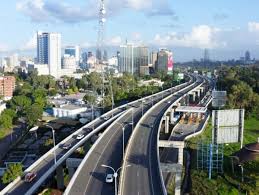
According to Vincent Owino, the Nairobi Expressway, a 27-kilometre toll road linking Mlolongo to Westlands, has demonstrated how high-capacity roads can ease congestion and cut travel time dramatically.

However, it has also sparked debate around affordability, access, and the long-term implications of toll-based infrastructure.

Now, the government appears ready to scale the model.

RELATEDPOSTS

Kenya’s Infrastructure Sector Poised for Growth in 2026

January 5, 2026

Lets build roads not rails

May 13, 2025

Projects already in motion include the Rironi–Mau Summit highway, being developed under a public-private partnership, and the proposed Nairobi–Mombasa expressway, which could become the longest in the country.

At the same time, plans are advancing to upgrade the Mau Summit–Eldoret–Malaba corridor into a dual carriageway, improving connectivity to Uganda and strengthening Kenya’s position as a regional trade hub.

Why Expressways Matter

High-capacity roads reduce travel time, lower vehicle operating costs, and improve supply chain reliability. For a country like Kenya—where road transport carries the bulk of goods—this has direct implications for inflation, trade, and economic growth.

Moreover, improved infrastructure can unlock new investment. Businesses are more likely to set up operations in areas with reliable transport links, while logistics companies benefit from predictable delivery timelines.

In that sense, expressways function as economic infrastructure, not just transport projects.

The PPP Model: Opportunity and Risk

A key feature of Kenya’s expressway expansion is the reliance on public-private partnerships (PPPs).

This approach allows the government to deliver large-scale infrastructure without placing the full burden on public finances. However, it comes with trade-offs.

Private investors expect returns, which often translates into toll charges. While this model accelerates construction, it raises concerns about inclusivity—particularly for lower-income users who may be priced out of faster routes.

The proposed creation of an expressway authority suggests that the government is aware of the need for stronger oversight as these projects expand.

Beyond Roads: A Structural Shift

What is emerging is more than a transport strategy—it is a structural shift in development thinking.

Kenya is moving toward a model where infrastructure is seen as a catalyst for growth, rather than just a public good. This aligns with broader global trends, where countries invest heavily in transport networks to drive industrialization and regional integration.

However, success will depend on execution. Poor planning, weak regulation, or unsustainable financing could turn these projects into long-term liabilities rather than assets.

The Bigger Question

The real question is not whether Kenya needs more expressways—it does.

The question is whether these roads will be accessible, sustainable, and aligned with broader economic goals.

If done right, they could transform how people and goods move across the country, unlocking productivity and attracting investment.

If done poorly, they risk becoming expensive corridors that benefit only a fraction of the population.
Previous Post

KBA Moves to Block Bancassurance Fee Ban in Court

Next Post

Kenya seeks rapid world bank support to shield economy from Iran war shock

Christopher Magoba

Christopher Magoba

Related Posts

News

How amenities are redefining property values and tenant loyalty

May 29, 2026
News

Why some businesses are finding it hard to keep customers

May 29, 2026
News

How financial planning must evolve through life

May 29, 2026
News

The changing definition of wealth among young professionals

May 29, 2026
News

The financial impact of impulse buying in the digital age

May 29, 2026
News

Kenya’s school fire crisis: when overcrowded dormitories become death traps and insurers walk away

May 29, 2026

LATEST STORIES

How amenities are redefining property values and tenant loyalty

May 29, 2026

Why some businesses are finding it hard to keep customers

May 29, 2026

How financial planning must evolve through life

May 29, 2026

The changing definition of wealth among young professionals

May 29, 2026

The financial impact of impulse buying in the digital age

May 29, 2026

Understanding the essentials of mergers and acquisitions

May 29, 2026

Kenya’s school fire crisis: when overcrowded dormitories become death traps and insurers walk away

May 29, 2026

Treasury Bill Rates Rise as Investors Seek Protection From Inflation

May 29, 2026
  • About Us
  • Meet The Team
  • Careers
  • Privacy Policy
  • Terms and Conditions
Email us: editor@thesharpdaily.com

Sharp Daily © 2024

No Result
View All Result
  • Home
  • News
    • Politics
  • Business
    • Banking
  • Investments
  • Technology
  • Startups
  • Real Estate
  • Features
  • Appointments
  • About Us
    • Meet The Team

Sharp Daily © 2024