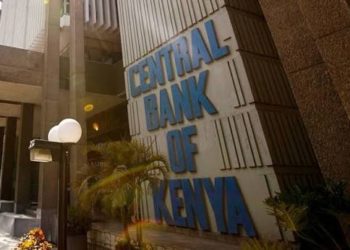
Kenya’s latest Eurobond refinancing strategy has come at a measurable cost to taxpayers, with incentives offered to investors amounting to an estimated Sh7.3 billion. The expense arose from a combination of price discounts on newly issued bonds and premiums paid to retire existing debt ahead of schedule, underscoring the financial trade offs involved in managing sovereign debt risks.
The government recently issued new Eurobonds totaling $2.25 billion (Sh290.3 billion) to refinance existing obligations and smooth the country’s debt maturity profile. To secure investor participation at acceptable interest rates, the Treasury offered discounts on the issue price of the new bonds. As a result, Kenya received approximately Sh4.1 billion less than the face value of the bonds sold, reflecting the gap between investor yield expectations and the final coupon rates agreed upon.
The refinancing also involved the partial buyback of two outstanding Eurobonds: one valued at $350 million due in 2032 and another of $150 million maturing in 2028. To persuade bondholders to surrender these instruments before maturity, the government offered premiums above face value, translating into an additional Sh3.2 billion cost. These premiums compensate investors for the interest income they would have earned had they held the bonds to maturity.
The newly issued bonds comprise a seven-year tranche of $900 million carrying a coupon of 7.875 percent and a 12-year tranche of $1.35 billion with an interest rate of 8.7 percent. Both coupons were set below the yields initially sought by investors, making price discounts a necessary incentive. This pricing structure reflects the inverse relationship between bond prices and yields in the secondary market.


The refinancing strategy is part of a broader effort by the National Treasury of Kenya to reduce near-term refinancing risks after concerns in early 2024 over Kenya’s ability to meet external debt obligations unsettled financial markets and weakened the shilling. By extending maturities into the mid-2030s, the Treasury aims to create a more predictable debt repayment schedule and restore investor confidence.
However, the approach comes with additional costs beyond pricing incentives. The government also pays fees to international banks that structure and manage bond issuances and buybacks. In the current transaction, global financial institutions such as Citigroup Global Markets and Standard Bank Group were appointed as joint dealer managers, adding to the overall cost of execution.
While refinancing reduces immediate repayment pressure, it increases the total cost of borrowing over time. This highlights the delicate balance governments must strike between managing liquidity risks and containing long-term debt servicing expenses.
For investors and savers, the episode reinforces the importance of understanding how sovereign borrowing decisions can affect interest rates, currency stability, and broader market conditions. In periods of fiscal adjustment and global volatility, liquidity and capital preservation become increasingly critical considerations for individual portfolios.
Money market instruments, which focus on short-term, low-risk securities, often play a stabilising role during such environments by offering predictable returns without long-term lock-ins.
As global markets react to shifting interest rates and sovereign debt strategies, maintaining a flexible and stable savings approach is essential. Consider growing your savings with the Cytonn Money Market Fund (CMMF) a transparent, liquid investment option designed to help you earn steady returns while keeping your funds accessible.
📞 Call +254 (0) 709 101 200
📧 Email sales@cytonn.com to learn more.