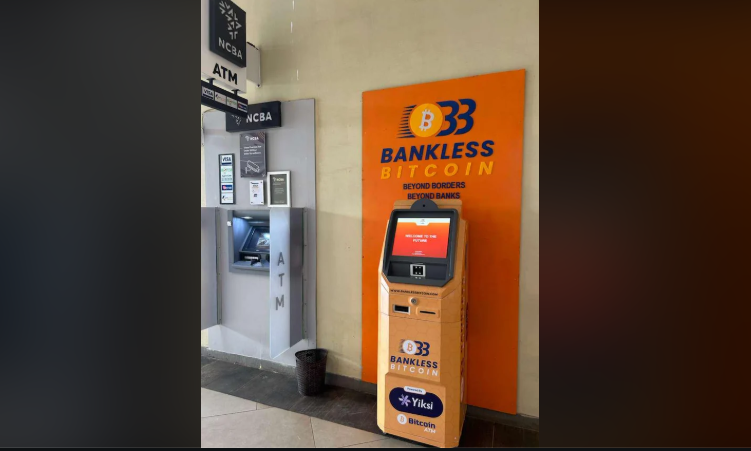
Kenya’s financial regulators have maintained that no cryptocurrency operator has been licensed in the country, even as new Bitcoin ATMs quietly pop up across Nairobi malls, signaling a widening gap between policy and on-ground adoption.
This comes just days after the Virtual Assets Service Providers (VASP) Act, 2025 officially came into effect – a law expected to create Kenya’s first formal licensing framework for crypto firms. But despite the law being active, the Central Bank of Kenya (CBK) and the Capital Markets Authority (CMA) say the licensing process itself has not begun.
In a recent cautionary statement, a senior CBK official clarified:
“No virtual asset service provider has been approved under the new law. Any entity claiming to be licensed is misleading the public.”
Yet Nairobi residents have already reported spotting bright orange Bitcoin ATMs installed at major commercial centres including Two Rivers Mall, Westlands, and retail corridors along Ngong Road.


A regulatory gap as crypto infrastructure goes public
The launch of Bitcoin ATMs is striking because it places crypto trading directly into formal retail spaces, not just online exchanges or informal peer-to-peer networks. The timing, however, is what has drawn attention -the ATMs appeared before any crypto operator has been licensed under the VASP Act.
According to a CMA policy officer involved in the regulatory rollout:
“The law is now active, but the operational regulations are still being finalized. Licensing will only begin once the National Treasury publishes the implementing rules.”
That means the ATMs are operating in a period where crypto is neither fully illegal nor formally recognized – a classic regulatory grey zone.
What the ATMs offer – and why regulators are concerned
The Bitcoin ATMs reportedly allow users to buy and sell Bitcoin using cash or mobile money, with transactions processed instantly. Their visibility and accessibility are expected to attract new users who have never interacted with crypto exchanges.
But globally, Bitcoin ATMs often raise concerns about:
-
Cash-based anonymity
-
Money laundering risks
-
Fraud vulnerability
-
Lack of consumer recourse
A cybersecurity analyst in Nairobi noted:
“Bitcoin ATMs remove the intimidation barrier, but they also make unregulated transactions easier. Without a licensed operator, accountability is unclear.”
Kenya’s crypto paradox: High adoption, zero licenses
Kenya is one of Africa’s most active crypto markets, consistently ranking high in global P2P transaction volumes. Crypto use is especially common for:
-
Cross-border remittances
-
Dollar hedging
-
Freelance payments
-
Savings outside the banking system
Yet Kenya has spent years in a “regulate-later” stalemate, with repeated warnings from CBK but without an active licensing regime – until the VASP Act.
Still, with the licensing window not yet open, the country now finds itself in a paradox: crypto is everywhere, but no one is officially allowed to operate.
Conclusion
Kenya’s Bitcoin ATM rollout underscores the tension between fast-moving technology and slow-moving regulation. With no licensed crypto firms but live ATMs in malls, the country now faces a pivotal moment: embrace the sector with robust frameworks or clamp down before the market expands beyond oversight.
Kenya’s power generation stalls as demand soars: Why rationing is back