Sharp Daily
No Result
View All Result
Friday, January 9, 2026
  • Home
  • News
    • Politics
  • Business
    • Banking
  • Investments
  • Technology
  • Startups
  • Real Estate
  • Features
  • Appointments
  • About Us
    • Meet The Team
Sharp Daily
  • Home
  • News
    • Politics
  • Business
    • Banking
  • Investments
  • Technology
  • Startups
  • Real Estate
  • Features
  • Appointments
  • About Us
    • Meet The Team
No Result
View All Result
Sharp Daily
No Result
View All Result
Home Investments

Hedge funds 101: Strategies for high returns and their associated risks

Patricia Mutua by Patricia Mutua
December 20, 2024
in Investments
Reading Time: 2 mins read

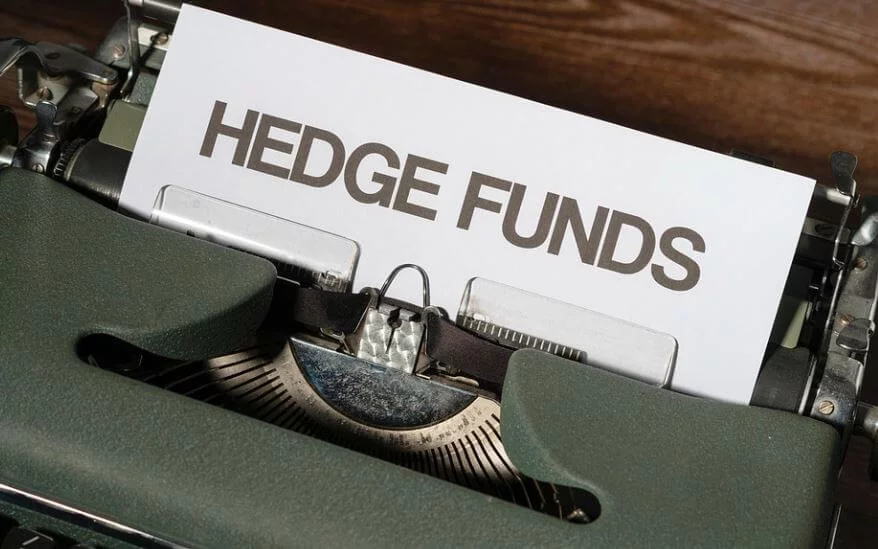
Hedge funds are a type of investment vehicle that pools money from accredited investors and institutional investors to invest in a variety of assets. They are known for their aggressive investment strategies and potential for high returns, but they also come with higher risks and fees compared to traditional investment funds.

Hedge funds are actively managed investment funds that use pooled funds from private investors to invest in a wide range of assets, including stocks, bonds, commodities, and derivatives. The goal of a hedge fund is to generate high returns regardless of market conditions, often by employing complex and non-traditional investment strategies.

Hedge funds typically require investors to be accredited, meaning they must meet certain income or net worth criteria. Investors usually need to commit a substantial amount of capital to invest in a hedge fund, and there are often lock-up periods during which investors cannot withdraw their funds. Hedge fund managers typically charge performance fees in addition to management fees, often following the “2-and-20” rule (2% management fee and 20% performance fee). Hedge funds frequently use leverage (borrowed money) and derivatives (financial contracts) to amplify returns and manage risk.

Common hedge fund strategies include long/short equity, market neutral, event-driven, global macro, and fixed-income arbitrage. Long/short equity involves investing in stocks expected to increase in value and short-selling stocks expected to decrease in value. Market neutral strategies seek to profit from both rising and falling markets by balancing long and short positions. Event-driven strategies capitalize on corporate events such as mergers, acquisitions, and bankruptcies. Global macro strategies invest based on macroeconomic trends and events across different countries and markets. Fixed-income arbitrage exploits pricing inefficiencies between related fixed-income securities.

RELATEDPOSTS
Investing in Kenya’s hedge funds: Pros and Cons

November 8, 2023

Hedge funds offer the potential for high returns, but they also come with significant risks. The use of leverage and derivatives can amplify losses, and the complex strategies employed can be difficult to understand. Additionally, the high fees and lack of liquidity can make hedge funds less accessible to average investors.

Hedge funds are a unique and powerful investment tool that can provide substantial returns for those who meet the eligibility criteria and are willing to take on higher risks.

Previous Post

Maximizing space and aesthetics: A guide to modern apartment design

Next Post

Ruto confirms Nairobi-Nakuru highway dualling to begin in 2024

Patricia Mutua

Patricia Mutua

Related Posts

Analysis

Self-Insurance by Another Name: The Rise of Investment Based Risk Management

January 9, 2026
Analysis

Kenya Faces Sh45 billion blow as Trump withdraws US from 66 global organizations – Impact on Nairobi’s UN hub

January 9, 2026
Analysis

KPC NSE listing set to open state-owned energy giant to public investors

January 6, 2026
Analysis

CBK reopens 25-year bonds, investors lock in high yields

January 5, 2026
Economy

Diageo, Vodafone exit and the quiet unravelling of Britain’s corporate hold on Kenya

December 30, 2025
Analysis

Investors to buy and sell NSE shares on M-Pesa from January 2026

December 29, 2025

LATEST STORIES

Self-Insurance by Another Name: The Rise of Investment Based Risk Management

January 9, 2026

The Economics of Working Abroad: Where Opportunity Meets Trade-Offs

January 9, 2026

The Question of Country Risk: Why Perception Matters as Much as Reality

January 9, 2026

How Early Campaign Cycles Shape Business Confidence and Investment Timing

January 9, 2026

From Shadow to Structure: What CBK’s Licensing of Digital Lenders Means for Kenya’s Credit Market

January 9, 2026

Financial literacy as an investment

January 9, 2026

How Equities and Fixed Income Markets Will Shape Pension Scheme Performance in Kenya in 2025

January 9, 2026

Kenya’s Trade Deficit with China Widens to Kes 475.6 Bn

January 9, 2026
  • About Us
  • Meet The Team
  • Careers
  • Privacy Policy
  • Terms and Conditions
Email us: editor@thesharpdaily.com

Sharp Daily © 2024

No Result
View All Result
  • Home
  • News
    • Politics
  • Business
    • Banking
  • Investments
  • Technology
  • Startups
  • Real Estate
  • Features
  • Appointments
  • About Us
    • Meet The Team

Sharp Daily © 2024