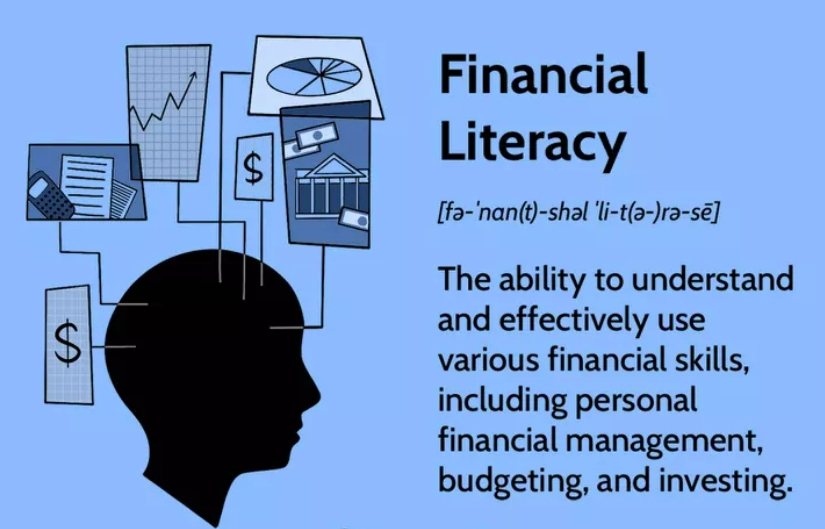
Financial literacy has become increasingly important in modern economies as individuals gain greater access to financial products, investment opportunities, and digital financial platforms. It refers to the ability to understand and effectively use financial knowledge in making decisions related to saving, investing, budgeting, and managing risk. In the context of investing, financial literacy plays a crucial role in helping individuals evaluate opportunities, understand market dynamics, and build sustainable long-term financial strategies.
One of the key benefits of financial literacy is improved decision-making. Investors who understand financial concepts such as risk diversification, inflation, interest rates, and asset allocation are generally better equipped to assess investment opportunities objectively. This knowledge enables individuals to compare financial products, interpret market information, and avoid decisions driven purely by speculation or emotional reactions.
Financial literacy also contributes to better risk management. Every investment carries some degree of risk, whether related to market volatility, economic conditions, or company-specific performance. Investors with strong financial knowledge are more likely to understand the relationship between risk and return, allowing them to select investments that align with their financial goals and risk tolerance. This can help reduce exposure to excessive risk and improve portfolio stability over time.
The rise of digital finance and online investment platforms has further increased the importance of financial literacy. Technology has made investment products more accessible to a broader population, enabling individuals to trade securities, invest in collective investment schemes, and access financial information more easily. While this accessibility creates opportunities, it also exposes investors to complex financial products and misinformation. Financial literacy therefore becomes essential in navigating digital financial environments responsibly.


Another important aspect of financial literacy is long-term financial planning. Investors who understand concepts such as compound growth, retirement planning, and inflation-adjusted returns are more likely to adopt disciplined savings and investment habits. Long-term planning encourages consistency and reduces the likelihood of making impulsive investment decisions based on short-term market fluctuations.
Financial literacy also supports broader economic development. When individuals participate more effectively in financial markets, savings can be mobilized into productive investments that contribute to economic growth. Increased participation in investment activities may strengthen capital markets, support entrepreneurship, and improve financial inclusion within the economy.
In addition, financially literate investors are generally more resilient during periods of market uncertainty. Economic downturns and market volatility can create fear and uncertainty, leading some investors to make decisions that may negatively affect long-term outcomes. Investors with a stronger understanding of market cycles and investment principles are more likely to maintain balanced strategies and avoid reactionary decisions during periods of instability.
Educational initiatives and access to financial information play a significant role in improving financial literacy levels. Governments, financial institutions, and educational organizations often promote programs aimed at enhancing understanding of personal finance and investment concepts. These efforts help create more informed investors and contribute to healthier financial systems.
Despite its importance, financial literacy levels remain uneven across populations. Income disparities, educational access, and limited exposure to financial systems can affect individuals’ ability to make informed financial decisions. Addressing these gaps is therefore important for promoting inclusive participation in investment markets.
In conclusion, financial literacy is a fundamental component of effective investment decision-making. By improving understanding of financial concepts, enhancing risk management, and supporting long-term planning, financial literacy empowers individuals to make informed investment choices and contribute to broader economic development.