Sharp Daily
No Result
View All Result
Friday, April 17, 2026
  • Home
  • News
    • Politics
  • Business
    • Banking
  • Investments
  • Technology
  • Startups
  • Real Estate
  • Features
  • Appointments
  • About Us
    • Meet The Team
Sharp Daily
  • Home
  • News
    • Politics
  • Business
    • Banking
  • Investments
  • Technology
  • Startups
  • Real Estate
  • Features
  • Appointments
  • About Us
    • Meet The Team
No Result
View All Result
Sharp Daily
No Result
View All Result
Home Investments

Equities, Bonds, or Fixed Deposits?

Ivy Mutali by Ivy Mutali
October 7, 2025
in Investments
Reading Time: 2 mins read

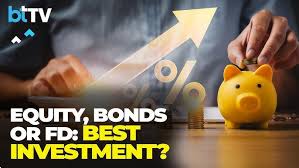
In every investor’s journey, one of the earliest yet most important decisions is where to put their money. Among the most common options are equities, bonds and fixed deposits. While all aim to grow wealth, they operate differently in terms of risk, return and liquidity and understanding these distinctions is key to building a balanced portfolio.

Equities:
Equities represent ownership in a company. When you buy shares, you become a part-owner entitled to a portion of its profits, usually paid as dividends and potential capital gains if the share price rises. Equities offer the highest potential returns among traditional investment classes, but they also come with higher volatility. Prices can fluctuate daily depending on market performance, company results or global events. In Kenya, listed companies on the Nairobi Securities Exchange (NSE) such as banks, telecoms and manufacturing firms provide access to diverse sectors. For investors with a long-term outlook, equities can significantly outperform inflation and generate wealth through compounding growth.

Bonds:
Bonds are essentially loans to governments or corporations. When you buy a bond, you lend money for a set period in exchange for regular interest pay   ments (known as coupons) and the return of your principal at maturity. Bonds are generally considered safer than equities, especially government bonds such as Treasury Bonds issued by the Central Bank of Kenya. They provide predictable income and are ideal for investors seeking stability, although they may offer lower returns compared to stocks. However, bond prices can fluctuate with changes in interest rates, when rates rise, bond values tend to fall.

FixedDeposits:
Fixed deposits (FDs) are the simplest and most conservative of the three. Offered by banks and financial institutions, they involve locking your money for a specific period at a fixed interest rate. They are low-risk and guarantee capital preservation, making them suitable for short-term goals or emergency reserves. The trade-off, however, is limited returns and lack of flexibility, withdrawing early often incurs penalties.


RELATEDPOSTS

Safaricom launches ksh 15B green bond with 5B greenshoe

December 2, 2025

CBK reopens treasury Bonds

October 31, 2025

In essence, equities build wealth, bonds preserve it, and fixed deposits secure it. A smart investor doesn’t choose one over the other, they blend all three based on their goals, time horizon and appetite for risk. Together, they form the foundation of a well-diversified investment strategy.


Previous Post

Kenya’s Inflation is creeping up, What it means for investors

Next Post

The economic and environmental gains of Kenya’s LPG shift

Ivy Mutali

Ivy Mutali

Related Posts

Analysis

NSE secondary bond market surges

April 16, 2026
Business

CBK reassures on shilling stability

April 16, 2026
Analysis

Diageo EABL sale approved

April 13, 2026
Analysis

Kenya central bank pauses rate cuts amid inflation concerns

April 9, 2026
Analysis

NCBA’s digital lending hits kSh 1.4 trillion as mobile banking drives growth

March 30, 2026
Analysis

Central bank rate cuts continue to shape kenya’s economy

March 26, 2026

LATEST STORIES

Kenya seeks rapid world bank support to shield economy from Iran war shock

April 17, 2026

Kenya’s expressway push: can new roads unlock growth or deepen the toll debate?

April 17, 2026

KBA Moves to Block Bancassurance Fee Ban in Court

April 17, 2026

KUSCCO and the Failure of Cooperative Finance: What Went Wrong and What Must Change

April 17, 2026

Streaming wars intensify as rising costs and AI disrupt the global film industry

April 17, 2026

The role of corporate governance in investment decisions

April 17, 2026

Bridging the gap between financial policy and practical use

April 16, 2026

Corporate governance and business sustainability

April 16, 2026
  • About Us
  • Meet The Team
  • Careers
  • Privacy Policy
  • Terms and Conditions
Email us: editor@thesharpdaily.com

Sharp Daily © 2024

No Result
View All Result
  • Home
  • News
    • Politics
  • Business
    • Banking
  • Investments
  • Technology
  • Startups
  • Real Estate
  • Features
  • Appointments
  • About Us
    • Meet The Team

Sharp Daily © 2024