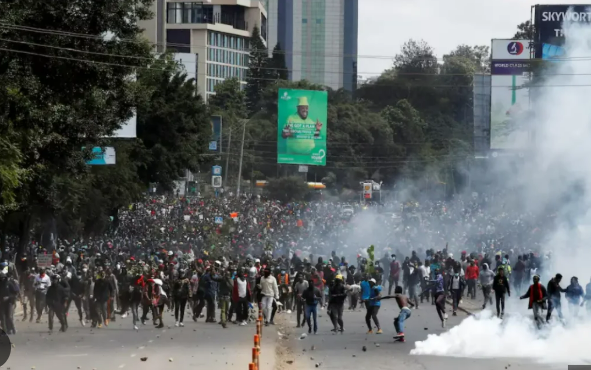
Kenya’s June 25, 2026 demonstrations, held to commemorate the first anniversary of the 2024 anti-government protests, underscored the close connection between political developments and economic performance. While public demonstrations remain an important constitutional mechanism for civic participation and accountability, the resulting disruptions once again exposed the vulnerability of business activity and investor sentiment to periods of social unrest.
The economic effects were most visible in Nairobi, where security measures and road closures significantly limited access to the Central Business District (CBD). Major transport corridors leading into the city Centre experienced restrictions, reducing the movement of workers, customers, and goods. Many businesses opted to suspend operations for the day due to security concerns and uncertainty surrounding the protests. Similar patterns were observed in several urban centers across the country, affecting both formal enterprises and informal traders.
The immediate consequence of these disruptions was lost business revenue. Enterprises that rely heavily on daily customer transactions, particularly small and medium-sized businesses, were among the hardest hit. Retail outlets, food establishments, transport operators, and informal traders experienced reduced sales as foot traffic declined sharply in affected areas. Unlike larger corporations with diversified revenue streams, smaller businesses often operate on narrow margins and depend on daily cash flows to meet expenses such as rent, wages, utilities, and supplier payments.
The demonstrations also carried broader productivity implications. Employees faced challenges reaching workplaces due to transport disruptions and restricted access to commercial centers. Delays in logistics and deliveries affected supply chains, while interruptions to customer-facing services reduced operational efficiency across multiple sectors. Although many organizations adopted remote working arrangements where possible, sectors dependent on physical presence remained particularly exposed to disruptions.


Investor confidence can also be influenced by recurring episodes of uncertainty. Capital allocation decisions are typically supported by predictable operating environments and stable institutions. While democratic expression is an essential component of a functioning economy, repeated disruptions may increase perceptions of operational risk among both domestic and international investors, particularly in sectors requiring long-term capital commitments.
Financial markets are often sensitive to periods of political uncertainty, with investors tending to adopt more cautious positions until stability returns. Although isolated demonstrations rarely alter underlying economic fundamentals, prolonged uncertainty can influence business confidence, delay investment decisions, and weigh on growth expectations.
The June 25 demonstrations therefore serve as a reminder that social and political developments carry measurable economic consequences. Sustaining economic growth while protecting democratic freedoms requires a balance between safeguarding constitutional rights and maintaining an environment that supports business continuity, investment, and economic resilience.