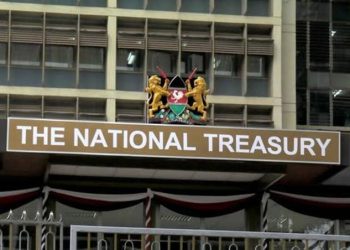
Credibility functions like an invisible asset on every balance sheet. It does not appear in accounting statements, yet it quietly shapes borrowing costs, investor behavior, and the flow of capital across borders and industries. Firms, institutions, and even entire markets trade on trust long before they trade on numbers.
Credibility is built through consistency. When companies meet guidance, honor obligations, and communicate transparently during both strong and weak cycles, they create a reputation that lowers uncertainty. Investors respond by demanding lower risk premiums, extending longer funding horizons, and tolerating temporary volatility. In this sense, credibility compresses the cost of capital more effectively than aggressive financial engineering ever could. The absence of credibility produces the opposite effect. Even solid fundamentals struggle to attract patient capital when stakeholders doubt management integrity or strategic direction. Markets begin to price uncertainty instead of performance. Financing becomes shorter, more expensive, and more fragile. Liquidity retreats quickly, not because assets have lost value, but because confidence has.
This dynamic explains why similar companies can trade at vastly different valuations despite comparable revenues and assets. One firm carries the premium of predictability, the other the discount of doubt. The difference is not always operational efficiency, but belief in future behavior. Capital markets, at their core, are mechanisms for pricing expectations. Credibility also determines how organizations absorb shocks. During periods of stress, trusted institutions are granted time. Investors allow room for restructuring, policymakers offer flexibility, and lenders roll over obligations. Where credibility is thin, markets demand immediate correction. The same disturbance becomes either a temporary disruption or an existential threat depending on how much faith surrounds the institution.
At a systemic level, this principle extends beyond corporations. Financial centers, regulatory regimes, and currencies derive much of their strength from reputational capital accumulated over decades. Once damaged, rebuilding that trust requires more than technical reforms. It requires sustained evidence of discipline.
For investors, recognizing credibility as an asset changes portfolio construction. It shifts attention away from short term earnings volatility toward governance quality, communication patterns, and institutional memory. These factors are difficult to quantify, but they often determine whether returns compound quietly or collapse suddenly. In markets obsessed with data, credibility remains stubbornly qualitative. Yet it is priced every day, embedded in yields, valuations, and capital flows. Long before balance sheets weaken, belief does.