Concerns over China’s economy dominate financial headlines, with critics pointing to unsustainable investment levels, rising debt, and deflationary pressures. Many argue that the country’s investment-led model has saturated domestic markets while provoking protectionism abroad, leaving China with mounting challenges. With debt-to-GDP ratios at 90.1%, predictions of an economic collapse abound. However, a deeper analysis reveals a more complex picture, suggesting resilience and opportunities for adjustment rather than an inevitable crisis.
China’s economic strategy is distinct in three key ways. First, its growth is primarily driven by investment in infrastructure and industrial capacity, rather than consumption. This investment accounts for an exceptionally high share of GDP at 6.1% ,2.5% points more than the average share for upper middle income countries of 3.6%. Second, the model relies heavily on domestic debt, most of which is denominated in Chinese Yuan and held by state-controlled banks, insulating China from international financial shocks. Finally, its financial system is relatively closed, allowing the government to stabilize asset valuations and mitigate market volatility through intervention.
Cultural factors further support this model. Rooted in Confucian traditions, Chinese society tends to accept hierarchical governance and economic adjustments with greater tolerance. This cultural resilience enables the government to implement policies that might provoke unrest elsewhere.
Critics argue that China’s investment-driven growth is self-perpetuating, exacerbating supply-demand imbalances and deflationary pressures. Increased capacity leads to diminishing returns, further fueling economic distortions. Yet, systemic failure has not materialized. Unlike market-driven economies, China’s state-controlled financial system can sustain the “balance sheet fiction,” ensuring that bad debts and underperforming assets do not cascade into broader crises.


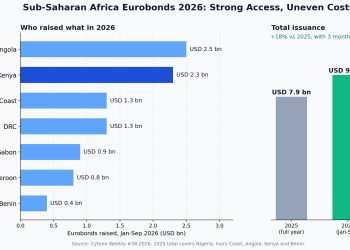
Similarly, Kenya grapples with balancing investment-driven growth and sustainability. Its Vision 2030 initiative has spurred significant infrastructure development, enhancing transportation and energy sectors. However, rising public debt and reliance on external financing pose risks, making Kenya more vulnerable to global economic fluctuations compared to China’s insulated financial system.
To build resilience, Kenya is focusing on diversifying its economy by boosting technology and agriculture, and strengthening regional trade through the African Continental Free Trade Area (AfCFTA). These efforts aim to create a more balanced and sustainable growth model. By channeling resources into infrastructure and technology, China continues to strengthen its competitive edge in advanced manufacturing and innovation. However, the model’s long-term success depends on strategic adjustments, including a gradual shift toward consumption-led demand and measures to address industrial deflation.
While challenges remain, China’s unique blend of state control, financial insulation, and cultural adaptability provides tools to manage potential risks. The narrative of imminent collapse oversimplifies a complex system that may, with careful adjustments, thrive in the years ahead.