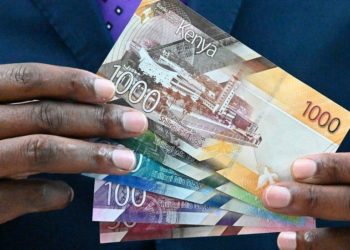
The Central Bank of Kenya (CBK) is taking a new turn in its reserve management strategy, joining a global wave of central banks turning to gold as a hedge against volatility in currencies and geopolitics. For decades, Kenya’s external reserves have been anchored in traditional foreign currencies, predominantly the US dollar. Now, in an era of monetary easing, rising inflation fears, and debt stress, the CBK’s newfound appetite for gold signals a broader shift in how emerging economies are thinking about financial resilience.
CBK data shows that the value of its gold holdings surged by 40.8% to KS 238.0 mn in the financial year ended June 2025, up from KES 169.0 mn a year earlier. This increase was partly driven by the dramatic rise in global gold prices, from about USD 1,950.0 to USD 3,700.0 per troy ounce over the same period, reflecting both valuation gains and renewed strategic interest. Despite this, gold still accounts for less than one percent of Kenya’s USD 12.07 bn in foreign reserves, leaving the bulk of the assets denominated in the US dollar.
CBK Governor Kamau Thugge recently noted that the bank is actively considering increasing its gold holdings as part of a long-term diversification and risk management plan. The shift reflects lessons learned from recent volatility in the Kenyan shilling, which lost about a quarter of its value against the dollar in 2023. The experience underscored the vulnerability of holding most reserves in one dominant currency, especially during episodes of global financial tightening.
Gold offers a compelling hedge in such an environment. It tends to perform well during inflationary cycles and times of currency weakness, serving as a store of value when paper assets come under pressure. For Kenya, building gold reserves could help anchor market confidence and improve the CBK’s balance sheet. In times of dollar scarcity or exchange-rate pressure, gold could provide liquidity support and signal financial strength to investors and credit rating agencies.


Kenya’s move is not without precedent in Africa. Ghana and Tanzania have both incorporated gold into their reserve strategies, though with mixed results. Ghana’s “Gold for Oil” programme, launched in 2022 to pay for fuel imports with locally mined gold, was abandoned in March 2025 after heavy financial losses. Tanzania, on the other hand, has continued to build its gold stockpile gradually, citing its role as a hedge against inflation and a stabilizer for the shilling. Kenya’s more cautious approach, focused on balance sheet diversification rather than active trade settlement, appears better aligned with its macroeconomic priorities.
Globally, central banks have been on a historic gold-buying spree. The World Gold Council reported that in both 2023 and 2024, central banks purchased over 1,000 tonnes of gold annually—the highest accumulation on record. Countries such as China, India, Poland, and Turkey have all increased their gold holdings, seeking to reduce dependence on the dollar-dominated system and insulate their reserves from sanctions or financial fragmentation.
Still, Kenya must tread carefully. Gold is volatile and, at current record highs above USD 4,300 per troy ounce, the risk of a price correction is significant. Overexposure could lead to valuation losses if global sentiment shifts. Moreover, storage and insurance costs, especially if gold is held abroad, will add new expenses to CBK’s operations. The bank’s core mandate remains price and financial stability; thus, diversification must not come at the expense of liquidity in foreign currency reserves.
Ultimately, CBK’s move toward gold is less about chasing returns and more about strategic resilience. In an increasingly uncertain world, where debt burdens, inflation, and geopolitical tensions weigh on global finance, gold provides Kenya with a measure of insurance. It is a cautious but timely step toward greater autonomy in reserve management.