
Sharp Daily
  • News
  • Business
  • Technology
  • Real Estate
  • Opinion
  • About Us
No Result
View All Result
Sharp Daily
  • News
  • Business
  • Technology
  • Real Estate
  • Opinion
  • About Us
No Result
View All Result
Sharp Daily
No Result
View All Result
Home News

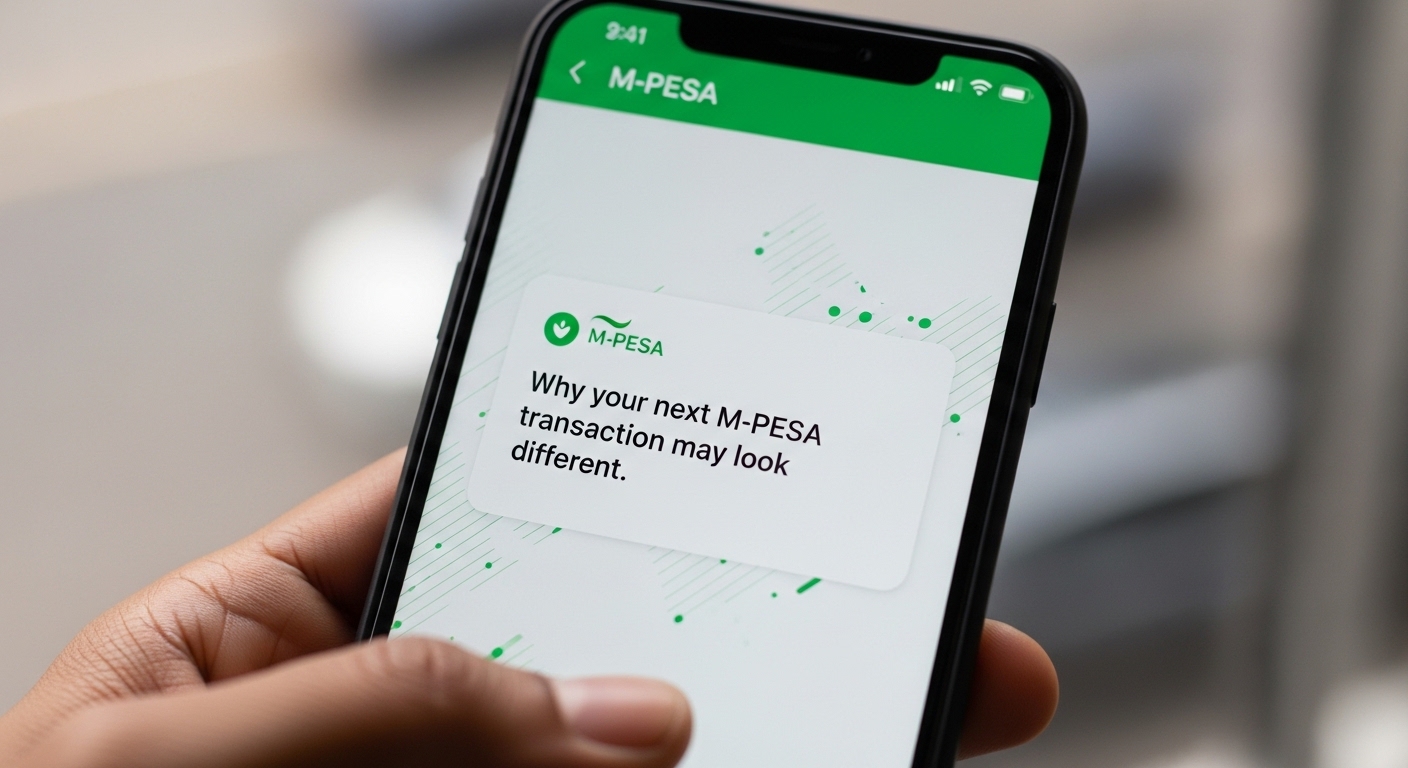
Why your next M-PESA transaction may look different

Christopher Magoba by Christopher Magoba
March 2, 2026
in News
Reading Time: 2 mins read

Kenya’s financial sector is set for a major privacy shift after the Central Bank of Kenya (CBK) approved the masking of phone numbers in M-PESA transaction confirmations, reinforcing the principle of data minimization in digital payments.

As Kabui Mwangi writes, the move means that users will no longer see full mobile numbers in transaction messages and statements. Instead, part of the digits will be concealed to limit unnecessary exposure of personal data. The approval aligns with broader data protection standards that require institutions to collect and display only information that is strictly necessary for a transaction.

Strengthening Data Privacy in Mobile Money

Mobile money has become deeply embedded in Kenya’s financial ecosystem, with millions of transactions processed daily. However, displaying full phone numbers in payment confirmations has long raised privacy concerns, especially in cases where messages are shared, forwarded, or viewed by unintended parties.

By allowing masked numbers, the regulator is seeking to reduce the risk of misuse, fraud, and identity exposure. Under the new framework, transaction details will still confirm the recipient or sender, but sensitive identifiers will be partially hidden.


RELATEDPOSTS

CBK holds benchmark rate at 8.75% for fourth consecutive time

October 8, 2026

Kenya’s Central Bank Rate on the line as core inflation rises

October 5, 2026

The decision reflects a growing regulatory focus on data governance in financial services. As digital transactions increase, so does the volume of personal data circulating within payment systems. Masking phone numbers ensures that transaction transparency is maintained without unnecessarily exposing customer details.

Balancing Transparency and Security

One of the key considerations in the shift was maintaining trust in transactions. Users rely on confirmation messages to verify payments, and complete anonymity could undermine confidence. The masked format is designed to strike a balance, providing enough information for verification while limiting privacy risks.

Industry players are expected to adjust their systems to comply with the updated directive. The approval also signals that regulators are actively reviewing how digital platforms handle customer information in line with data protection principles.

A Broader Digital Finance Evolution

Kenya’s mobile money ecosystem has often been viewed as a global benchmark. As adoption deepens, regulatory oversight is evolving beyond access and financial inclusion to include data responsibility and consumer protection.

The CBK’s nod to phone number masking demonstrates a shift toward embedding privacy safeguards directly into digital financial infrastructure. As digital payments continue to expand, similar measures could extend to other areas of financial services where personal data is routinely displayed.

The development marks another step in strengthening user confidence in Kenya’s rapidly advancing digital economy.

Previous Post

US firm moves to exit ICEA Lion with sale of 24.1% stake

Next Post

Is Kenya’s derivatives market awakening?

Christopher Magoba

Christopher Magoba

Christopher Magoba is a digital marketing and creative content strategist at Cytonn Investments, specializing in financial communications, brand storytelling, and digital marketing. He develops data-driven content on investments, capital markets, personal finance, and economic trends, translating complex financial concepts into accessible insights for investors. His expertise spans content strategy, search engine optimization (SEO), social media marketing, thought leadership, and multimedia storytelling, with a focus on enhancing investor education and brand engagement.

Related Posts

News

Kenya’s Debt Service Burden: Implications for Fiscal Flexibility and Domestic Markets

October 16, 2026
News

Bolt Plus launches in Kenya: What the new subscription offers riders and food customers

October 16, 2026
Economy

Kenya Faces Fresh Cost-of-Living Pressure as Fuel Prices Rise and Matatu Fares Set to Increase by 10%

October 16, 2026
News

Balancing Currency Stability and Investment Risk

October 16, 2026
News

Uganda’s MPC Tightens Policy: Balancing Inflation Risks and Economic Growth

October 16, 2026
News

Real Estate vs. REITs: Which Path Fits Your Budget?

October 14, 2026

LATEST STORIES

Kenya’s Debt Service Burden: Implications for Fiscal Flexibility and Domestic Markets

October 16, 2026

When the business fails: What happens to your pension if your employer goes bust?

October 16, 2026

Bolt Plus launches in Kenya: What the new subscription offers riders and food customers

October 16, 2026

Kenya Faces Fresh Cost-of-Living Pressure as Fuel Prices Rise and Matatu Fares Set to Increase by 10%

October 16, 2026

Balancing Currency Stability and Investment Risk

October 16, 2026

Uganda’s MPC Tightens Policy: Balancing Inflation Risks and Economic Growth

October 16, 2026

Real Estate vs. REITs: Which Path Fits Your Budget?

October 14, 2026

Formula 1 confirms Rwanda will host the African Grand Prix from the early 2030s

October 14, 2026
  • About Us
  • Meet The Team
  • Careers
  • Privacy Policy
  • Terms and Conditions
Email us: editor@thesharpdaily.com

Sharp Daily © 2024

No Result
View All Result
  • News
  • Business
  • Technology
  • Real Estate
  • Opinion
  • About Us

Sharp Daily © 2024