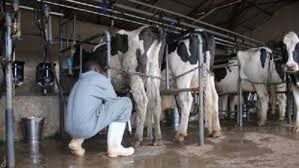
Kenya’s dairy sector has received a major boost following Brookside Dairy’s payout of KES 303.0 mn to its farmers which marks an increase of 40.0% from last year’s disbursement of KES 218.0 mn. At a time when rural households are grappling with economic pressure and unpredictable agricultural returns, this payout offers critical relief and renewed confidence in dairy farming. The bonus, which rewards milk quality and consistency, is being distributed to farmers countrywide. It forms part of Brookside’s broader strategy to promote higher standards in milk production, while strengthening its supply base. For many small-scale farmers, the payment represents more than an annual bonus, it provides a timely injection of funds to support livelihoods and reinvest in farm operations.
Dairy farming remains one of the most accessible and reliable income-generating activities in rural Kenya. Regular milk deliveries ensure a steady stream of cash, unlike seasonal crops that are vulnerable to poor weather and market fluctuations. Brookside’s quality-linked bonuses provide an added incentive for farmers to adopt better animal care, invest in hygiene and modernize operations. The economic impact of these payments extends beyond individual farms. In many dairy-producing regions, payouts such as these have a ripple effect, stimulating local economies as farmers spend on agricultural inputs, school fees, healthcare and small business ventures. The result is a more resilient rural economy with better cash flow and improved household welfare.
The bonus model employed by Brookside is structured to reward quality over quantity, thereby encouraging farmers to focus on clean milk handling, proper feeding, and good animal health. This shift is gradually transforming dairy from a subsistence activity into a more commercially driven enterprise. As farmers adopt better practices in pursuit of higher rewards, the overall productivity and quality of Kenya’s dairy sector continues to improve. These efforts contribute to a more competitive industry, one that is aligned with both local demand and regional export potential.
Brookside’s payout underscores the potential of private sector-led incentives to deliver tangible benefits to farmers. While the dairy sector is relatively well organized compared to others, the reward model it employs could serve as a blueprint for sectors such as tea, coffee and horticulture, where farmers often face challenges around payment delays and pricing volatility. With proper regulation and value chain coordination, performance-based bonus schemes could help reduce farmer dependency on unstable markets and government bailouts.
Brookside’s payout is a clear demonstration of how structured farmer engagement and reward systems can drive both social and economic impact. At a time when smallholder farmers are seeking stability and predictability in their incomes, such initiatives offer a practical solution, turning milk into a powerful tool for rural empowerment and sector-wide transformation.