Sharp Daily
No Result
View All Result
Sunday, June 14, 2026
  • Home
  • News
    • Politics
  • Business
    • Banking
  • Investments
  • Technology
  • Startups
  • Real Estate
  • Features
  • Appointments
  • About Us
    • Meet The Team
Sharp Daily
  • Home
  • News
    • Politics
  • Business
    • Banking
  • Investments
  • Technology
  • Startups
  • Real Estate
  • Features
  • Appointments
  • About Us
    • Meet The Team
No Result
View All Result
Sharp Daily
No Result
View All Result
Home News

Ruto seeks level playing field for Africa in accessing affordable capital

Brian Murimi by Brian Murimi
May 29, 2024
in News
Reading Time: 2 mins read

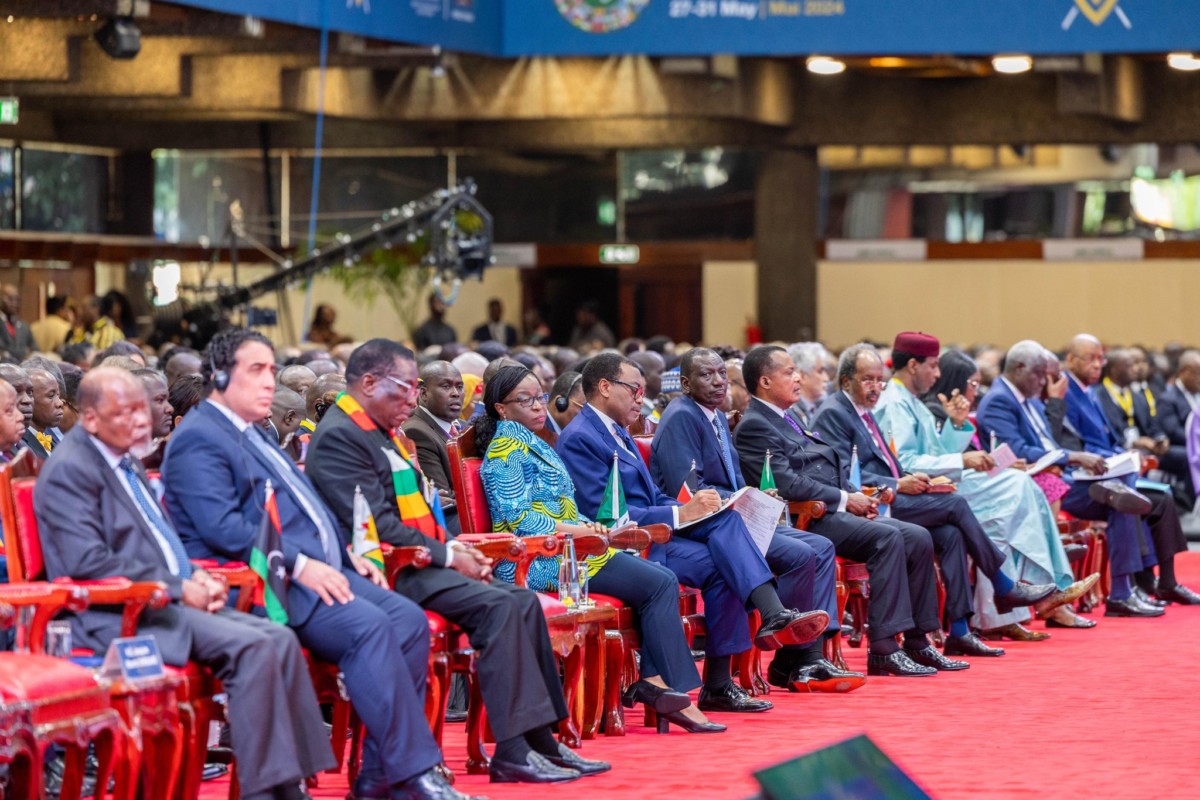
President William Ruto has issued a clarion call for overhauling the international financial architecture, arguing that the current system hamstrings Africa’s development by restricting access to affordable financing and failing to account for climate vulnerabilities.

In an address at the opening of the African Development Bank’s (AfDB) 59th annual meetings in Nairobi, Ruto said the antiquated global rules perpetuate an “unjust financial architecture” that loads African nations with unsustainably high debt burdens.

“We routinely borrow from international markets at rates far above those paid by the rest of the world, often up to 8 to 10 times more,” Ruto told delegates. “These rates are said to factor in an arbitrary risk profile that is notably not applied when considering mineral extraction, even in areas of active conflict.”

He insisted that Africa is “neither seeking handouts nor asking for charity” but merely a level playing field to mobilize affordable capital and catalyze the continent’s immense economic potential.


RELATEDPOSTS

Africa has built the innovation institutions, now it must connect them

February 24, 2026

Budget cuts weaken Kenya’s fight against money laundering

January 19, 2026

“We are a continent of sovereign people who aspire to grow in a just multilateral system and access development financing on fair terms,” he said.

Ruto argued the debt crises ravaging many African economies directly stem from this skewed financial system, diverting scarce resources from investing in resilience, sustainable growth and opportunities for the burgeoning youth population.

Moreover, he emphasized that climate change – to which Africa contributes minimally but bears the brunt – poses an existential threat by diminishing fiscal revenues and escalating disaster relief costs. This vicious cycle perpetually undermines economic advancement.

“Climate change and sovereign debt are now firmly interconnected, trapping governments where increasing losses and damage from climate impacts lead to rising costs of mobilizing resources for public investments,” Ruto warned.

The president urged reforms integrating climate vulnerabilities into global financial frameworks while endorsing proposals to boost the AfDB’s lending firepower, including a $25 billion replenishment of the African Development Fund and re-channeling Special Drawing Rights through the bank.

“A better, more responsive, and fairer international development financial architecture is urgently needed, and time is of the essence,” Ruto implored.

His impassioned rhetoric struck a chord across the continent grappling with rising debt distress, limited fiscal space for climate adaptation, and the lingering setbacks from pandemics, conflicts and weather calamities.
Previous Post

Gachagua seeks apology over ‘concocted’ party switch story

Next Post

How healthy competition can drive employee productivity and innovation

Brian Murimi

Brian Murimi

Brian Murimi is a communications and advocacy professional with a focus on innovation, policy and continental development in Africa. A former journalist, he now works at the intersection of knowledge, strategy, and pan-African institution building.

Related Posts

News

June 12, 2026
News

Where Fintech Companies Actually Make Their Real Profits: Beyond Payments and Transaction Fees

June 12, 2026
News

Why Revenue Growth in Fintech Can Be Misleading: The Hidden Economics Behind Digital Payments

June 12, 2026
News

Finance bill 2026: key tax reforms and economic impact in kenya

June 12, 2026
News

INVISIBLE TRANSACTIONS: THE FUTURE OF PAYMENTS

June 12, 2026
News

Kenya’s Growing Reliance on Domestic Borrowing: Opportunity or Crowding-Out Risk?

June 12, 2026

LATEST STORIES

June 12, 2026

Where Fintech Companies Actually Make Their Real Profits: Beyond Payments and Transaction Fees

June 12, 2026

Why Revenue Growth in Fintech Can Be Misleading: The Hidden Economics Behind Digital Payments

June 12, 2026

Finance bill 2026: key tax reforms and economic impact in kenya

June 12, 2026

INVISIBLE TRANSACTIONS: THE FUTURE OF PAYMENTS

June 12, 2026

Kenya’s Growing Reliance on Domestic Borrowing: Opportunity or Crowding-Out Risk?

June 12, 2026

Family Bank’s NSE Listing: A Long-Overdue Milestone for Kenya’s Capital Markets

June 12, 2026

Kenya’s Small Banks Given Until 2032 to Meet Kshs 10 Billion Core Capital Requirement

June 12, 2026
  • About Us
  • Meet The Team
  • Careers
  • Privacy Policy
  • Terms and Conditions
Email us: editor@thesharpdaily.com

Sharp Daily © 2024

No Result
View All Result
  • Home
  • News
    • Politics
  • Business
    • Banking
  • Investments
  • Technology
  • Startups
  • Real Estate
  • Features
  • Appointments
  • About Us
    • Meet The Team

Sharp Daily © 2024