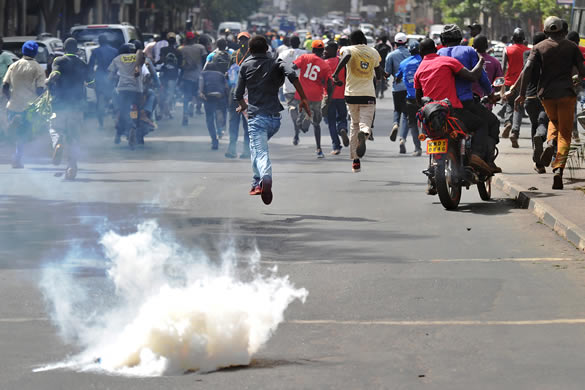
Investors are growing increasingly concerned about the ongoing anti-government protests in Kenya, particularly due to the increased cost of living amid the passing of the Finance Bill 2023. The opposition in Kenya has announced a fresh wave of demonstrations to protest against the escalating cost of living crisis, which has worsened with the tax measures introduced to fund the government’s inaugural budget. Economists warn that these protests are likely to lead to reduced cash circulation, adversely affect investments, and jeopardize job opportunities, particularly for the country’s growing skilled youth population.
Read more: Kenya Lags Behind Among Her Peers in the Foreign Direct Investment (FDI) Race
Global lenders like the International Monetary Fund (IMF), the World Bank, and global analysts, on the other hand, view the full implementation of these taxing measures, projected to generate Kshs 211.0 billion in new revenue, as necessary to put Kenya’s public finances on a sustainable path. However, with protests hindering the government’s efforts to avoid default, investor confidence has been shaken, leading to a widening of dollar bond spreads in the past week.
Read more: Businesses Count Losses as Azimio Protests rock Nairobi and Kisumu
Amid these protests, Chief Justice Martha Koome appointed a panel of three judges to hear and determine multiple petitions challenging the Finance Act, 2023, which was halted by the High Court on June 30. The government’s attempts to lift the suspension were rejected by Justice Mugure Thande, who argued that implementing the Act might subject Kenyans to an unconstitutional law if the petitions succeed.
The government aims to narrow the fiscal deficit to a projected 4.4% of the gross domestic product in the current year from the 5.8% recorded last year by fully enforcing the tax measures. This, coupled with increased tax revenue mobilization, the government hopes will ease pressure on the Treasury to exceed the budgeted borrowing of Kshs 663.5 billion for the current year. However, the Central Bank of Kenya (CBK) has expressed concerns about the country’s high debt levels and the challenges of servicing external debts, especially given elevated interest rates in international markets.
Read more: The World Bank Warns Against Tax Increases
The recent protests have resulted in widespread violence, with several businesses remaining closed during the demonstrations, leading to several casualties. The United Nations Human Rights Office has expressed concern over the alleged disproportionate use of force by the police during the protests, calling for the facilitation of peaceful assemblies and the avoidance of using firearms to disperse protests.
As Kenya faces this uncertain economic and political situation, investors remain watchful, hoping for a resolution that will stabilize the country’s financial footing and restore confidence in its economy.
Email your news TIPS to editor@thesharpdaily.com