Sharp Daily
No Result
View All Result
Monday, February 16, 2026
  • Home
  • News
    • Politics
  • Business
    • Banking
  • Investments
  • Technology
  • Startups
  • Real Estate
  • Features
  • Appointments
  • About Us
    • Meet The Team
Sharp Daily
  • Home
  • News
    • Politics
  • Business
    • Banking
  • Investments
  • Technology
  • Startups
  • Real Estate
  • Features
  • Appointments
  • About Us
    • Meet The Team
No Result
View All Result
Sharp Daily
No Result
View All Result
Home Investments

Treasury Shifts from Issuing Long-Term Bonds Towards Shorter-Dated Bonds

Patricia Mutua by Patricia Mutua
July 17, 2023
in Investments
Reading Time: 2 mins read
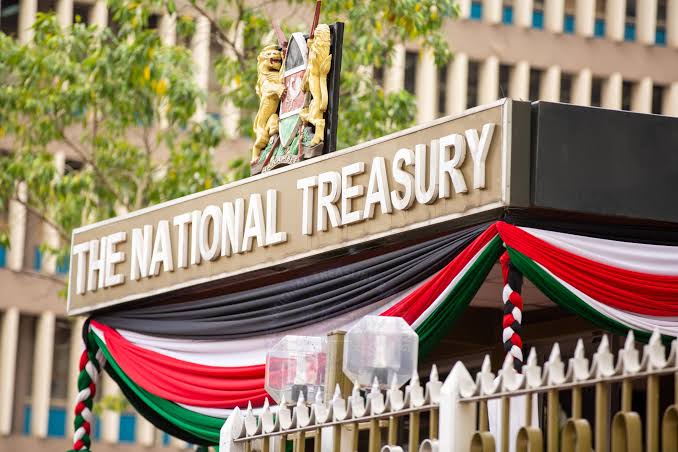
The National Treasury

[Photo/Courtesy]

In a departure from its previous approach, the Treasury has opted against issuing long-dated bonds as it seeks to avoid incurring higher debt service costs in an environment of rising interest rates. An analysis of bond durations issued at primary auctions during the first half of 2023 reveals that the average duration was 7.4 years, a significant decrease from the comparable period in 2022, which saw an average duration of 12.9 years. In the first half of this year, the Central Bank of Kenya (CBK) conducted 13 auctions, including bond re-openings and tap sales. The longest-tenured papers offered were the new 17-year infrastructure bond and the reopening of a 15-year bond. By contrast, the CBK had issued longer-dated papers in the same period of 2022, including the reopening of a 25-year bond issued in 2021 as well as two infrastructure bonds with tenures of 19 and 18 years, respectively.

Read more: Banks Remain the Largest Domestic Lenders to The Government

This shift toward shorter-dated bonds aligns with investor demands for higher risk-adjusted returns, accounting for increased inflation and heightened domestic financing by the exchequer. Although the Treasury’s domestic debt management policy still emphasizes issuing long-dated instruments, analysts suggest that the government has been compelled to strike a compromise by issuing bonds with shorter tenures. This transition is expected to reduce the average time to maturity for the government’s domestic debt portfolio. Data from the 2023 Medium Term Debt Management Strategy released by the Treasury reveals that the average time to maturity rose from 6.3 years in December 2020 to 7.8 years at the end of last year, reflecting the issuance of longer-dated instruments in line with the 2021 strategy.

Read more: Growth in New Loan Accounts in Kenya Reduces on The Back of the Government’s Overreliance on Domestic Borrowing

RELATEDPOSTS

Kenyan banks inject sh153 billion into MSMEs

January 16, 2026

NSE ranks second in Africa for dollar returns in 2025

January 12, 2026

As the 2022/23 fiscal cycle approached its end, the exchequer had to rely on tap sales of a new three-year bond to meet its domestic borrowing target. The pressure was evident in the multiple issues at the primary auctions. Despite the growing preference for shorter-dated papers, particularly Treasury bills, the share of domestic debt held in Treasury bills has decreased to 12.99 percent as of June 30, compared to 14.54 percent during the same period last year. Meanwhile, the proportion of Treasury bonds as a percentage of government domestic debt has increased to 84.85 percent from 83.2 percent a year earlier.

Read more: All Kenya Government Securities Now Yielding Above 12.0%

Over the past few years, the Treasury has been reducing its exposure to T-bills, as the maturity profile of domestic debt fell to 4.1 years in June 2018. A shorter-term profile implies that the government would face significant refinancing pressures characterized by large volumes of debt maturing within short intervals.

Email your news TIPS to editor@thesharpdaily.com

Previous Post

Kenyan Market Experiences Increased Liquidity Amid Tough Economic Times

Next Post

Flutterwave and IATA Join Forces to Streamline Payments for African Airlines

Patricia Mutua

Patricia Mutua

Related Posts

Investments

State races to raise Sh106.3 billion from Kenya Pipeline Company IPO as uptake slows

February 16, 2026
Analysis

CBK 10th rate cut: A simple breakdown for everyday kenyans

February 13, 2026
Analysis

NSSF early pension access proposal

February 13, 2026
Analysis

Pension funds with higher risk exposure outperform peers in 2025

February 11, 2026
Analysis

Safaricom ziidi trader, bringing stock market investing to m-pesa

February 10, 2026
Analysis

Pension fund returns moderate in 2025 as falling interest rates weigh on performance

February 5, 2026

LATEST STORIES

State races to raise Sh106.3 billion from Kenya Pipeline Company IPO as uptake slows

February 16, 2026

Jumia Cuts 2025 Losses by 38.0% as Market Exits and Cost Discipline Drive Path to Profitability

February 13, 2026

Strengthening accountability to break Kenya’s corruption cycle

February 13, 2026

Soros backed Delta40 raises Sh2.6 billion to expand funding for African startups

February 13, 2026

February 13, 2026

Embedded Finance: The invisible force reshaping banking

February 13, 2026

Q4’2025 Kenyan Segregated Retirement Benefit Schemes Performance

February 13, 2026

Ziidi Trader, CDSC Accounts and the Recalibration of Retail Market Intermediation in Kenya

February 13, 2026
  • About Us
  • Meet The Team
  • Careers
  • Privacy Policy
  • Terms and Conditions
Email us: editor@thesharpdaily.com

Sharp Daily © 2024

No Result
View All Result
  • Home
  • News
    • Politics
  • Business
    • Banking
  • Investments
  • Technology
  • Startups
  • Real Estate
  • Features
  • Appointments
  • About Us
    • Meet The Team

Sharp Daily © 2024