

The Capital Markets Authority (CMA) is proposing to reduce the minimum investment requirement for certain Real Estate Investment Trusts (REITs) from Kshs 5.0 mn to Kshs 100,000, representing a 98.0% reduction. The proposal, reported on 3 November 2026, seeks to widen investor participation and deepen Kenya’s capital markets by making property-backed investments accessible to a broader pool of investors. While the proposed change could lower the financial barrier to entry, its effectiveness will depend on whether it addresses the broader structural challenges that have constrained the growth of Kenya’s REIT market.
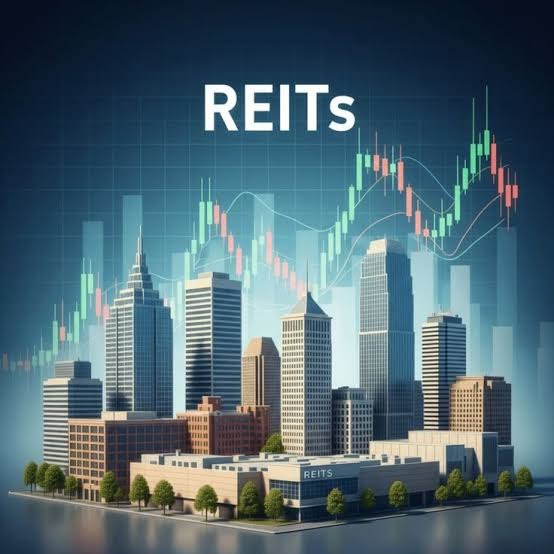
REITs are collective investment schemes that pool funds from investors to acquire, develop or manage income-generating real estate assets. They provide investors with an opportunity to gain exposure to the property market and earn returns through rental income distributions and potential capital appreciation without directly purchasing or managing property. Kenya’s REIT framework provides for two main structures: Income REITs (I-REITs), which invest in completed properties that generate rental income, and Development REITs (D-REITs), which finance the development and construction of properties for eventual sale or income generation.
The proposed reduction is particularly relevant to restricted I-REITs and D-REITs, where the Kshs 5.0 mn threshold has historically limited participation to professional and institutional investors. It is, however, important to distinguish these from unrestricted I-REITs, which already have no regulatory minimum investment amount. Listed REITs also have a Kshs 100,000 minimum subscription under the existing framework. Therefore, the proposed reform is not a blanket reduction across all REIT products, but rather an effort to broaden access to investment structures that have traditionally required higher capital commitments.
Despite the proposed reforms, lowering the investment threshold alone may not be sufficient to drive substantial growth in the sector. Kenya’s REIT market has historically faced challenges relating to investor confidence, limited liquidity and the relatively small number of investment products available. A market transformation study published in October 2026 by the Private Infrastructure Development Group (PIDG) indicates that REIT turnover across the NSE and Unquoted Securities Platform increased to Kshs 2.4 bn in 2025, while market capitalization reached Kshs 25.2 bn. However, turnover remained below 10.0% of market capitalization, highlighting the limited liquidity in the market.


There are also encouraging signs of investor interest, with the ALP Investment REIT and TRIFIC Green I-REIT offers recording subscription rates of 115.0% and 103.3%, respectively. These outcomes suggest demand for property-backed investment products, although sustained participation will depend on consistent returns, transparent reporting, effective property management and the availability of reliable secondary-market trading.
Going forward, we expect the proposed reduction in the minimum investment threshold to improve accessibility and potentially broaden the investor base for REITs in Kenya. However, the long-term growth of the sector will depend on more than affordability. We believe that strengthening investor confidence, improving liquidity and expanding the range of quality REIT products will be critical in positioning REITs as a viable channel for mobilizing domestic savings into the real estate sector.