

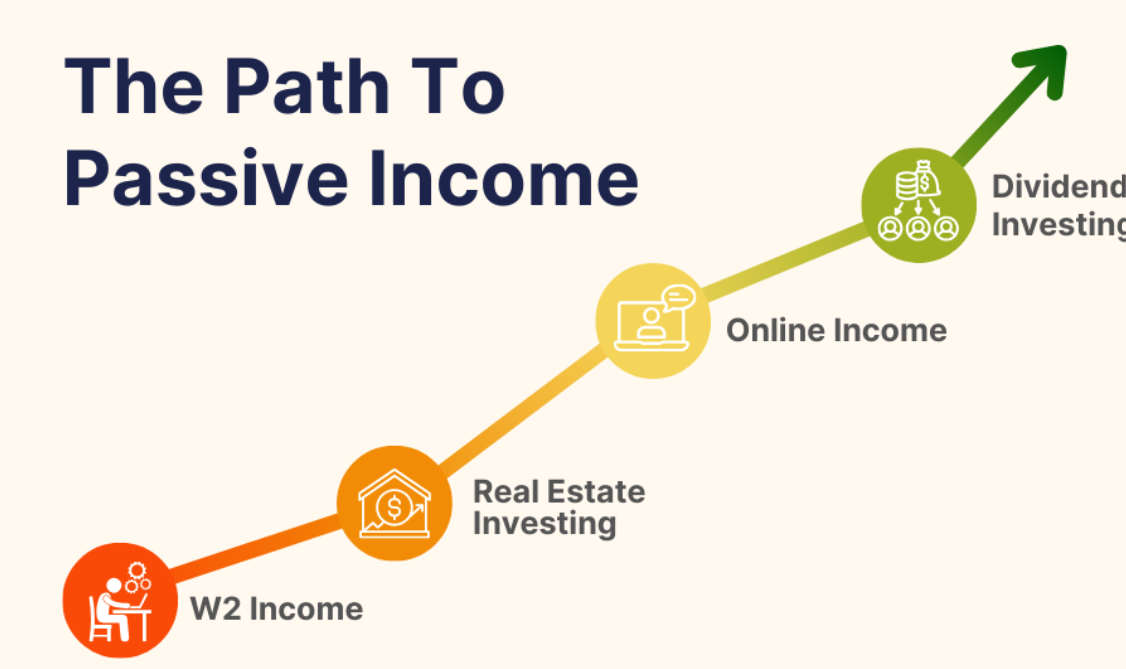
Dividend investing is an investment strategy through which individuals earn income by purchasing shares in companies that distribute a portion of their profits to shareholders. Unlike capital gains, which arise when an investor sells shares at a higher price than the purchase price, dividends provide periodic cash payments while investors retain ownership of their investments. This makes dividend-paying stocks an important consideration for investors seeking to generate passive income while participating in long-term capital appreciation.
The attractiveness of dividend investing is influenced by a company’s profitability, cash flow generation, financial stability and dividend distribution policy. Companies with established business models and relatively predictable earnings may be better positioned to maintain consistent dividend payments. However, dividend distributions are not guaranteed, as companies can reduce, suspend or withhold payments depending on their financial performance and capital requirements. According to the Organisation for Economic Co-operation and Development (OECD), dividend policies generally follow either a residual approach, where distributions are made after meeting investment and financing requirements, or a managed approach, where companies aim to maintain a relatively consistent pattern of payments.
In Kenya, dividend-paying companies listed on the Nairobi Securities Exchange (NSE) provide an opportunity for investors to generate income through equity ownership. Banks and Safaricom accounted for 80.2% of total dividends distributed by NSE-listed companies in the latest full financial year, paying shareholders Kshs 197.2 bn out of the total Kshs 245.9 bn distributed across the market. The remaining 21 dividend-paying companies collectively distributed Kshs 48.7 bn. This concentration highlights the significant contribution of the banking and telecommunications sectors to shareholder income in Kenya’s listed equity market.
One of the important indicators investors use when evaluating dividend-paying stocks is the dividend yield, which measures annual dividend payments relative to the prevailing share price. It is calculated by dividing the annual dividend per share by the market price per share and expressing the result as a percentage. For instance, a company paying an annual dividend of Kshs 5.00 per share, with its stock trading at Kshs 100.00, would have a dividend yield of 5.0%. This enables investors to compare the income-generating potential of different shares. However, a high dividend yield does not necessarily indicate an attractive investment, as it may result from a declining share price or an unsustainable dividend distribution.

Dividend investing also provides an opportunity to compound investment returns through dividend reinvestment. Instead of withdrawing dividend payments, investors can use the proceeds to purchase additional shares, increasing the number of shares held and potentially generating higher dividend income in subsequent periods. Over time, this approach can enhance portfolio growth, particularly when companies maintain or increase their dividend distributions. The overall returns from dividend investing therefore comprise both dividend income and potential capital appreciation, although share price movements can also result in capital losses.
Despite its income-generating potential, dividend investing carries several risks. Companies operating in cyclical industries may experience fluctuations in earnings, affecting their ability to maintain distributions. Additionally, excessive dividend payouts may limit the funds available for business expansion, debt repayment and capital expenditure. Investors should therefore assess dividend sustainability by examining earnings growth, free cash flow, debt levels, dividend payout ratios and historical payment consistency. Diversification across sectors can also reduce exposure to individual companies and industries whose dividend policies may be affected by changing economic conditions.
Going forward, dividend investing remains a relevant strategy for investors seeking to balance regular income generation with long-term wealth accumulation. Its effectiveness, however, depends on selecting financially sustainable companies rather than focusing solely on high dividend yields. By evaluating corporate fundamentals, dividend policies and market valuations, investors can build diversified portfolios that support income generation while maintaining exposure to potential capital appreciation.