

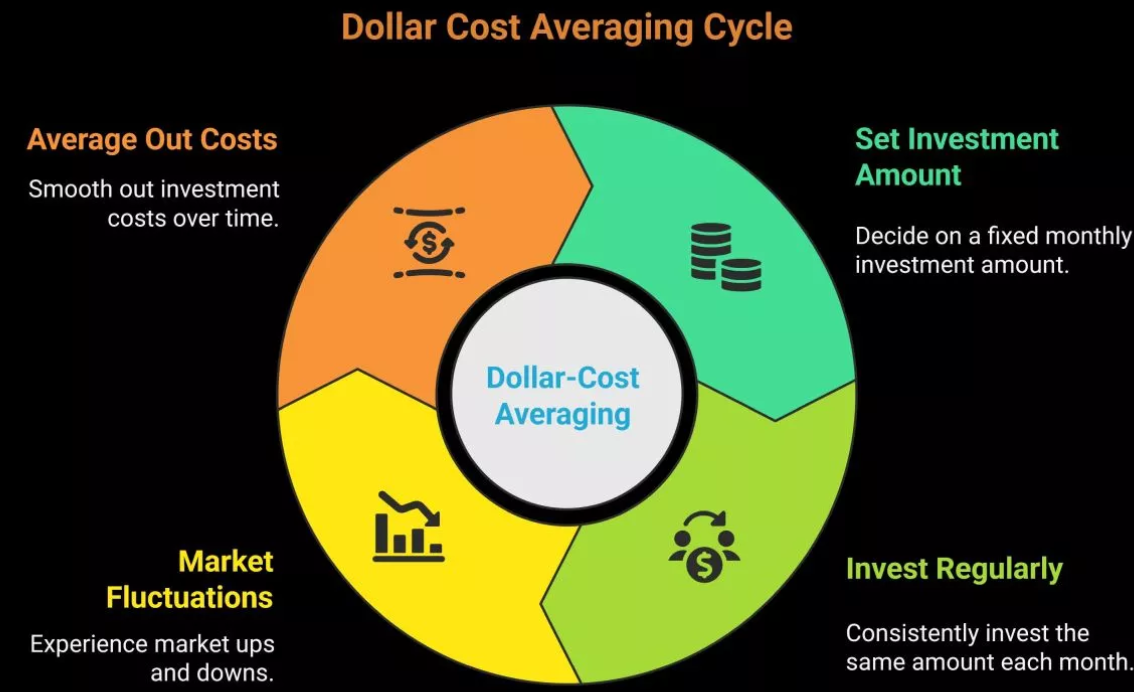
Building wealth through investing does not necessarily require substantial initial capital or the ability to predict market movements. For beginners, developing a consistent investment strategy can be an important step towards achieving long-term financial goals. Dollar-cost averaging (DCA) is one approach that enables investors to commit a fixed amount of money to an investment at regular intervals, regardless of prevailing market prices. Rather than attempting to identify the perfect time to enter the market, investors spread their purchases over time, potentially reducing the impact of short-term price volatility on their investment decisions. According to the United States Securities and Exchange Commission’s Investor.gov, this approach allows investors to purchase more units when prices are low and fewer when prices are high, helping them establish a disciplined investment routine.
The principal advantage of dollar-cost averaging for beginners is its potential to reduce emotional decision-making. Financial markets can experience sharp price movements in response to interest rate changes, inflation, corporate earnings and broader economic developments. Investors who attempt to time the market may delay investing while waiting for prices to fall or rush into investments after observing strong gains. Both approaches can result in inconsistent decisions. By establishing a predetermined investment schedule, dollar-cost averaging encourages investors to remain focused on their financial objectives rather than reacting to every market movement. The Financial Industry Regulatory Authority (FINRA) identifies this consistency as a potential benefit, particularly for investors who might otherwise make impulsive decisions during periods of uncertainty.
Another important benefit is accessibility. Individuals who earn regular salaries or operate small businesses can allocate a manageable portion of their income towards investments without waiting to accumulate a large sum. Depending on their financial circumstances, they may consider suitable investment vehicles such as diversified exchange-traded funds, unit trusts or other regulated investment products that permit recurring contributions. In Kenya, investors can investigate available collective investment schemes, including money market funds and equity-oriented funds, while assessing their investment objectives, liquidity requirements, fees and risk profiles. Regular contributions can also complement the long-term benefits of compounding, whereby investment earnings generate additional earnings over time. However, compounding depends on the returns achieved, the duration of the investment and whether earnings remain invested; it does not guarantee a particular outcome.


Ultimately, dollar-cost averaging provides beginners with a structured method of entering financial markets through consistent contributions rather than relying on accurate market timing. Its effectiveness lies in supporting investment discipline and spreading purchases across different price levels, not in guaranteeing returns or eliminating risk. When combined with suitable asset selection, diversification, cost awareness and a long-term perspective, the strategy can form part of a practical investment framework. The decision to use it should nevertheless reflect an investor’s financial circumstances and the characteristics of the chosen investment, particularly when comparing regular contributions with investing an available lump sum.