An investment can look highly attractive on paper and still create problems when an investor needs cash. A property may appreciate significantly, a private company may deliver strong returns, or a bond may offer an attractive yield. However, if the investor cannot sell the asset quickly without accepting a substantial discount, the investment may carry more risk than its headline return suggests.
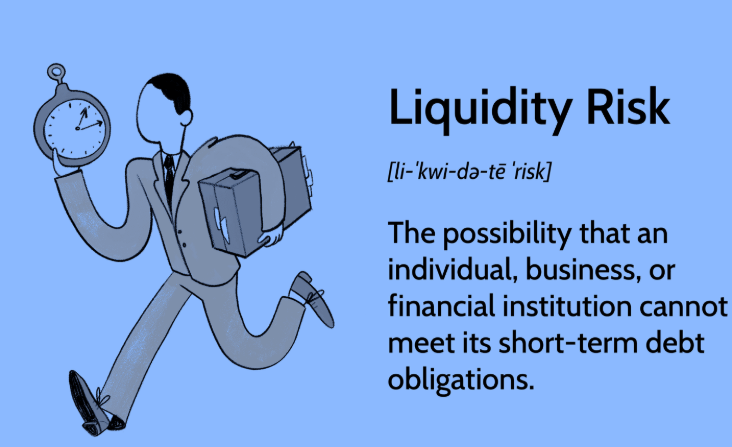
This is where liquidity risk becomes important. Liquidity risk refers to the possibility that an investor may not be able to convert an asset into cash quickly and at a price close to its fair value. It is particularly important because investors do not always control when they will need access to their capital.
The level of liquidity varies considerably across different investments. Listed shares traded on an active stock exchange can generally be bought or sold relatively quickly because they have an established market of buyers and sellers. Government securities also have secondary markets that allow investors to trade before maturity, although liquidity can vary between individual securities.
Real estate and private investments present a different situation. Selling a property can take months, particularly when the seller wants to achieve a specific price. Private equity and investments in unlisted companies can be even less liquid because investors may have limited opportunities to sell their interests before the end of the investment period.


This difference creates an important relationship between liquidity and expected returns. Investors often require greater compensation for committing their money to assets that are difficult to sell. A less-liquid investment may therefore offer a higher potential return than an otherwise comparable liquid investment.
However, a higher return does not automatically mean a better investment. Research suggests that once investors account for liquidity and systemic risks, some of the apparent excess returns associated with private assets can become considerably smaller.
The same principle applies to fixed-income investments. Less-liquid bonds can sometimes offer higher yields than securities that trade more actively. The additional yield can compensate investors for the difficulty and potential cost of selling the investment.
For investors, liquidity creates a trade-off between return and flexibility. Consider two investments. The first generates a 15.0% return but may take several months to sell. The second generates a 12.0% return but allows the investor to access the capital almost immediately. At first glance, the 15.0% investment appears more attractive. However, the decision changes if the investor expects to need the money in the short term.
Selling an illiquid asset under pressure can force the investor to accept a lower price. This can reduce the actual return and, in some cases, result in a loss. The investor therefore needs to consider not only the expected return but also how easily the investment can be converted into cash.
This consideration is particularly relevant to Kenyan investors who allocate capital to real estate and private investments. A property in a desirable location may increase substantially in value over several years. However, an owner who suddenly needs cash may have to reduce the asking price to complete the sale quickly.
The same challenge applies to unlisted companies. An investor may expect strong long-term growth, but the absence of an active secondary market can make it difficult to exit before the investment reaches maturity. Investors can manage liquidity risk by ensuring that their portfolios contain sufficient assets that can be converted into cash when required. Liquid investments can help meet short-term obligations, while less-liquid investments can provide exposure to longer-term growth opportunities.
The appropriate balance depends on an investor’s financial obligations, investment horizon and tolerance for risk. An investor who expects significant expenses in the near future may need to hold a larger proportion of liquid assets. Someone investing for the long term may have greater capacity to allocate funds to assets that take longer to sell.
Liquidity should therefore form part of the investment decision from the beginning rather than becoming a consideration only when an investor needs cash.
Investment analysis often focuses heavily on returns, but return alone does not provide a complete picture of an investment’s attractiveness. Investors also need to consider when they can access their capital, the potential cost of exiting the investment and the likelihood that they may need to sell during unfavorable market conditions. A 15.0% return from an illiquid investment may not necessarily be more attractive than a 12.0% return from a highly liquid investment. The better choice depends on the investor’s circumstances and objectives.
Liquidity risk highlights an important principle in portfolio management: the value of an investment is not determined only by how much it can earn, but also by how easily the investor can access the capital when needed. Balancing return with liquidity can help investors build portfolios that are better aligned with both their long-term objectives and short-term financial requirements.