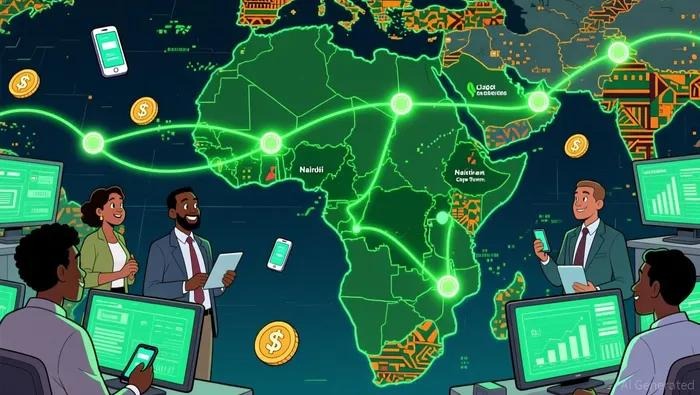
Stablecoin Treasury Infrastructure Gains Ground
Stablecoin Treasury Infrastructure is emerging as a new tool for African businesses managing cross-border payments and foreign exchange risk. Persistent dollar shortages and sharp local currency devaluations continue to pressure corporate margins across Sub-Saharan Africa.
Regional payment gateways such as Kora are expanding digital dollar settlement rails to meet growing enterprise demand. US dollar-pegged stablecoins, including USDT and USDC, are also moving beyond speculative retail trading. Businesses increasingly use them for operational payments, treasury management, and cross-border trade.
By routing B2B payments through blockchain networks, enterprises and payment providers can reduce some of the delays associated with traditional correspondent banking. This can help businesses maintain cross-border supply chains while improving access to working capital.
Improving Cross-Border Settlement
Stablecoins can address one of the major inefficiencies in cross-border commerce: pre-funding.


Traditional correspondent banking often requires payment providers and importers to hold local currency reserves in several markets. Businesses need these reserves to guarantee payments and complete trade settlements.
This approach can tie up working capital for several days. It can also expose businesses to multiple banking and foreign exchange costs.
Stablecoin settlement can reduce these delays. Blockchain networks can process transactions within seconds, allowing businesses to move funds closer to real time.
Lower settlement friction could also reduce transaction costs. Under real-time payout models, businesses may achieve significantly lower costs than traditional cross-border payment structures.
Managing Currency and Liquidity Risk
Currency volatility creates another challenge for African corporate treasuries. Businesses operating in markets such as Nigeria and Kenya often face limited access to foreign currency through official channels.
These shortages can push importers toward secondary markets. Wide foreign exchange spreads can then increase the cost of international purchases.
USD-backed stablecoins offer another way to manage corporate liquidity. Businesses can hold part of their treasury balances in digital dollars rather than relying entirely on volatile local currencies.
Consider an African electronics distributor preparing a USD 500.0k (Ksh 64.7 mn) inventory purchase. A stablecoin transaction could allow the business to settle the payment almost immediately. This can reduce the period during which the company remains exposed to foreign exchange movements.
Integrating Digital Dollars With Corporate Systems
Financial institutions and payment providers are also connecting stablecoin infrastructure with corporate enterprise resource planning (ERP) systems.
API-based integrations can automate several treasury functions. These include payment reconciliation, multi-currency account management, and real-time cash position monitoring.
This integration can give finance teams greater visibility across multiple African markets. It can also reduce manual reconciliation and improve the management of fragmented regional liquidity.
The infrastructure is also developing alongside institutional banking relationships and emerging virtual asset regulations. This creates a path toward more compliant corporate use of digital assets.
The Future of African Corporate Treasury
Stablecoin-based treasury solutions could become an increasingly important component of African corporate finance. The technology addresses several challenges that businesses face when managing cross-border payments, foreign exchange exposure, and regional liquidity.
The opportunity could grow as the African Continental Free Trade Area (AfCFTA) increases regional commerce. Businesses operating across multiple African markets will need faster and more efficient ways to move capital between jurisdictions.
Companies that combine stablecoin settlement with automated FX management and real-time liquidity monitoring could gain a significant operational advantage.
The evolution of payment infrastructure providers such as Kora also shows how stablecoins are moving toward practical enterprise applications. The next phase of African corporate treasury may therefore depend on integrating digital dollars into compliant, institutional-grade payment infrastructure.