For more than a decade, Nairobi’s property expansion followed a relatively straightforward investment model: as land and housing became increasingly expensive in established neighbourhoods, development moved towards the outskirts, where lower land prices and improving infrastructure created opportunities for appreciation. The latest market data, however, suggests that this model is becoming more selective. For investors, the question is no longer simply where Nairobi is expanding, but where households can still afford to live and where developers can generate sustainable returns.
The long-term performance of satellite towns demonstrates why peripheral investment was attractive. Average land prices across Nairobi’s satellite towns increased by 6.8% over the five years to 2025, rising to Kshs 18.9 mn per acre from Kshs 17.7 mn in 2021. The appreciation was supported by urbanisation, infrastructure development and growing demand for residential and mixed-use projects. Cytonn Research – Rise of Satellite Towns in Nairobi Metropolitan Area
Recent performance, however, points to increasing differentiation within the land market. Serviced land prices increased by 5.2% in 2025, reaching Kshs 20.2 mn per acre from Kshs 19.2 mn in 2024, while unserviced land prices increased by 3.5%, to Kshs 17.6 mn from Kshs 17.0 mn. Over the longer five-year period, unserviced land recorded stronger growth, with prices increasing by 17.3% from Kshs 15.0 mn in 2021 to Kshs 17.6 mn in 2025. Serviced land, in contrast, recorded a 1.0% decline, falling from Kshs 20.4 mn to Kshs 20.2 mn over the same period. Cytonn Research – Rise of Satellite Towns in Nairobi Metropolitan Area
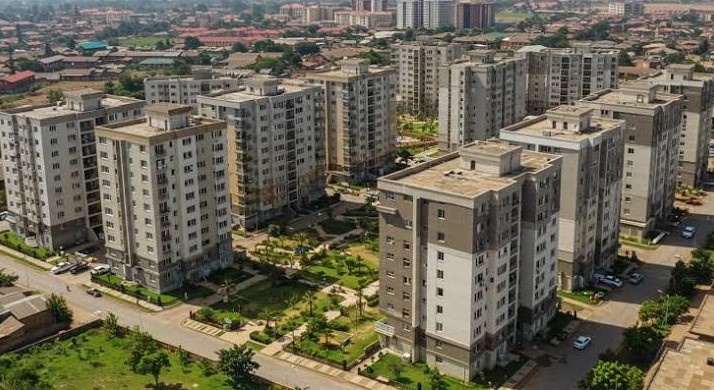
The more significant shift is visible in completed residential property, where affordability is increasingly influencing investment returns. Satellite-town residential markets recorded an average rental yield of 6.2% between 2022 and 2026. Within this market, detached housing yields increased by 25.9%, rising to 7.3% in 2026 from 5.8% in 2022, while apartment yields declined by 20.9%, falling to 5.3% from 6.7% over the same period. The divergence suggests that apartment supply has expanded faster than effective demand in some satellite towns, placing pressure on rental returns. Cytonn Research – Rise of Satellite Towns in Nairobi Metropolitan Area


This creates a different investment equation from the one that previously drove development towards the urban fringe. The strategy of acquiring relatively inexpensive peripheral land, waiting for infrastructure-led appreciation and selling at higher prices becomes less attractive where land values have already increased significantly. At the same time, affordability pressures have intensified as infrastructure improvements, investor activity and speculative land purchases have contributed to higher land prices, while elevated construction and financing costs have constrained effective housing demand.
For developers, this environment increases the importance of smaller units, attainable price points, construction efficiency and locations with reliable transport and proximity to employment centres. For investors, geographic exposure alone may no longer be sufficient to generate attractive returns. Rental demand, achievable rents, occupancy levels, development costs, infrastructure readiness and the relationship between property prices and household incomes are becoming increasingly important in determining asset performance.
The divergence between detached and apartment yields also highlights the importance of asset selection within the same geographic market. A satellite town may continue to experience population growth and infrastructure development while individual property segments deliver different investment outcomes. Investors therefore need to distinguish between broader market appreciation and the actual income-generating performance of specific assets.
Nairobi’s property market is consequently moving from expansion to differentiation. The earlier phase rewarded investors for identifying and entering emerging urban fringes before infrastructure and population growth drove land values higher. The next phase is likely to favour investors who can identify locations and property types where housing demand remains sufficiently strong to support both occupancy and sustainable rental yields. The investment opportunity is therefore shifting from simply finding the next Nairobi suburb to identifying where sustainable housing demand can be served at a price the market can absorb.