Global supply chains are undergoing a major transformation as multinational companies redesign production and sourcing strategies to improve resilience against economic, geopolitical, and environmental disruptions. The COVID-19 pandemic exposed the risks of concentrating manufacturing in a limited number of locations, while geopolitical tensions, trade disputes, and climate-related events have reinforced the need for more diversified production networks. In response, businesses are expanding their manufacturing footprints across multiple countries to reduce operational risk, strengthen supply chain continuity, and improve market access. This shift is creating new opportunities for emerging economies that can provide competitive manufacturing environments, efficient logistics, and reliable infrastructure.
One of the most significant developments driving this transformation is the adoption of the China Plus One strategy. Under this approach, multinational corporations continue to maintain operations in China while expanding manufacturing and sourcing activities into additional countries. The strategy enables firms to reduce dependence on a single production base, improve operational flexibility, and manage risks associated with rising labour costs, geopolitical uncertainty, and trade restrictions. As companies diversify production, they are increasing investment in industrial parks, logistics facilities, warehousing, transport corridors, ports, and supporting infrastructure to strengthen regional supply networks.
Governments are also responding to these changing investment patterns by introducing policies that enhance their competitiveness as manufacturing destinations. Investment incentives, regulatory reforms, and the expansion of Special Economic Zones (SEZs) have become increasingly important tools for attracting international manufacturers. Countries that combine efficient transport systems, affordable and reliable energy, skilled labor, transparent regulations, and stable business environments are better positioned to benefit from the reconfiguration of global supply chains.
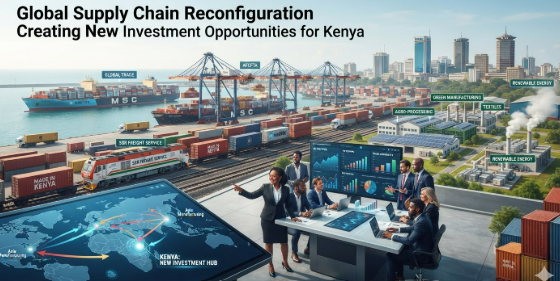
For Kenya, these global trends present a significant opportunity to strengthen its role within regional and international value chains. As one of East Africa’s largest economies, Kenya offers investors strategic access to markets through both the East African Community (EAC) and the African Continental Free Trade Area (AfCFTA). Its location along the Indian Ocean, supported by the Port of Mombasa and expanding transport corridors, positions the country as an important gateway for regional trade and logistics. These advantages improve Kenya’s attractiveness to manufacturers seeking efficient access to fast-growing African consumer markets while reducing dependence on traditional production hubs.


Kenya’s manufacturing sector is well placed to benefit from this transition. Industries such as textiles and apparel, agro-processing, pharmaceuticals, food processing, and consumer goods have the potential to attract increased foreign direct investment as multinational firms diversify production locations. Expanded manufacturing activity could strengthen domestic value addition, increase exports, create employment opportunities, and improve industrial competitiveness. Greater integration into global value chains would also encourage technology transfer, enhance productivity, and stimulate investment across supporting sectors, including logistics, warehousing, transportation, and business services.
Despite these opportunities, Kenya must address several structural constraints to maximize the benefits of shifting global supply chains. Improving transport efficiency, lowering electricity costs, simplifying regulatory procedures, strengthening customs administration, and enhancing industrial productivity remain essential for attracting long-term manufacturing investment. Continued investment in workforce development, digital trade platforms, modern logistics infrastructure, and export facilitation will further improve Kenya’s competitiveness as businesses increasingly prioritize efficiency, reliability, and speed when selecting production locations.
Regional trade integration will also play an important role in supporting Kenya’s long-term competitiveness. The implementation of the AfCFTA creates opportunities for manufacturers to access a larger continental market while reducing trade barriers and facilitating cross-border commerce. Combined with Kenya’s strategic geographic position and ongoing infrastructure investments, this expanding market access can encourage businesses to establish regional production and distribution centers within the country.
The ongoing reconfiguration of global supply chains represents more than a response to recent disruptions; it reflects a long-term restructuring of international production and trade. For Kenya, this shift provides an opportunity to strengthen its manufacturing base, attract greater foreign investment, and expand its role as a regional logistics and export hub. By improving the business environment, investing in modern infrastructure, and leveraging regional trade agreements, Kenya can position itself to capture a larger share of global production networks while supporting sustainable economic growth, industrial development, and greater participation in global value chains.