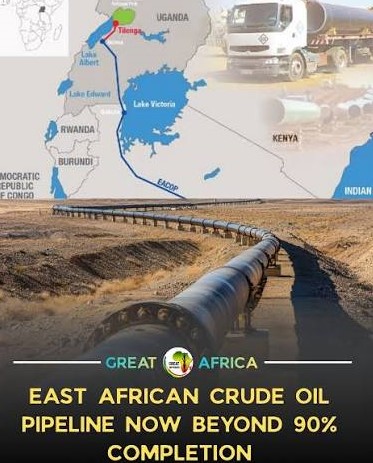
The East African Crude Oil Pipeline (EACOP) is moving closer to completion as Uganda and Tanzania continue to make progress on one of the region’s largest energy infrastructure projects. Once operational, the pipeline will transport crude oil from Uganda’s Lake Albert oilfields to the Port of Tanga in Tanzania for export to international markets. The project is expected to strengthen regional trade, improve export capacity and attract additional investment into East Africa’s energy sector.
According to the EACOP project overview, the pipeline will extend approximately 1,443 kilometres, making it the world’s longest electrically heated crude oil pipeline. The infrastructure is designed to transport up to 246,000 barrels of crude oil per day from Kabaale in western Uganda to Tanzania’s Indian Ocean coast. The heating system is necessary because Uganda’s waxy crude oil solidifies at lower temperatures and must remain heated throughout transportation to ensure continuous flow.
The latest project update indicates that construction has progressed beyond the halfway stage, with major engineering works continuing across both Uganda and Tanzania. Activities currently underway include pipeline welding, construction of pumping stations and the development of supporting infrastructure required for the operation of the pipeline. Thousands of workers remain engaged across multiple construction sites as the project advances toward completion.
Beyond strengthening oil export infrastructure, the pipeline is expected to generate significant economic activity during both the construction and operational phases. According to the EACOP local content programme, thousands of employment opportunities have been created, with a substantial proportion of the workforce drawn from Uganda and Tanzania. Local businesses have also secured contracts to supply construction materials, transport services, accommodation and other support services, creating additional opportunities for domestic enterprises.


The project is also expected to strengthen regional economic integration. For Uganda, the pipeline will provide direct access to international export markets for its crude oil, supporting the commercialization of its petroleum resources. Tanzania is expected to benefit through transit revenues generated from transporting crude oil across its territory, while the supporting infrastructure could encourage further investment in the country’s energy and logistics sectors.
The East African Crude Oil Pipeline has also attracted significant international investment and financing, reflecting growing confidence in the region’s long-term energy potential. At the same time, the project continues to undergo environmental and social monitoring in accordance with its regulatory requirements. Project developers indicate that construction activities are progressing alongside community compensation programmes and environmental management initiatives designed to support responsible project implementation.
Overall, the East African Crude Oil Pipeline remains one of the most significant infrastructure investments currently underway in the region. With a planned length of 1,443 kilometres, a transport capacity of 246,000 barrels per day, and construction progressing beyond the halfway stage, the project is expected to strengthen regional connectivity, expand oil export capacity and support economic activity in both Uganda and Tanzania once it becomes operational.